H. Bestougeff – författare
Visar alla böcker från författaren H. Bestougeff. Handla med fri frakt och snabb leverans.
3 produkter
3 produkter
Inbunden, Engelska, 2002
1 116 kr
Skickas inom 10-15 vardagar
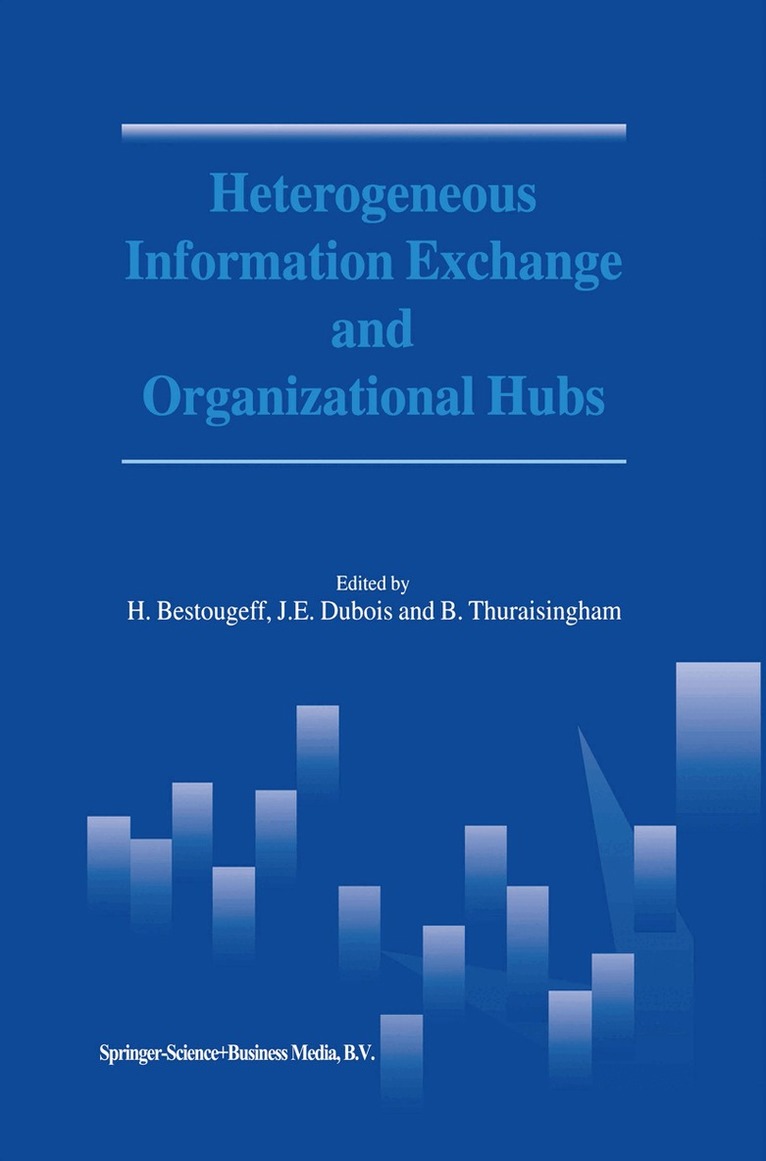
This text introduces heterogeneous information exchange as related to organizational hubs and provides directions and challenges for various other topics, including knowledge management and web information management. It presents ongoing developments in formal and experimental work and extended examples help the reader to understand underlying concepts and the difficulties with applications. The book is divided into three major parts: "Part 1 - Heterogeneous Database Integration: Concepts and Strategies", which deals with developing architectures and techniques for integrating schemas and data; "Part 2 - Data Warehousing: Models and Architectures", which develops data warehouse architectures such as multidimensional databases with related management and querying tools; and "Part 3 - Sharing Information and Knowledge", which concerns knowledge management, use of standards, information mining systems and web information management.The topics should provide scientists, information specialists, engineers, managers and librarians with insights in the field of heterogeneous knowledge management systems, including critical aspects of databased decision making, backed by information sharing processes. In addition, managers should find incentives and materials to support information tools in their organizations.
Häftad, Engelska, 2010
1 116 kr
Skickas inom 10-15 vardagar
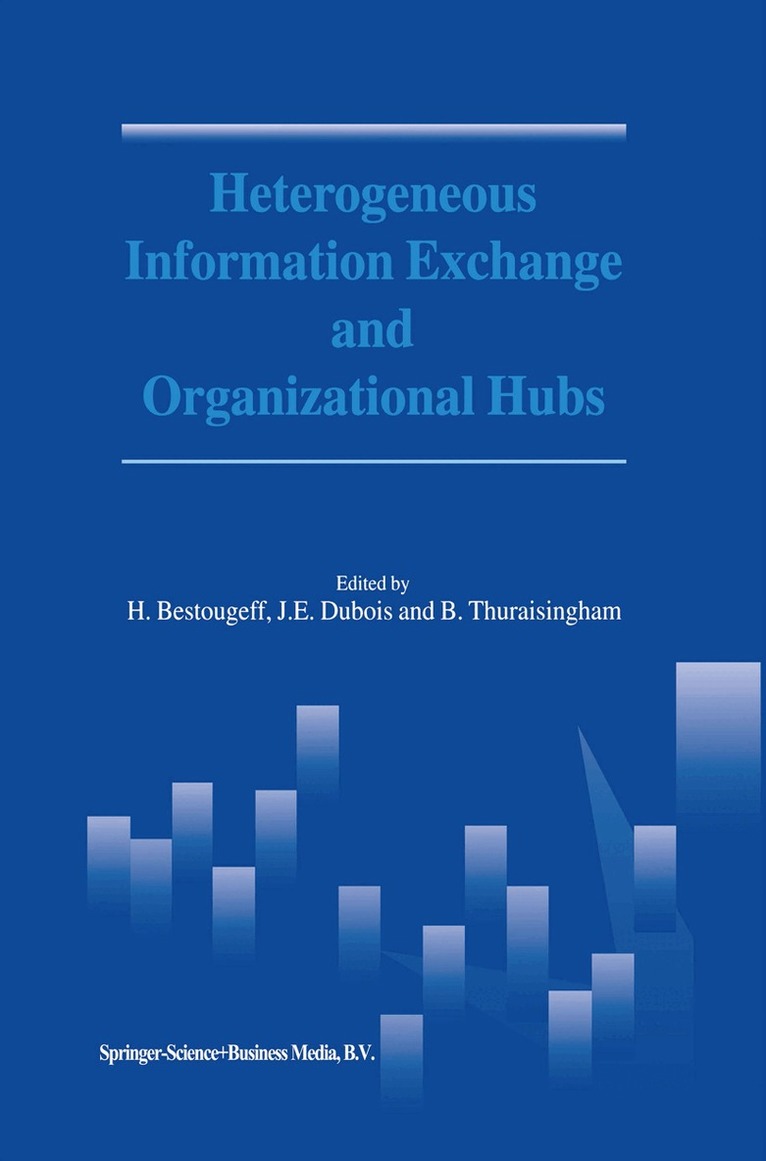
Helene Bestougeff, Universite de Marne Ia Vallee, France Jacques-Emile Dubois, Universite Paris VII-Denis Diderot, France Bhavani Thuraisingham, MITRE Corporation, USA The last fifty years promoted the conceptual trio: Knowledge, Information and Data (KID) to the center of our present scientific technological and human activities. The intrusion of the Internet drastically modified the historical cycles of communication between authors, providers and users. Today, information is often the result of the interaction between data and the knowledge based on their comprehension, interpretation and prediction. Nowadays important goals involve the exchange of heterogeneous information, as many real life and even specific scientific and technological problems are all interdisciplinary by nature. For a specific project, this signifies extracting information, data and even knowledge from many different sources that must be addressed by interoperable programs. Another important challenge is that of corporations collaborating with each other and forming coalitions and partnerships. One development towards achieving this challenge is organizational hubs. This concept is new and still evolving. Much like an airport hub serving air traffic needs, organizational hubs are central platforms that provide information and collaboration specific to a group of users' needs. Now companies are creating hubs particular to certain types of industries. The users of hubs are seen as communities for which all related information is directly available without further searching efforts and often with value-added services.
E-bok
PDF, Engelska, 20131 408 kr
Läs direkt efter köp
Helene Bestougeff, Universite de Marne Ia Vallee, France Jacques-Emile Dubois, Universite Paris VII-Denis Diderot, France Bhavani Thuraisingham, MITRE Corporation, USA The last fifty years promoted the conceptual trio: Knowledge, Information and Data (KID) to the center of our present scientific technological and human activities. The intrusion of the Internet drastically modified the historical cycles of communication between authors, providers and users. Today, information is often the result of the interaction between data and the knowledge based on their comprehension, interpretation and prediction. Nowadays important goals involve the exchange of heterogeneous information, as many real life and even specific scientific and technological problems are all interdisciplinary by nature. For a specific project, this signifies extracting information, data and even knowledge from many different sources that must be addressed by interoperable programs. Another important challenge is that of corporations collaborating with each other and forming coalitions and partnerships. One development towards achieving this challenge is organizational hubs. This concept is new and still evolving. Much like an airport hub serving air traffic needs, organizational hubs are central platforms that provide information and collaboration specific to a group of users'' needs. Now companies are creating hubs particular to certain types of industries. The users of hubs are seen as communities for which all related information is directly available without further searching efforts and often with value-added services.