H. K. Chourasia – författare
6 440 kr
Läs direkt efter köp
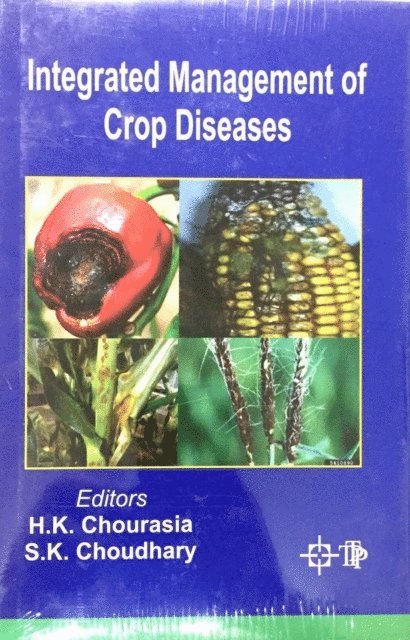
Over the last few years, scientists have researched extensively on integrated pest management (IPM) as the viable alternative of pesticides for reduction of damage due to insect pests, pathogens and weeds in crop plants. This disease management strategy is bio-safe, environmental friendly, ecologically compatible and economically sound. Excellent biotechnological developments have taken place and a number of technologies are currently crossed the pilot tests for commercialization. More recently emphasis is given on the development of resistant varieties but sometimes the failure of resistant gene in a variety has been observed and hence the scientists are busy to manage the diseases by developing transgenic varieties in addition to regular hybridization. This proceedings volume of the International Conference will be of great help to solve the problems of crop disease management. The volume consists of 33 review articles / research papers on biotechnological approaches by well-known researchers throughout India on different crops.
5 725 kr
Läs direkt efter köp
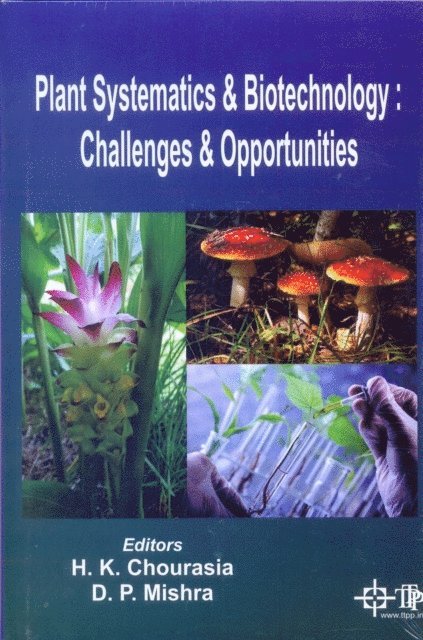
The knowledge of plant systematics is useful in understanding flora at fundamental taxonomic, structural, functional and metabolic level since it gives a comprehensive and complete information based on biological classification of plants. Each plant is assigned a proper position in the hierarchy of flora, with checkpoints and filters to store useful information and keep some in storage. Plant improvisation in terms of modifications or introduction of altogether new features can be done using modern biotechnological techniques based on tissue culture, molecular biology, enzymology, fermentation, plant breeding and genetics, microbiology etc. for improved plant growth, better adaptation and survival, crop yield in terms of improved disease and climate change resistance etc., converting plant bioresources into dynamic bioreactors which can become sources of useful metabolites, compounds, drugs, enzymes, vaccines etc. In addition new hybrid varieties with improved features can be developed after focusing upon plant species amenable to genetic manipulation. Large information thus generated can be interpreted through predictive-modeling studies and bio-informatic tools can be utilized for analyzing data generated spatially and temporally over the years. The UGC and BCST sponsored National Conference held during November 28-30, 2017 at P. G. Department of Biotechnology, T. M. Bhagalpur University, Bhagalpur has focused on urgent issues related to historical prospective, challenges and opportunities, methods in restoring the validity, recent advances and future prospects of research in plant systematics and biotechnology have been compiled in the present form of the Proceedings. Each paper has been written in lucid scientific manner, following guidelines of standard research journals with adequate number of tables, figures, graphs and latest references. Development of transgenic plants, emerging technologies for crop improvement and statistical computing in bio-statistics with SPSS have been discussed in detail. The present book will prove useful to the research scholars and scientists of the various disciplinces in their ongoing research activities.

6 440 kr
Läs direkt efter köp
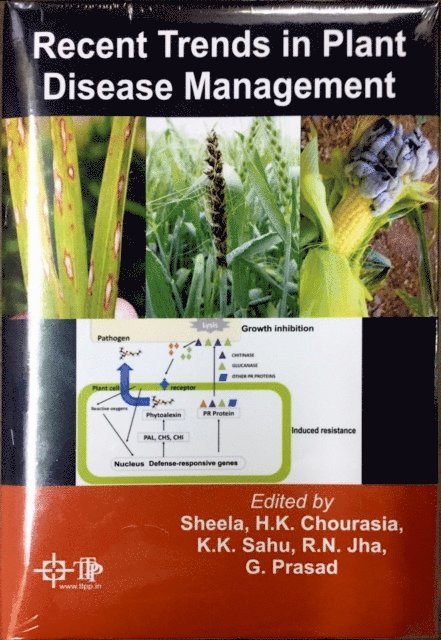
Plant diseases are one of the major biotic factors, which destroy around 10-20% of crop produce during pre and post-harvest stages. Farmers apply high doses of pesticides to control pests and diseases, but the treatments often fail to give an economic return because of late application and/or poor quality of the pesticide. This situation warrants evolving appropriate plant protection strategies so as to minimize pesticide input in agriculture, and to make the plant protection strategies economical and ecofriendly. In this direction, bio-intensive approaches may work as an effective and alternate option to chemical pesticides, and may offer economical and sustainable solutions of plant disease problems. The book, Bio-intensive approaches: application and effectiveness in plant diseases management presents elaborated and updated information on non-chemical and integrated methods of pests and plant disease management. The volume embodies 25 chapters covering major diseases of agriculturally important crops, highlighting the application and effectiveness of bio-intensive methods of their management, especially biological and cultural methods as well as the biotechnological and nano-technological tools. The present book shall serve as an important reference source and would provide field orientated and detailed information, highly useful to students, scientists, faculties, entrepreneurs, industrialists, planners and others intend to devise and develop bio-intensive modules for management of diseases in food and medicinal crops.