H. Loffler – författare
Visar alla böcker från författaren H. Loffler. Handla med fri frakt och snabb leverans.
7 produkter
7 produkter
E-bok
PDF, Tyska, 20111 628 kr
Läs direkt efter köp
E-bok
PDF, Tyska, 2013582 kr
Läs direkt efter köp
E-bok
PDF, Tyska, 2013535 kr
Läs direkt efter köp
E-bok
PDF, Tyska, 2013535 kr
Läs direkt efter köp
E-bok
PDF, Tyska, 2013540 kr
Läs direkt efter köp
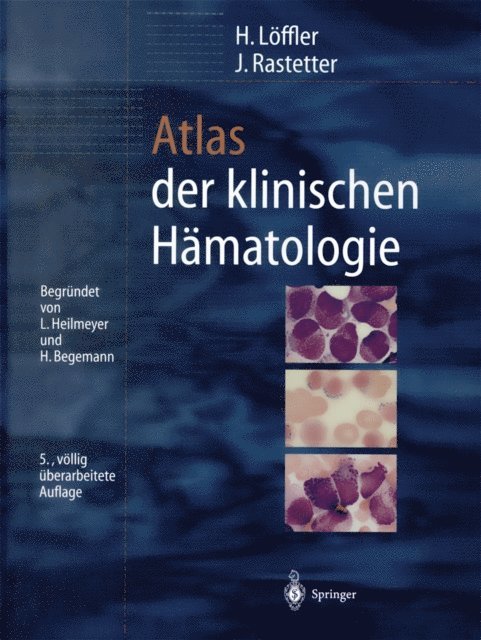
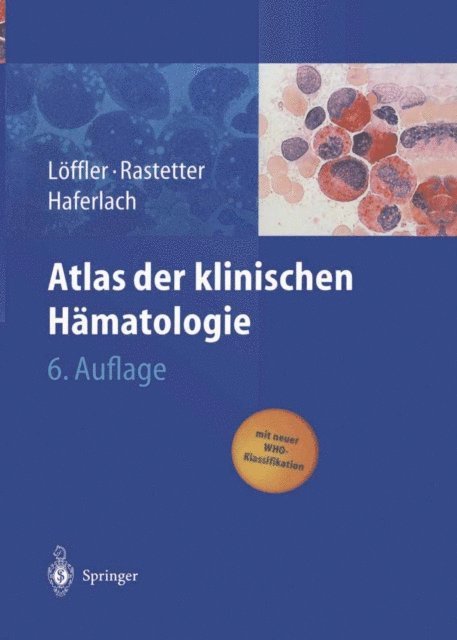
In der 5. Auflage wurde dieser Atlas dem aktuellen Stand der Diagnostik angepaßt und vollständig überarbeitet. Neben allen lichtmikroskopischen Methoden, die die Grundlagen der Diagnose bilden, werden die modernen zytogenetischen und molekulargenetischen Befunde vorgestellt. Das Buch stellt eine umfassende Dokumentation der Blut- und Knochenmarkserkrankungen des Erwachsenen und von Kindern dar und deckt auch die malignen Lymphome sowie die Knochenmarksinsuffizienz ab. Dabei werden Pathologie und Normalbefund gegenübergestellt. Ebenso werden viele Abbildungen zur Therapieverlaufskontrolle präsentiert. Der Atlas ist damit ein wertvolles Nachschlagewerk, welches in jeder hämatologischen und onkologischen Abteilung sowie im Labor für Routinediagnostik und Forschung zu finden sein sollte.
E-bok
PDF, Engelska, 20122 741 kr
Läs direkt efter köp
E-bok
PDF, Engelska, 20121 367 kr
Läs direkt efter köp
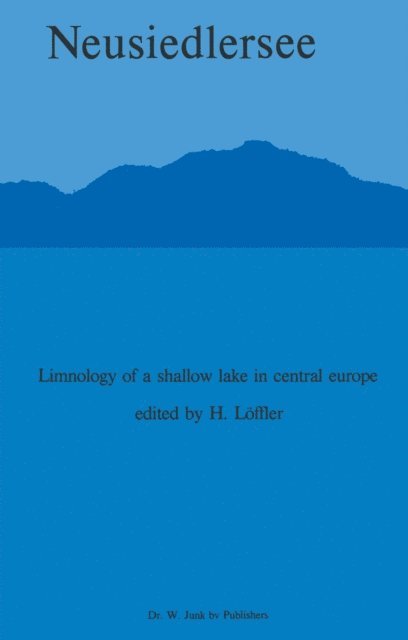
H. Laffler Interest aroused in the past by Neusiedlersee, located in what was earlier the western part of Hungary, was mainly due to the enormous fluctuations in water level and the consequent threat to the livelihood of the local popula tion, who lived chiefly from stock-farming. Practically no tourism touched the area until 1920, about a century later than Schubert''s visit to the Salzkam mergut lake district, the traditional resort area in Upper Austria. Probably because of its small popularity there is almost no documentation in the form of engravings or paintings. One of the exceptions is an oil painting by Schnorr-Carolsfeld, from about 1820. It is obvious that there was no Phragmites at the time he painted the view near Neusiedl. When the shallow Neusiedlersee was discovered by tourists it began to attract scientific interest, although some earlier work by mineralogists, geographers and hydrographers does exist. But it was only after the Second World War that this interest could be intensified, the lake now being an alkaline, turbid body of water confined by the vast areas of Phragmites which had come into existence after the lake last dried out in 1868. Scientific work gained considerable impetus from international activities such as the Interna tional Biological Programme, International Hydrological Decade, and Man and Biosphere, the results of which will be included in this volume. But in spite of all such efforts Neusiedlersee will undoubtedly remain, in many respects, a mystery.