H. Wang - Böcker
Visar alla böcker från författaren H. Wang. Handla med fri frakt och snabb leverans.
2 produkter
2 produkter
2 743 kr
Skickas inom 5-8 vardagar
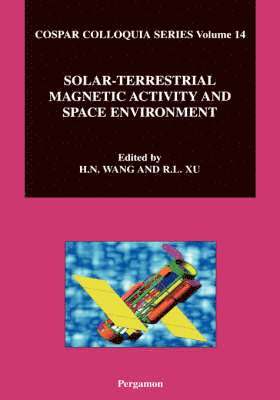
The COSPAR Colloquium on Solar-Terrestrial Magnetic Activity and Space Environment (STMASE) was held in the National Astronomy Observatories of Chinese Academy of Sciences (NAOC) in Beijing, China in September 10-12, 2001. The meeting was focused on five areas of the solar-terrestrial magnetic activity and space environment studies, including study on solar surface magnetism; solar magnetic activity, dynamical response of the heliosphere; space weather prediction; and space environment exploration and monitoring. A hot topic of space research, CMEs, which are widely believed to be the most important phenomenon of the space environment, is discussed in many papers. Other papers show results of observational and theoretical studies toward better understanding of the complicated image of the magnetic coupling between the Sun and the Earth, although little is still known little its physical background. Space weather prediction, which is very important for a modern society expanding into out-space, is another hot topic of space research. However, a long way is still to go to predict exactly when and where a disaster will happen in the space. In that sense, there is much to do for space environment exploration and monitoring. The manuscripts submitted to this Monograph are divided into the following parts: (1) solar surface magnetism, (2) solar magnetic activity, (3) dynamical response of the heliosphere, (4) space environment exploration and monitoring; and (5) space weather prediction. Papers presented in this meeting but not submitted to this Monograph are listed by title as unpublished papers at the end of this book.
Del 14 - World Scientific Series In Robotics And Intelligent Systems
Intelligent Supervisory Control, A Qualitative Bond Graph Reasoning Approach
Inbunden, Engelska, 1996
1 221 kr
Tillfälligt slut
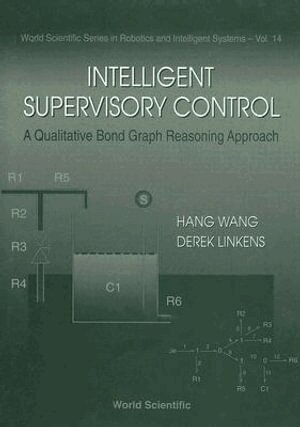
In this book, a methodology integrating qualitative reasoning and bond graphs is developed to construct intelligent supervisory control systems. Qualitative reasoning is a powerful model-based reasoning method while bond graphs are a formal modelling language for dynamic systems. Their integration and qualitative reasoning on bond graphs results in a problem-solving approach to artificial intelligence, in which qualitative reasoning is used as the general reasoning strategy and bond graphs are employed as the knowledge representation.A systematic modelling procedure based on qualitative bond graphs is presented. A controller design method is developed to derive control algorithms from qualitative bond graph models. An auto-tuning scheme is proposed to adjust the controllers in order to meet performance criteria and adapt to system changes. A fault diagnosis mechanism is built to localise system faults, and an additional measurement suggestion method is developed for the diagnosis result refinement. An automatic planner is proposed to generate the operation sequences for system start-up, shut-down, and emergency measures to help human operators operate systems safely. All of these applications are combined together via a management mechanism to construct a supervisory control system.