H Yamaguchi – författare
Visar alla böcker från författaren H Yamaguchi. Handla med fri frakt och snabb leverans.
6 produkter
6 produkter
Inbunden, Engelska, 2002
7 188 kr
Skickas inom 5-8 vardagar
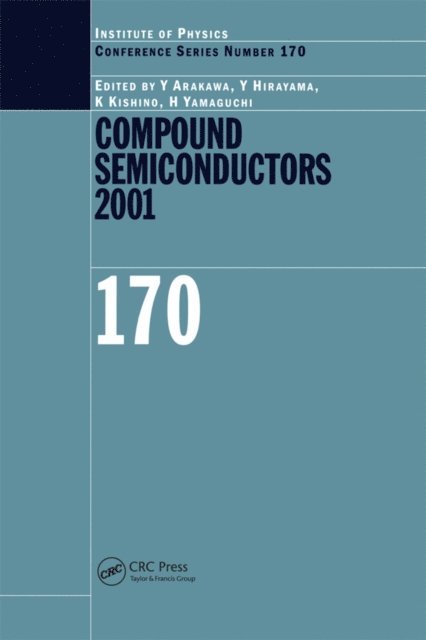
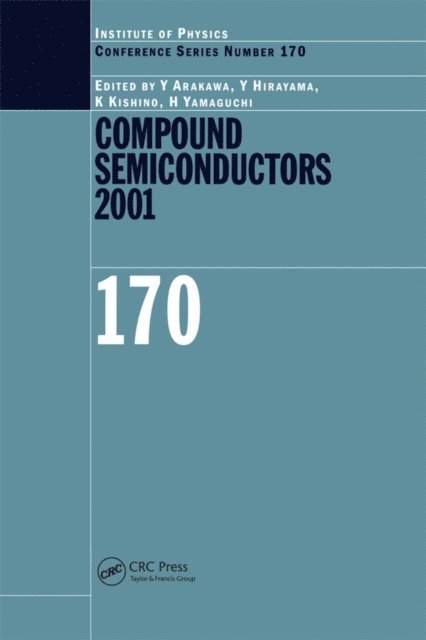
An international perspective on recent research, Compound Semiconductors 2001 provides an overview of important developments in III-V compound semiconductors, such as GaAs, InP, and GaN; II-VI compounds, such as ZnSe and CdTe; and IV-IV compounds, such as SiC and SiGe. The book contains 139 papers arranged in chapters on electronic devices, optical devices, magnetic materials, novel systems, quantum transport, optical characterization, quantum nanostructures, and material growth and characterization. The content encompasses the development of optical and electronic devices based on nitride semiconductors as well as the steady advances in traditional topics like III-V-based electronic and optical devices, growth and processing, and characterization. The book also includes novel research trends in quantum structures, such as quantum wires and dots, and spintronics, which are very promising for future developments in nanotechnology.As the primary forum for research into these materials and their device applications, this resource is an essential reference for researchers working on compound semiconductors in semiconductor physics, device physics, materials science, chemistry, and electronic and electrical engineering.
E-bok
Engelska, 20028 516 kr
Läs direkt efter köp
An international perspective on recent research, Compound Semiconductors 2001 provides an overview of important developments in III-V compound semiconductors, such as GaAs, InP, and GaN; II-VI compounds, such as ZnSe and CdTe; and IV-IV compounds, such as SiC and SiGe. The book contains 139 papers arranged in chapters on electronic devices, optical
Inbunden, Engelska, 2008
2 371 kr
Skickas inom 10-15 vardagar
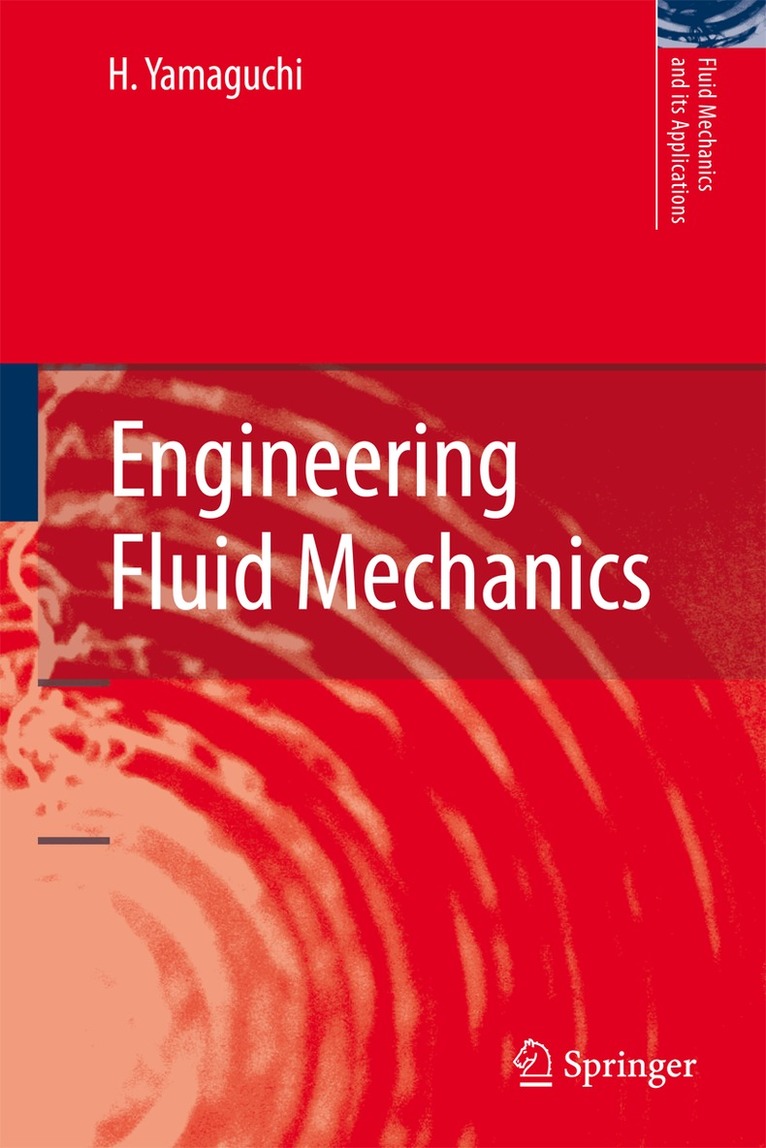
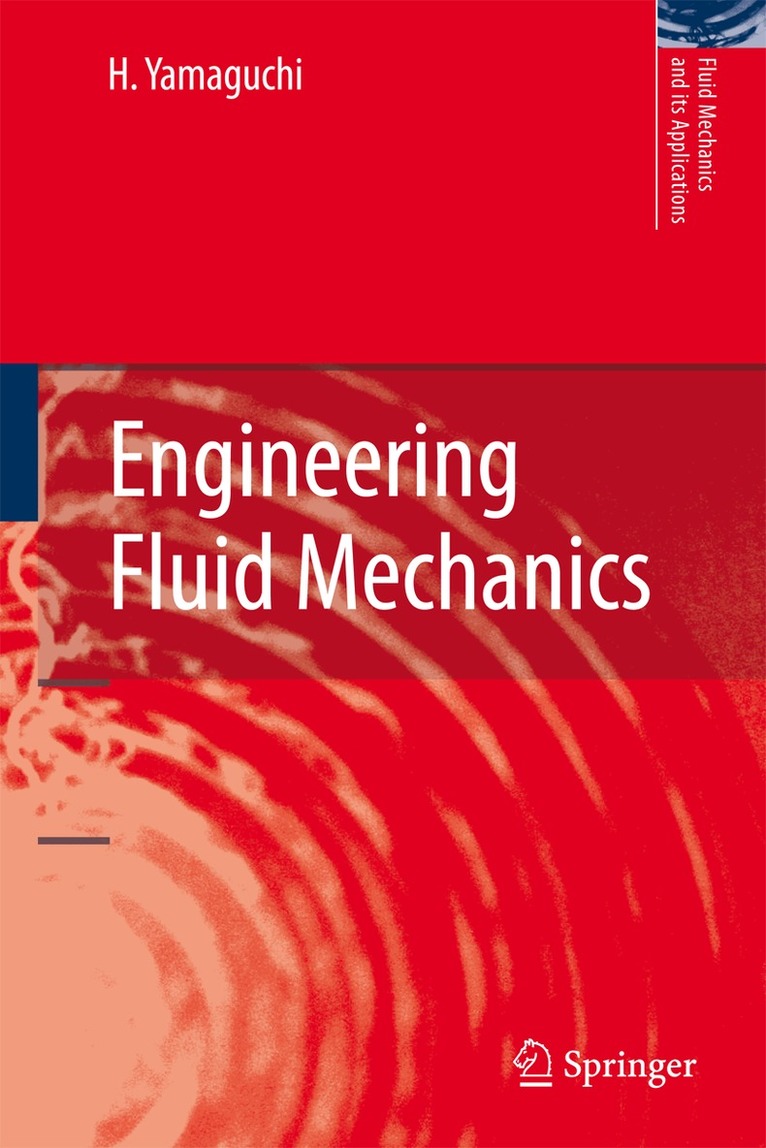
This book is intended for advanced engineering students in university or college and could serve as a reference for practical engineers. In recent years the development of fluid machineries has required a wider range of study in order to achieve a new level of developmental and conceptual progress. The field of fluid engineering is quite diverse in the sense that so many variations of flow exist in fluid machinery or an installation, whose characteristics are wholly dependent upon the flow field which is det- mined by the function of the machine setting itself. One who is studying fluid engineering, for the purpose of gaining a working knowledge of fluid machineries and their relevant installations, must understand not only the type of fluids used in practice, but also the fundamental flow problems - sociated with actual fluid machineries. Hence, the intended purpose of this book is to provide the fundamental and physical aspects of fluid mechanics and to develop engineering practice for fluid machineries. The subject of fluid engineering is most often approached at the senior undergraduate or postgraduate level of study. At this stage, the student or practical engineer is assumed to already have a basic mathematical ba- ground of vector and tensor analysis with a fair understanding of elem- tary fluid mechanics, such as Bernoulli equation, potential flow, and Poiseuille flow.
E-bok
PDF, Engelska, 20082 947 kr
Läs direkt efter köp
This book is intended for advanced engineering students in university or college and could serve as a reference for practical engineers. In recent years the development of fluid machineries has required a wider range of study in order to achieve a new level of developmental and conceptual progress. The field of fluid engineering is quite diverse in the sense that so many variations of flow exist in fluid machinery or an installation, whose characteristics are wholly dependent upon the flow field which is det- mined by the function of the machine setting itself. One who is studying fluid engineering, for the purpose of gaining a working knowledge of fluid machineries and their relevant installations, must understand not only the type of fluids used in practice, but also the fundamental flow problems - sociated with actual fluid machineries. Hence, the intended purpose of this book is to provide the fundamental and physical aspects of fluid mechanics and to develop engineering practice for fluid machineries. The subject of fluid engineering is most often approached at the senior undergraduate or postgraduate level of study. At this stage, the student or practical engineer is assumed to already have a basic mathematical ba- ground of vector and tensor analysis with a fair understanding of elem- tary fluid mechanics, such as Bernoulli equation, potential flow, and Poiseuille flow.
E-bok
PDF, Engelska, 20028 591 kr
Läs direkt efter köp
An international perspective on recent research, Compound Semiconductors 2001 provides an overview of important developments in III-V compound semiconductors, such as GaAs, InP, and GaN; II-VI compounds, such as ZnSe and CdTe; and IV-IV compounds, such as SiC and SiGe. The book contains 139 papers arranged in chapters on electronic devices, optical
Häftad, Engelska, 2010
2 351 kr
Skickas inom 10-15 vardagar
This book is intended for advanced engineering students in university or college and could serve as a reference for practical engineers. In recent years the development of fluid machineries has required a wider range of study in order to achieve a new level of developmental and conceptual progress. The field of fluid engineering is quite diverse in the sense that so many variations of flow exist in fluid machinery or an installation, whose characteristics are wholly dependent upon the flow field which is det- mined by the function of the machine setting itself. One who is studying fluid engineering, for the purpose of gaining a working knowledge of fluid machineries and their relevant installations, must understand not only the type of fluids used in practice, but also the fundamental flow problems - sociated with actual fluid machineries. Hence, the intended purpose of this book is to provide the fundamental and physical aspects of fluid mechanics and to develop engineering practice for fluid machineries. The subject of fluid engineering is most often approached at the senior undergraduate or postgraduate level of study. At this stage, the student or practical engineer is assumed to already have a basic mathematical ba- ground of vector and tensor analysis with a fair understanding of elem- tary fluid mechanics, such as Bernoulli equation, potential flow, and Poiseuille flow.