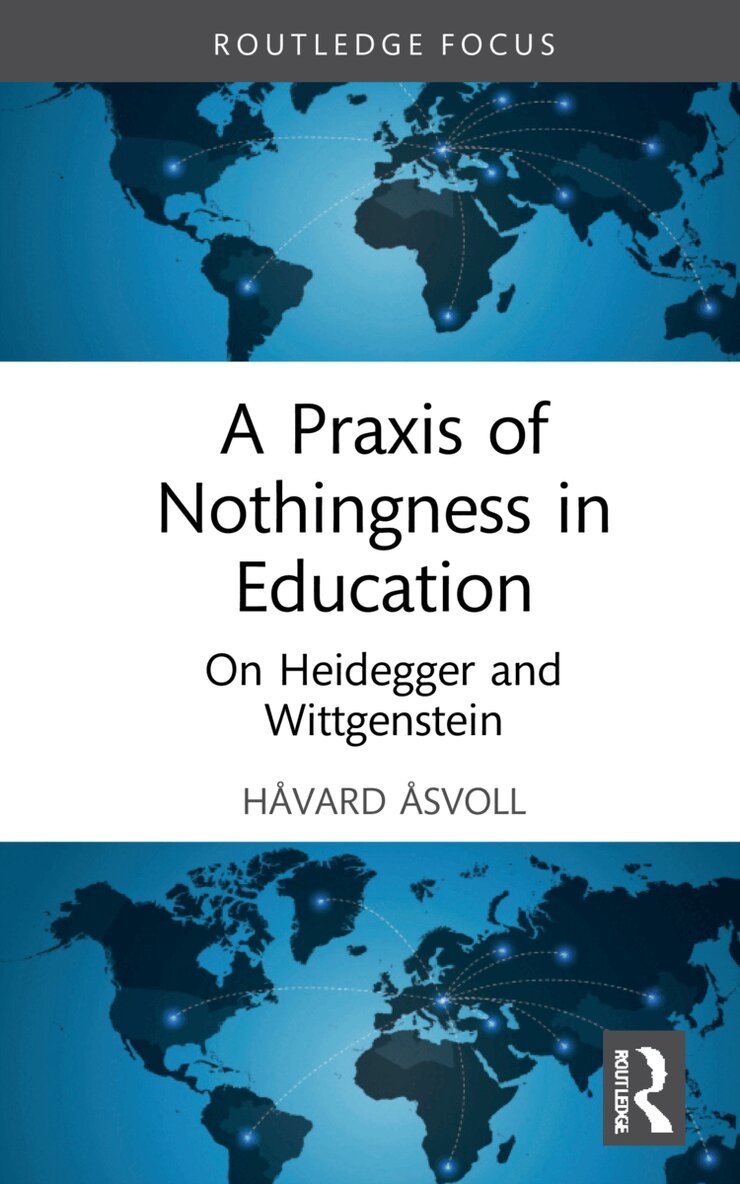
This book puts forward a "theory of Nothing" and shows how a praxis of "Nothing" can offer new possibilities for educational research and practice. Taking inspiration from Heidegger’s and Wittgenstein’s philosophy and with regards to phenomenology and language, the book indicates how nothing can be a condition for an educational technology.The book translates the complex philosophical thinking of Heidegger and Wittgenstein into the realm of education studies, drawing on their perspectives to contribute to an understanding of how nothingness comes into being and how this relates to education. Arguing that nothingness addresses new possibilities for understanding and how we perceive the world and our place in it, the book theorises different aspects that can be included in a theory of Nothing; including indeterminateness, embodiment and how the inexpressible can be made expressible. The book presents vignettes and examples of educational practice and explores how nothing can show up in educational research, theory and practice.Outlining a unique conceptualisation of nothingness in education, the book will be of great interest to academics, researchers and post-graduate students in the field of educational philosophy and educational theory.

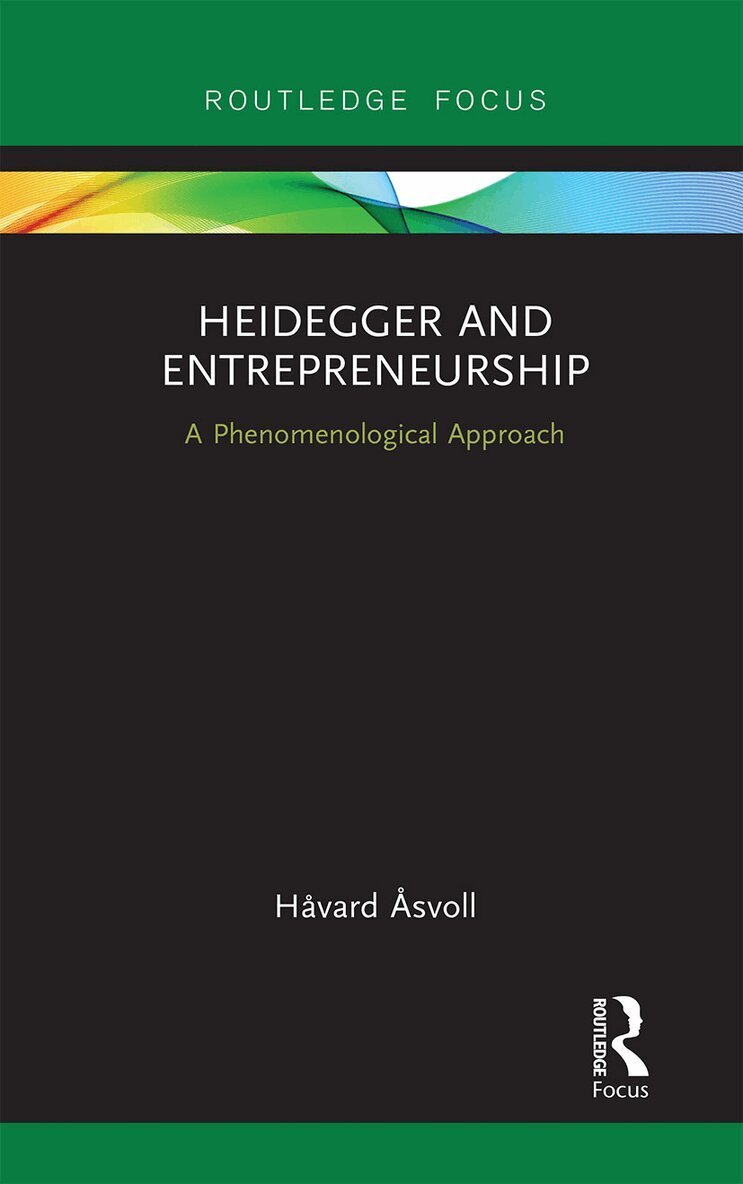
This book proposes that entrepreneurial practice is often considered an "applicable" paradigm. An "applicable" paradigm - which focus too much on planned, analytical, calculable, tool-based and ready-to-hand modes of decision making action. Hence, the equally important "theory of Nothing" has not received the attention it deserves. With reference to Heidegger’s existence oriented philosophy, Heidegger and Entrepreneurship: A Phenomenological Approach indicates how nothing can be a condition for an entrepreneurial applicable paradigm. It is suggested that the "theory of Nothing" bears the possibility of further development and can re-create the entrepreneurial paradigm of applying and decision making. This may also indicate a structure for understanding the new possibilities in entrepreneurship practice, such as entrepreneurial education and research. The book will be of value to students, researchers, and academics with an interest in entrepreneurship, management, and innovation.
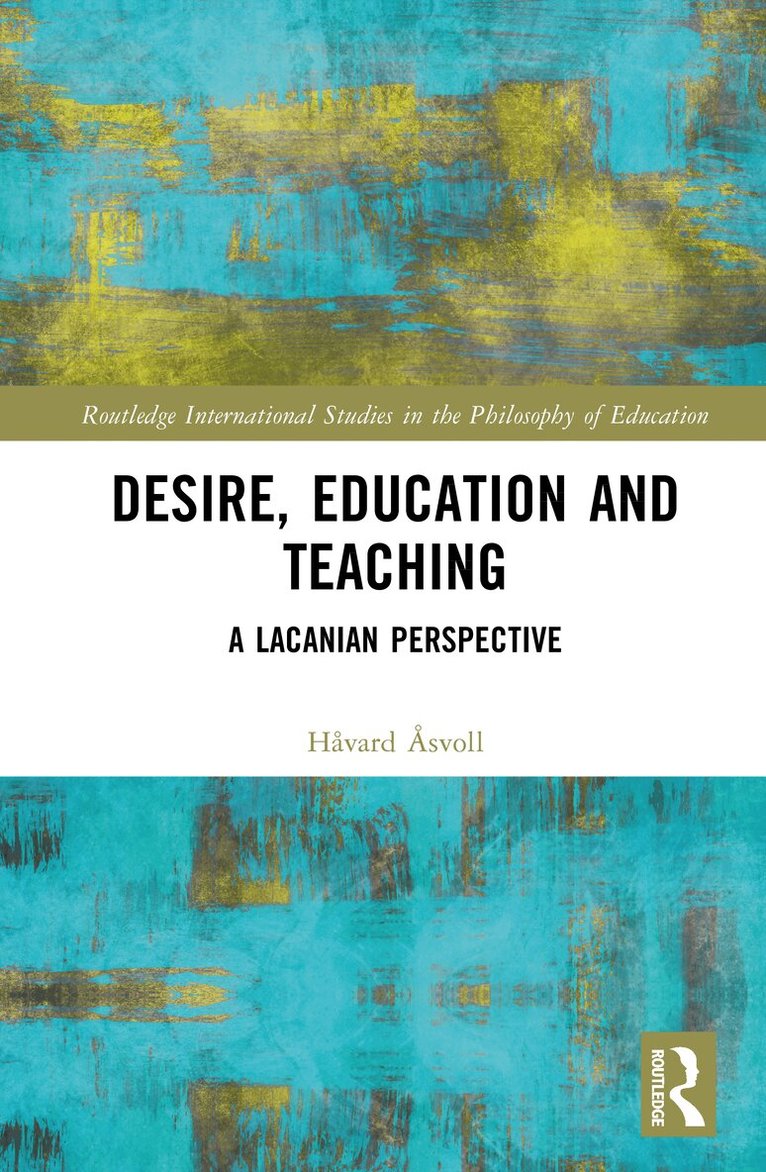
Exploring the implications of a novel theory of educational desire on the prevailing modes of educational research and theory, this book contextualises the realm of education studies through the challenging philosophies and theories of Lacan, thereby providing a genuinely alternative approach to the study of education.Structured into three main parts, the book provides a discussion of Lacanian ideas within educational research by setting out a description and analysis of how a theory of desire may work in educational settings and practice. Using vignettes and examples to drive the discussion, chapters explore the pivotal aspects of desire, which could be imaginary, symbolic, or real, elucidated by a mapping of discourses and exploring the reluctance of educational studies to engage with themes related to desire and psychoanalysis. Ultimately, the book argues for the need to disrupt the theoretical and practical logics and models that limit teacher practice, such as accountability, visible learning, competencies, pedagogical knowledge, and professional development, and how these can be better understood from a Lacanian perspective.This book will be of use to scholars, researchers, and academics in the fields of the philosophy of education, the theory of education, and teachers and teacher education more broadly. Those specifically interested in Lacanian psychoanalysis and a Lacanian view on how the concept of desire may influence educational research and practice will also find the book of use.The Open Access version of this book, available at www.taylorfrancis.com, has been made available under a Creative Commons Attribution-Non-Commercial (CC-BY-NC) 4.0 license.
This book proposes that entrepreneurial practice is often considered an "applicable" paradigm. An "applicable" paradigm - which focus too much on planned, analytical, calculable, tool-based and ready-to-hand modes of decision making action. Hence, the equally important "theory of Nothing" has not received the attention it deserves. With reference to Heidegger’s existence oriented philosophy, Heidegger and Entrepreneurship: A Phenomenological Approach indicates how nothing can be a condition for an entrepreneurial applicable paradigm. It is suggested that the "theory of Nothing" bears the possibility of further development and can re-create the entrepreneurial paradigm of applying and decision making. This may also indicate a structure for understanding the new possibilities in entrepreneurship practice, such as entrepreneurial education and research. The book will be of value to students, researchers, and academics with an interest in entrepreneurship, management, and innovation.