Habib Zafarullah – författare
2 186 kr
Läs direkt efter köp
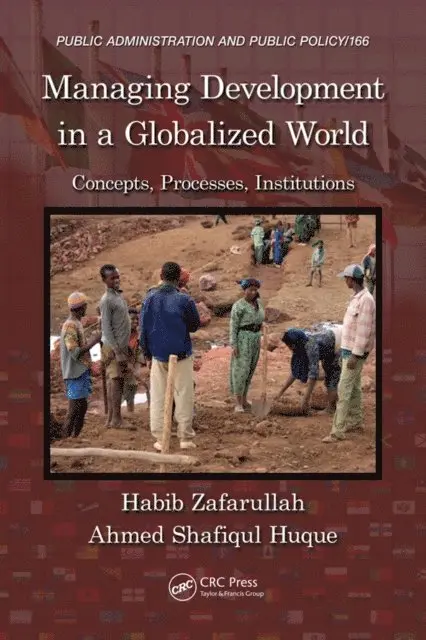
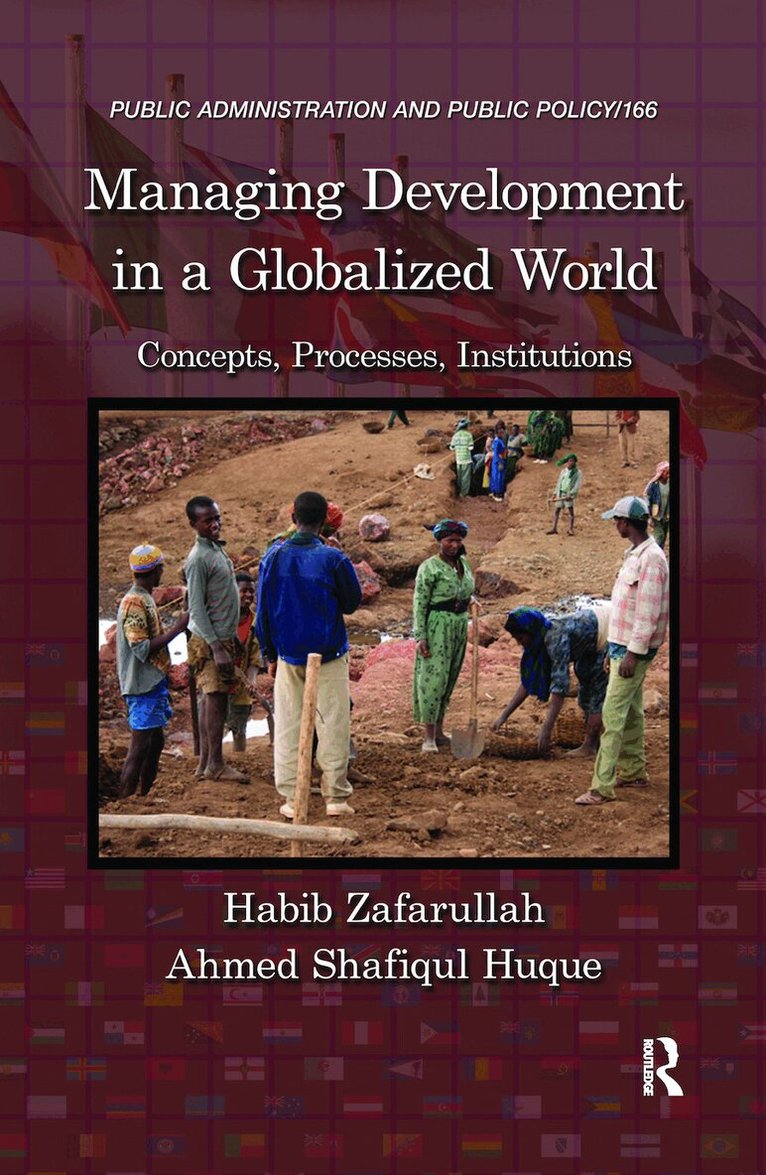
Traditionally, development has been rooted in ideologies and assumptions prevalent in the developed world and in practices and strategies adopted by leading industrial nations. However, historically, eclectic ideas and approaches often clash with existing long-established notions of progress and modes of realizing social and economic change. Managing Development in a Globalized World: Concepts, Processes, Institutions explores this topic by incorporating ideas and interpretations that have previously been neglected or given inadequate attention in the discourse on developing countries. It underscores development as a continuous process that must be supported by sound policies and efficient management, supplying a wider understanding of the field.
The authors argue that the application of innovative development techniques and best practices is essential for obtaining optimum results in meeting the needs of society. They examine the style of managing development with a new perspective that links the phenomenon with changing demands and the interplay of internal/external actors and a host of stakeholders. An exploration of key sectors in development provides clear comprehension of problems and solutions.
A careful synthesis of theoretical/conceptual and empirical literature, the book assesses real-world situations and provides insight into the operational dynamics of development policies, programs, and institutions. It focuses on goals, values, and dynamics of development management that are undergoing rapid changes and continue to be enhanced to alleviate poverty and improve living standards in an era of globalization and inter-regional and inter-institutional synergies. It highlights best practices essential for the efficient and effective delivery of human development services that are designed and put in place to obtain optimum results in meeting the needs of society.
2 186 kr
Läs direkt efter köp
Traditionally, development has been rooted in ideologies and assumptions prevalent in the developed world and in practices and strategies adopted by leading industrial nations. However, historically, eclectic ideas and approaches often clash with existing long-established notions of progress and modes of realizing social and economic change. Managing Development in a Globalized World: Concepts, Processes, Institutions explores this topic by incorporating ideas and interpretations that have previously been neglected or given inadequate attention in the discourse on developing countries. It underscores development as a continuous process that must be supported by sound policies and efficient management, supplying a wider understanding of the field.
The authors argue that the application of innovative development techniques and best practices is essential for obtaining optimum results in meeting the needs of society. They examine the style of managing development with a new perspective that links the phenomenon with changing demands and the interplay of internal/external actors and a host of stakeholders. An exploration of key sectors in development provides clear comprehension of problems and solutions.
A careful synthesis of theoretical/conceptual and empirical literature, the book assesses real-world situations and provides insight into the operational dynamics of development policies, programs, and institutions. It focuses on goals, values, and dynamics of development management that are undergoing rapid changes and continue to be enhanced to alleviate poverty and improve living standards in an era of globalization and inter-regional and inter-institutional synergies. It highlights best practices essential for the efficient and effective delivery of human development services that are designed and put in place to obtain optimum results in meeting the needs of society.
2 884 kr
Läs direkt efter köp
2 892 kr
Läs direkt efter köp
2 042 kr
Skickas inom 10-15 vardagar
3 327 kr
Skickas inom 3-6 vardagar
528 kr
Skickas inom 5-8 vardagar
4 405 kr
Skickas inom 5-8 vardagar
825 kr
Läs direkt efter köp
Chapters deliver critical analyses of complex issues within the economic, social, technological and environmental development sectors, such as climate change and environmental protection. This important Handbook synthesises diverse perspectives on policies and their implications for development, and features regional and country-specific case studies highlighting the field‘s expansive nature. The editors bring together leading contributors who deliver insightful research into topics such as human rights, policy networks and development policy praxis.
With an accessible and comprehensive approach, this Handbook will appeal to practitioners exploring development policy issues and be welcomed by scholars and researchers looking to gain an insight into the world of development.
1 398 kr
Skickas inom 10-15 vardagar
1 733 kr
Läs direkt efter köp
1 398 kr
Skickas inom 10-15 vardagar
1 612 kr
Skickas inom 10-15 vardagar
2 049 kr
Läs direkt efter köp
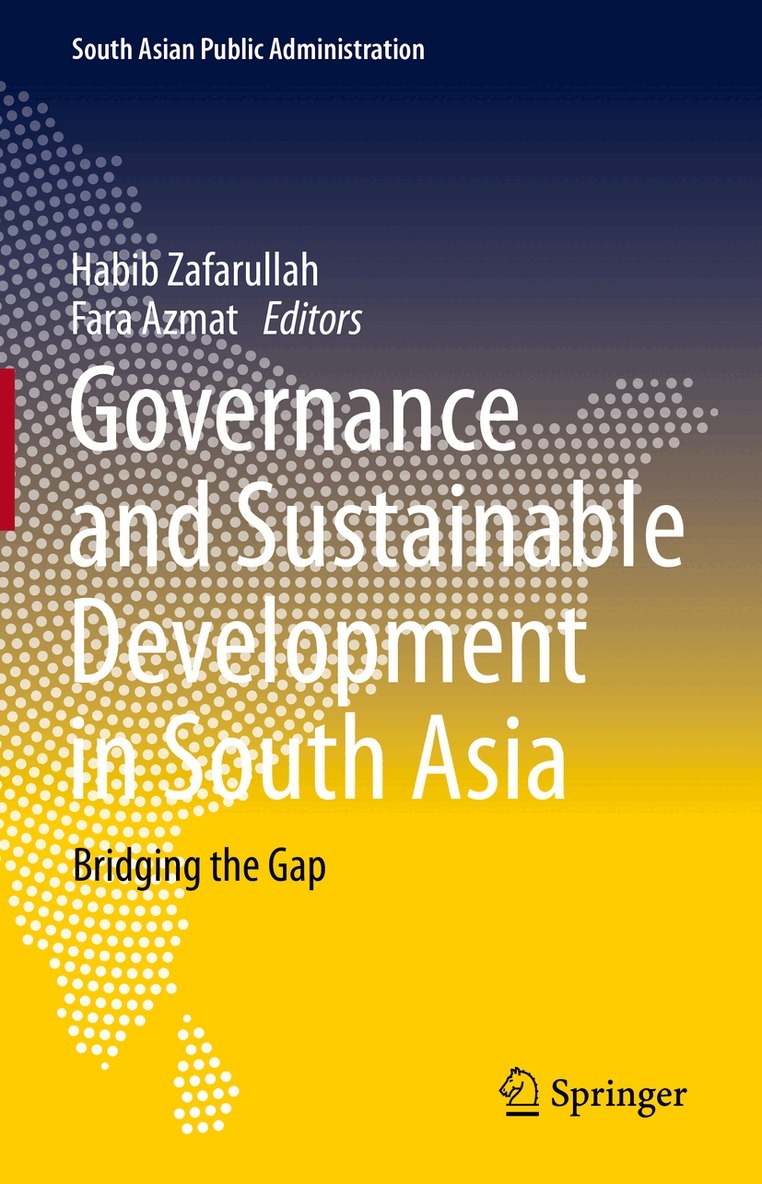
This edited volume analyzes South Asian public administration and its role in development through the lens of SDG 16. Chapters explore how SDG 16 has influenced the development of effective and accountable public institutions and the initiatives taken within this region to promote an inclusive society, provide access to justice for all, and build effective, accountable, and inclusive institutions at all levels. Each case presented offers best practices, the challenges faced, and the opportunities SDG 16 provides for regional and national development, as well as valuable insights into the transfer of knowledge and learning within the South Asian region and for broader “South-South” and “South-North” exchange.
The book is intended for policymakers, businesses, civil society organizations as well as academics across research fields spanning management, social innovation, and corporate sustainability, who are pursuing research on public administration, governance and the SDG Agenda.