Hagai Boas - Böcker
Visar alla böcker från författaren Hagai Boas. Handla med fri frakt och snabb leverans.
5 produkter
5 produkter
2 150 kr
Skickas inom 10-15 vardagar
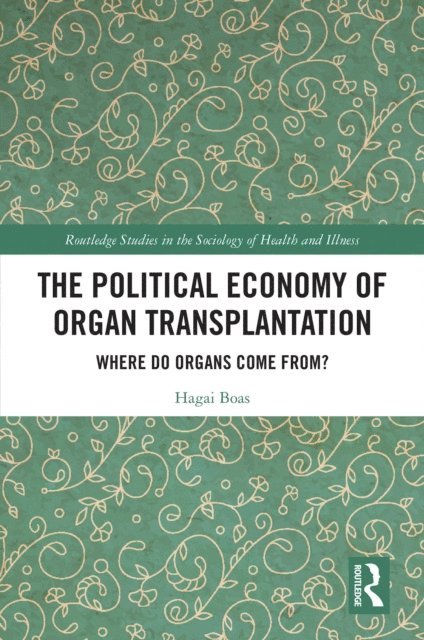
“This thought-provoking work examines how the relationships of organs, tissues, and cells transferred from one body to another through donation, sale, or gift are mediated by the state, market, and family. The book is a thorough review of the sociological, anthropological, and ethical literature surrounding transplant organs but encased within the author’s own personal dilemmas and lived experience. His work skillfully underscores the negotiations and accommodations inherent in the use of these technologies and reveals the situatedness of decisions that belie any simplistic readings of the ethics of transplantations… This is a stimulating and accessible book for those with an interest in transplantation, ethics, or the social implications of medical technologies. Its strength lies in the reflexive accounts from the author of his own experience juxtaposed with the sensitive appraisals of the workings of the state, market, and family in the organ economy.” Andrea Whittaker, Monash University, reviewed for Social Forces This innovative work combines a rigorous academic analysis of the political economy of organ supply for transplantation with autobiographical narratives that illuminate the complex experience of being an organ recipient.Organs for transplantations come from two sources: living or post-mortem organ donations. These sources set different routes of movement from one body to another. Postmortem organ donations are mainly sourced and allocated by state agencies, while living organ donations are the result of informal relations between donor and recipient. Each route traverses different social institutions, determines discrete interaction between donor and recipient, and is charged with moral meanings that can be competing and contrasting. The political economy of organs for transplants is the gamut of these routes and their interconnections, and this book suggests how such a political economy looks like: what are its features and contours, its negotiation of the roles of the state, market and the family in procuring organs for transplantations, and its ultimate moral justifications. Drawing on Boas’ personal experiences of waiting, searching and obtaining organs, each autobiographical section of the book sheds light on a different aspect of the discussed political economy of organs – post-mortem donations, parental donation, and organ market – and illustrates the experience of living with the fear of rejection and the intimidation of chronic shortage.A Political Economy of Organ Transplantation is of interest to students and academics with an interest in bioethics, sociology of health and illness, medical anthropology, and science and technology studies.
593 kr
Skickas inom 10-15 vardagar
“This thought-provoking work examines how the relationships of organs, tissues, and cells transferred from one body to another through donation, sale, or gift are mediated by the state, market, and family. The book is a thorough review of the sociological, anthropological, and ethical literature surrounding transplant organs but encased within the author’s own personal dilemmas and lived experience. His work skillfully underscores the negotiations and accommodations inherent in the use of these technologies and reveals the situatedness of decisions that belie any simplistic readings of the ethics of transplantations… This is a stimulating and accessible book for those with an interest in transplantation, ethics, or the social implications of medical technologies. Its strength lies in the reflexive accounts from the author of his own experience juxtaposed with the sensitive appraisals of the workings of the state, market, and family in the organ economy.” Andrea Whittaker, Monash University, reviewed for Social Forces This innovative work combines a rigorous academic analysis of the political economy of organ supply for transplantation with autobiographical narratives that illuminate the complex experience of being an organ recipient.Organs for transplantations come from two sources: living or post-mortem organ donations. These sources set different routes of movement from one body to another. Postmortem organ donations are mainly sourced and allocated by state agencies, while living organ donations are the result of informal relations between donor and recipient. Each route traverses different social institutions, determines discrete interaction between donor and recipient, and is charged with moral meanings that can be competing and contrasting. The political economy of organs for transplants is the gamut of these routes and their interconnections, and this book suggests how such a political economy looks like: what are its features and contours, its negotiation of the roles of the state, market and the family in procuring organs for transplantations, and its ultimate moral justifications. Drawing on Boas’ personal experiences of waiting, searching and obtaining organs, each autobiographical section of the book sheds light on a different aspect of the discussed political economy of organs – post-mortem donations, parental donation, and organ market – and illustrates the experience of living with the fear of rejection and the intimidation of chronic shortage.A Political Economy of Organ Transplantation is of interest to students and academics with an interest in bioethics, sociology of health and illness, medical anthropology, and science and technology studies.
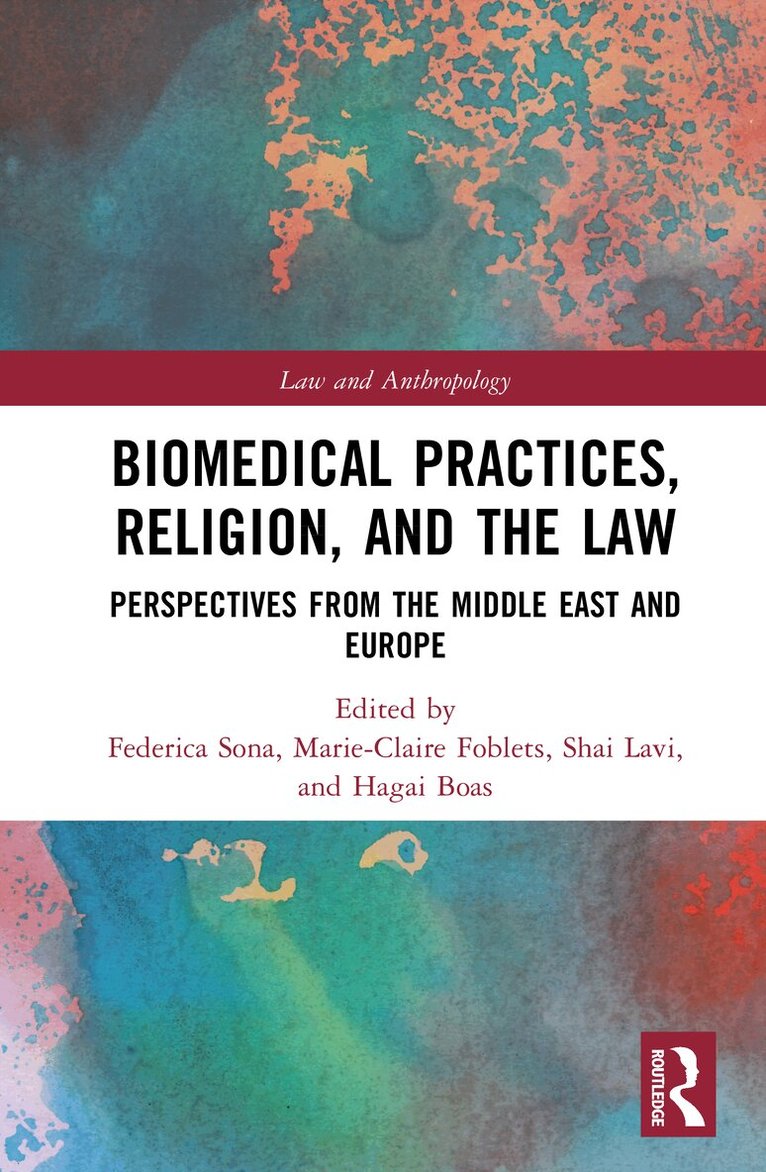
Biomedical Practices, Religion, and the Law
Perspectives from the Middle East and Europe
Inbunden, Engelska, 2026
2 258 kr
Kommande
This book deepens our understanding of the social, legal, and anthropological issues that arise from the global proliferation of advanced biomedical technologies and how they enable people to use their bodies to express individual and collective identities. The volume approaches these issues through the lens of three contentious and ethically fraught biomedical techniques: gender surgery; medically assisted reproduction; and organ donation and transplantation. It combines anthropological understandings of the body as a site for claiming and safeguarding identities with perspectives from legal and medical experts to address the bioethical concerns associated with these technologies and to challenge assumptions regarding the universality of normative principles such as personal autonomy, consent, and justice. The two regions that are the focus of this volume – the Middle East and Europe – allow the authors to explore cross-cultural comparisons and what they can tell us about how the symbolic dimension of the body, as a locus of identity, impacts medical practices. This is becoming especially relevant now, as contact among widely diverse cultures and communities is becoming ever more frequent and intense due to increasing migration, rampant urbanization, and internal displacement. The book will be of interest to researchers, academics, and policymakers working in the areas of Legal Anthropology, Comparative Law, Law and Religion, Medical Anthropology, Medical Law and Ethics, and Sociology of Medicine.
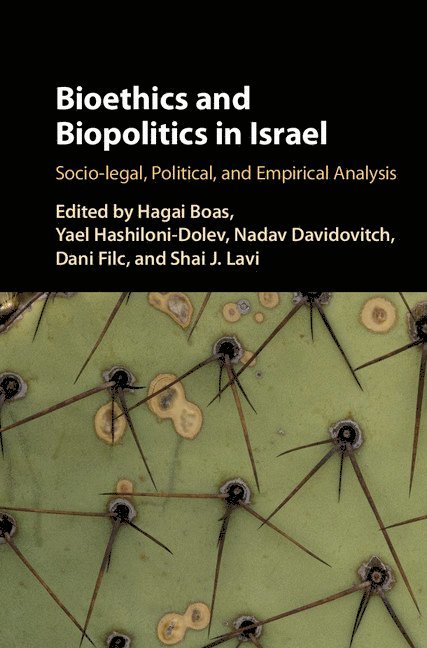
Bioethics and Biopolitics in Israel
Socio-legal, Political, and Empirical Analysis
Inbunden, Engelska, 2018
1 218 kr
Skickas inom 7-10 vardagar
Although the 'Israeli case' of bioethics has been well documented, this book offers a novel understanding of Israeli bioethics that is a milestone in the comparative literature of bioethics. Bringing together a range of experts, the book's interdisciplinary structure employs a contemporary, sociopolitical-oriented approach to bioethics issues, with an emphasis on empirical analysis, that will appeal not only to scholars of bioethics, but also to students of law, medicine, humanities, and social sciences around the world. Its focus on the development of bioethics in Israel makes it especially relevant to scholars of Israeli society - both in and out of Israel - as well as medical practitioners and health policymakers in Israel.
Bioethics and Biopolitics in Israel
Socio-legal, Political, and Empirical Analysis
Häftad, Engelska, 2019
428 kr
Skickas inom 7-10 vardagar
Although the 'Israeli case' of bioethics has been well documented, this book offers a novel understanding of Israeli bioethics that is a milestone in the comparative literature of bioethics. Bringing together a range of experts, the book's interdisciplinary structure employs a contemporary, sociopolitical-oriented approach to bioethics issues, with an emphasis on empirical analysis, that will appeal not only to scholars of bioethics, but also to students of law, medicine, humanities, and social sciences around the world. Its focus on the development of bioethics in Israel makes it especially relevant to scholars of Israeli society - both in and out of Israel - as well as medical practitioners and health policymakers in Israel.