Hai Li - Böcker
Visar alla böcker från författaren Hai Li. Handla med fri frakt och snabb leverans.
3 produkter
3 produkter
1 551 kr
Skickas inom 10-15 vardagar
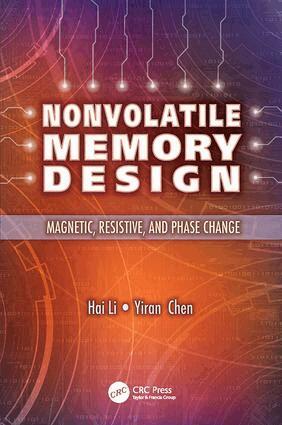
The manufacture of flash memory, which is the dominant nonvolatile memory technology, is facing severe technical barriers. So much so, that some emerging technologies have been proposed as alternatives to flash memory in the nano-regime. Nonvolatile Memory Design: Magnetic, Resistive, and Phase Changing introduces three promising candidates: phase-change memory, magnetic random access memory, and resistive random access memory. The text illustrates the fundamental storage mechanism of these technologies and examines their differences from flash memory techniques. Based on the latest advances, the authors discuss key design methodologies as well as the various functions and capabilities of the three nonvolatile memory technologies.
3 681 kr
Skickas inom 10-15 vardagar
The manufacture of flash memory, which is the dominant nonvolatile memory technology, is facing severe technical barriers. So much so, that some emerging technologies have been proposed as alternatives to flash memory in the nano-regime. Nonvolatile Memory Design: Magnetic, Resistive, and Phase Changing introduces three promising candidates: phase-change memory, magnetic random access memory, and resistive random access memory. The text illustrates the fundamental storage mechanism of these technologies and examines their differences from flash memory techniques. Based on the latest advances, the authors discuss key design methodologies as well as the various functions and capabilities of the three nonvolatile memory technologies.
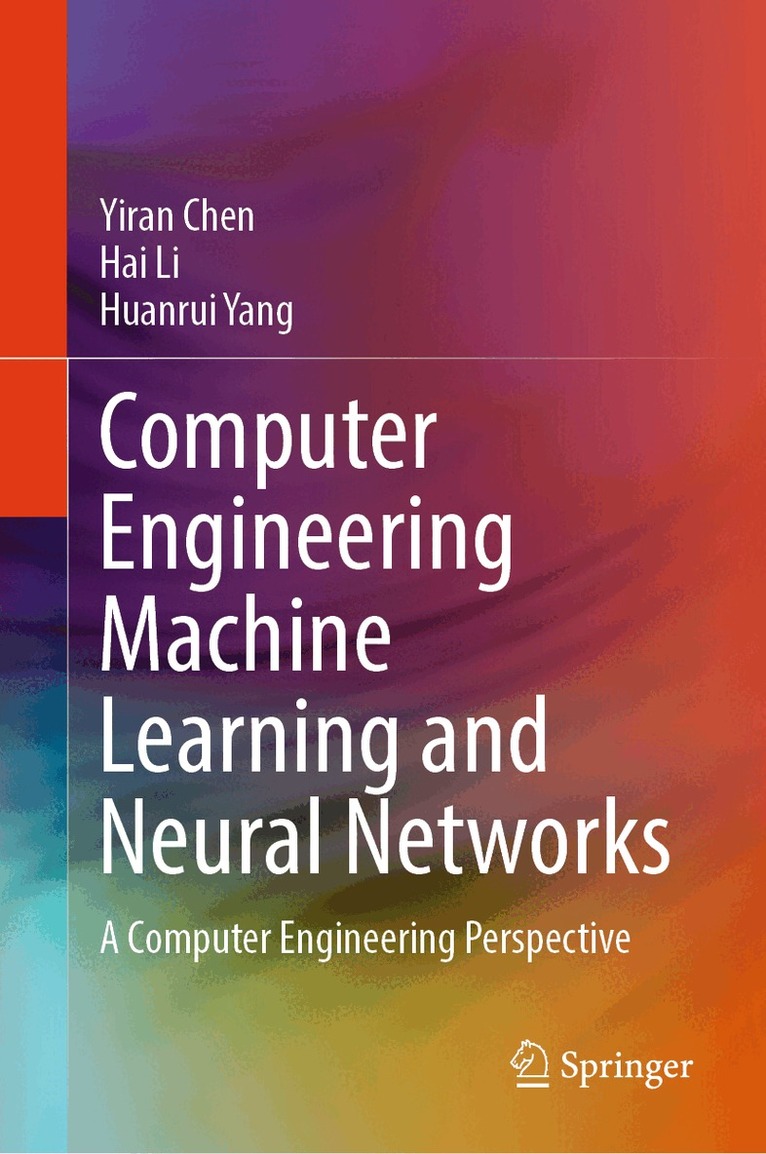
Computer Engineering Machine Learning and Neural Networks
A Computer Engineering Perspective
Inbunden, Engelska, 2026
1 133 kr
Kommande
This is the first textbook focusing on practicality of machine learning (ML) and deep neural networks (DNN), by introducing methods that enable engineering applications of ML and DNN models. The authors describe many methodologies that are widely used in designing, training, and deploying of these models and discuss their applicability under various contexts. Coverage begins with the basic knowledge of machine learning and deep neural networks and their applications in solving practical engineering problems. It then proceeds through a series of computer engineering methods commonly used in developing machine learning and deep neural network models. The book also explains how to improve the training and inference performance in terms of model accuracy, size, runtime, etc. by considering various requirements and availability of data in the applications. Techniques that are widely adopted in both industry and academia are discussed. Tutorials and projects designed to practice the introduced techniques are provided using popular development frameworks of machine learning. Emphasizes practice over theoretical foundations, making content accessible to engineering students and engineers;Includes in-depth discussion of popular DNN models and their applications;Discusses engineering methods and tricks widely adopted in practice for using ML and DNN to solve engineering problems.