Haibo Xie – författare
1 269 kr
Skickas inom 10-15 vardagar
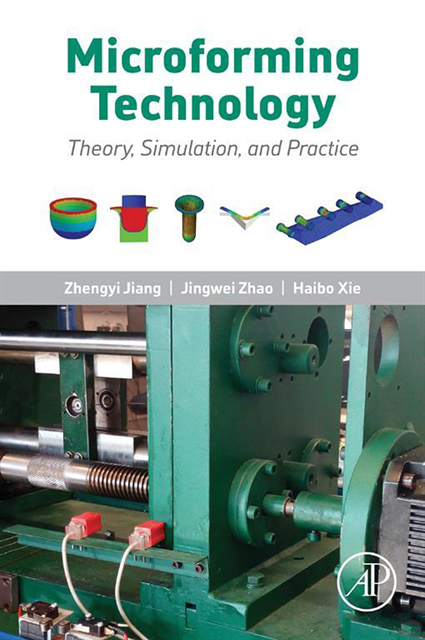
Microforming Technology: Theory, Simulation and Practice addresses all aspects of micromanufacturing technology, presenting detailed technical information and the latest research developments.
The book covers fundamentals, theory, simulation models, equipment and tools design, practical micromanufacturing procedures, and micromanufacturing-related supporting systems, such as laser heating system, hydraulic system and quality evaluation systems. Newly developed technology, including micro wedge rolling, micro flexible rolling and micro hydromechanical deep drawing, as well as traditional methods, such as micro deep drawing, micro bending and micro ultrathin strip rolling, are discussed.
This will be a highly valuable resource for those involved in the use, study and design of micro products and micromanufacturing technologies, including engineers, scientists, academics and graduate students.
Provides an accessible introduction to the fundamental theories of microforming, size effects, and scaling laws Includes explanations of the procedures, equipment, and tools for all common microforming technologies Explains the numerical modeling procedures for 7 different types of microforming1 632 kr
Läs direkt efter köp
1 590 kr
Skickas inom 5-8 vardagar
1 801 kr
Läs direkt efter köp
Sets the stage for the development of sustainable, environmentally friendly fuels, chemicals, and materials
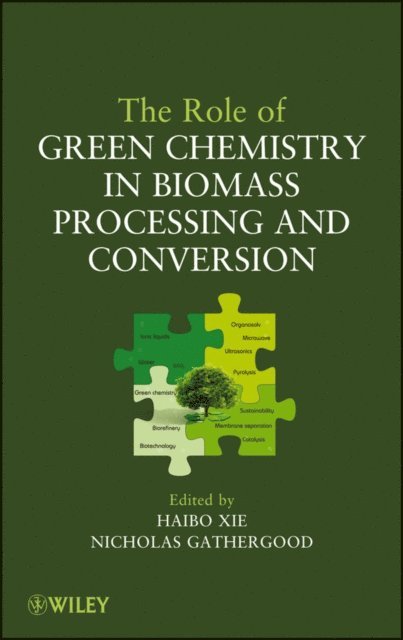
Taking millions of years to form, fossil fuels are nonrenewable resources; it is estimated that they will be depleted by the end of this century. Moreover, the production and use of fossil fuels have resulted in considerable environmental harm. The generation of environmentally friendly energy from renewable sources such as biomass is therefore essential. This book focuses on the integration of green chemistry concepts into biomass processes and conversion in order to take full advantage of the potential of biomass to replace nonsustainable resources and meet global needs for fuel as well as other chemicals and materials.
The Role of Green Chemistry in Biomass Processing and Conversion features contributions from leading experts from Asia, Europe, and North America. Focusing on lignocellulosic biomass, the most abundant biomass resource, the book begins with a general introduction to biomass and biorefineries and then provides an update on the latest advances in green chemistry that support biomass processing and conversion. Next, the authors describe current and emerging biomass processing and conversion techniques that use green chemistry technologies, including:
Green solvents such as ionic liquids, supercritical CO2, and water Sustainable energy sources such as microwave irradiation and sonification Green catalytic technologies Advanced membrane separation technologiesThe last chapter of the book explores the ecotoxicological and environmental effects of converting and using fuels, chemicals, and materials from biomass.
Recommended for professionals and students in chemical engineering, green chemistry, and energy and fuels, The Role of Green Chemistry in Biomass Processing and Conversion sets a strong foundation for the development of a competitive and sustainable bioeconomy.
This monograph includes a Foreword by James Clark (University of York, UK).
1 817 kr
Läs direkt efter köp
Sets the stage for the development of sustainable, environmentally friendly fuels, chemicals, and materials
Taking millions of years to form, fossil fuels are nonrenewable resources; it is estimated that they will be depleted by the end of this century. Moreover, the production and use of fossil fuels have resulted in considerable environmental harm. The generation of environmentally friendly energy from renewable sources such as biomass is therefore essential. This book focuses on the integration of green chemistry concepts into biomass processes and conversion in order to take full advantage of the potential of biomass to replace nonsustainable resources and meet global needs for fuel as well as other chemicals and materials.
The Role of Green Chemistry in Biomass Processing and Conversion features contributions from leading experts from Asia, Europe, and North America. Focusing on lignocellulosic biomass, the most abundant biomass resource, the book begins with a general introduction to biomass and biorefineries and then provides an update on the latest advances in green chemistry that support biomass processing and conversion. Next, the authors describe current and emerging biomass processing and conversion techniques that use green chemistry technologies, including:
Green solvents such as ionic liquids, supercritical CO2, and water Sustainable energy sources such as microwave irradiation and sonification Green catalytic technologies Advanced membrane separation technologiesThe last chapter of the book explores the ecotoxicological and environmental effects of converting and using fuels, chemicals, and materials from biomass.
Recommended for professionals and students in chemical engineering, green chemistry, and energy and fuels, The Role of Green Chemistry in Biomass Processing and Conversion sets a strong foundation for the development of a competitive and sustainable bioeconomy.
This monograph includes a Foreword by James Clark (University of York, UK).