Hailong Liu - Böcker
Visar alla böcker från författaren Hailong Liu. Handla med fri frakt och snabb leverans.
3 produkter
3 produkter
1 773 kr
Skickas inom 10-15 vardagar
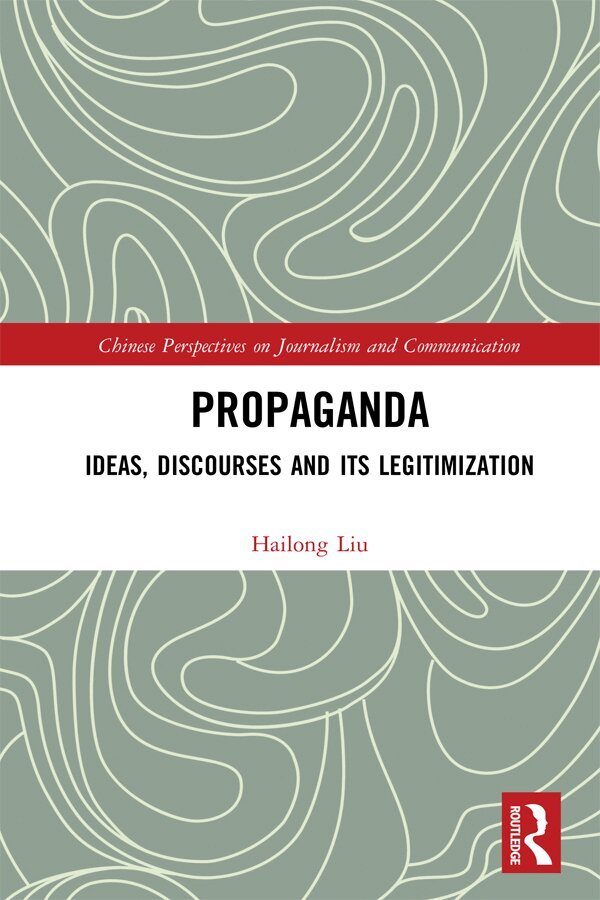
Propaganda is subjective information primarily used to influence an audience and further a political agenda. In China, it has a long history but has been most effective in modern society. What exactly is propaganda? Why does it exist and why does the public tolerate it? The book answers these questions by tracing back to the emergence and development of integrated propaganda and scientific propaganda. On this basis it focuses on the emergence of propaganda concept in China, the establishment of Kuomintang and the Communist Party of China’s propaganda concept, intellectuals and propaganda, the debate on the propaganda concept in China after 1949 as well as the emergence of Propaganda 3.0 that coordinates integrated propaganda and scientific propaganda.Setting propaganda in the framework of modernity, the book explains how various groups have legitimatized propaganda since the 20th century. From a reasonable and neutral standpoint, the author describes the confrontation among various propaganda concepts and discourses, displaying a panorama of the mutual conflicts between nations and individuals, control and freedom, ideas and bodies. Not only will scholars and students studying journalism and communication find this book interesting, but professionals working in journalism, advertising, public relations and publicity will also find it engaging and enlightening.
618 kr
Skickas inom 10-15 vardagar
Propaganda is subjective information primarily used to influence an audience and further a political agenda. In China, it has a long history but has been most effective in modern society. What exactly is propaganda? Why does it exist and why does the public tolerate it? The book answers these questions by tracing back to the emergence and development of integrated propaganda and scientific propaganda. On this basis it focuses on the emergence of propaganda concept in China, the establishment of Kuomintang and the Communist Party of China’s propaganda concept, intellectuals and propaganda, the debate on the propaganda concept in China after 1949 as well as the emergence of Propaganda 3.0 that coordinates integrated propaganda and scientific propaganda.Setting propaganda in the framework of modernity, the book explains how various groups have legitimatized propaganda since the 20th century. From a reasonable and neutral standpoint, the author describes the confrontation among various propaganda concepts and discourses, displaying a panorama of the mutual conflicts between nations and individuals, control and freedom, ideas and bodies. Not only will scholars and students studying journalism and communication find this book interesting, but professionals working in journalism, advertising, public relations and publicity will also find it engaging and enlightening.
374 kr
Tillfälligt slut
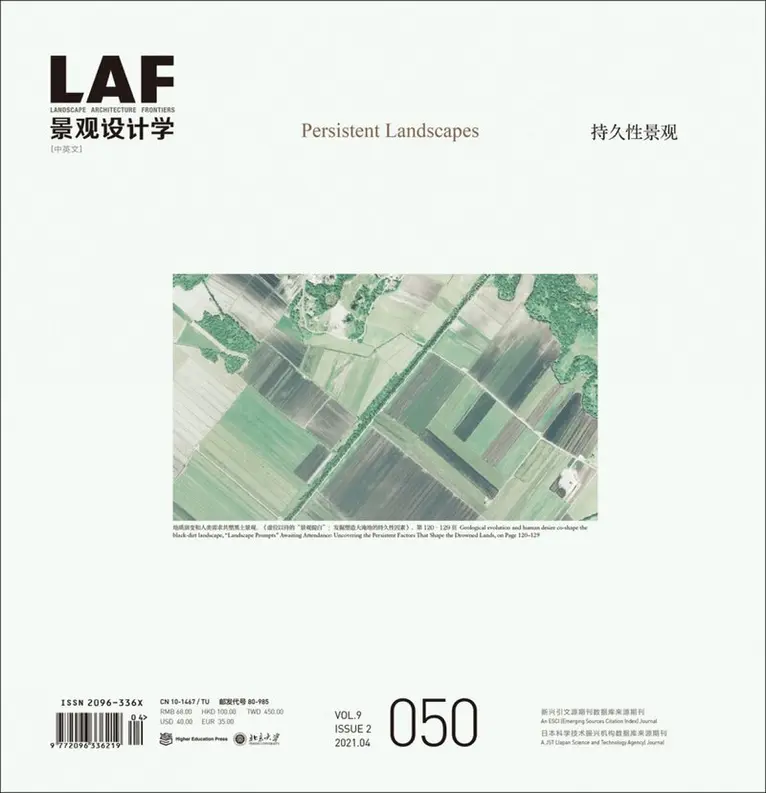
Landscape is a time-space compound shaped by human activities on natural processes; the persistence of a landscape supports its continuity and stability over time, as well as the stable variety of physical environment. For remaining landscapes, the persistence means the stability of natural ecosystems and the harmony of cultural-social contexts. The former emphasises the ability to maintain the dynamism and stability of the landscape system against external disturbances; the latter one, by regarding the landscape as a man-land composite ecosystem, refers to the ability to maintain localities and cultural legacy in response to changes of natural and social environments. For emerging landscapes, persistence manifests the ability to interact and integrate with and adapt to the remaining landscapes.The rapid urbanisation and population growth have caused tremendous changes in urban and rural landscapes worldwide, increasingly undermining the persistence of landscapes: traditional rural landscapes and urban historic neighbourhoods have been replaced with massive industrial scenes; the lack of innovative design ideas, the stagnation of theoretical study, and the limitation of aesthetic awareness have resulted in the neglect of critical ecological, social, and aesthetic values of such heritages, the damage of ecological security patterns, and the disappear of people’s collective memories about vernacular landscapes. Efforts addressing the pressing issues, e.g. the destruction of natural environment, the loss of landscape values, and the culture shock, are expected.Text in English and Chinese.