Haiyan Bai – författare
Visar alla böcker från författaren Haiyan Bai. Handla med fri frakt och snabb leverans.
2 produkter
2 produkter
Inbunden, Engelska, 2015
750 kr
Skickas inom 5-8 vardagar
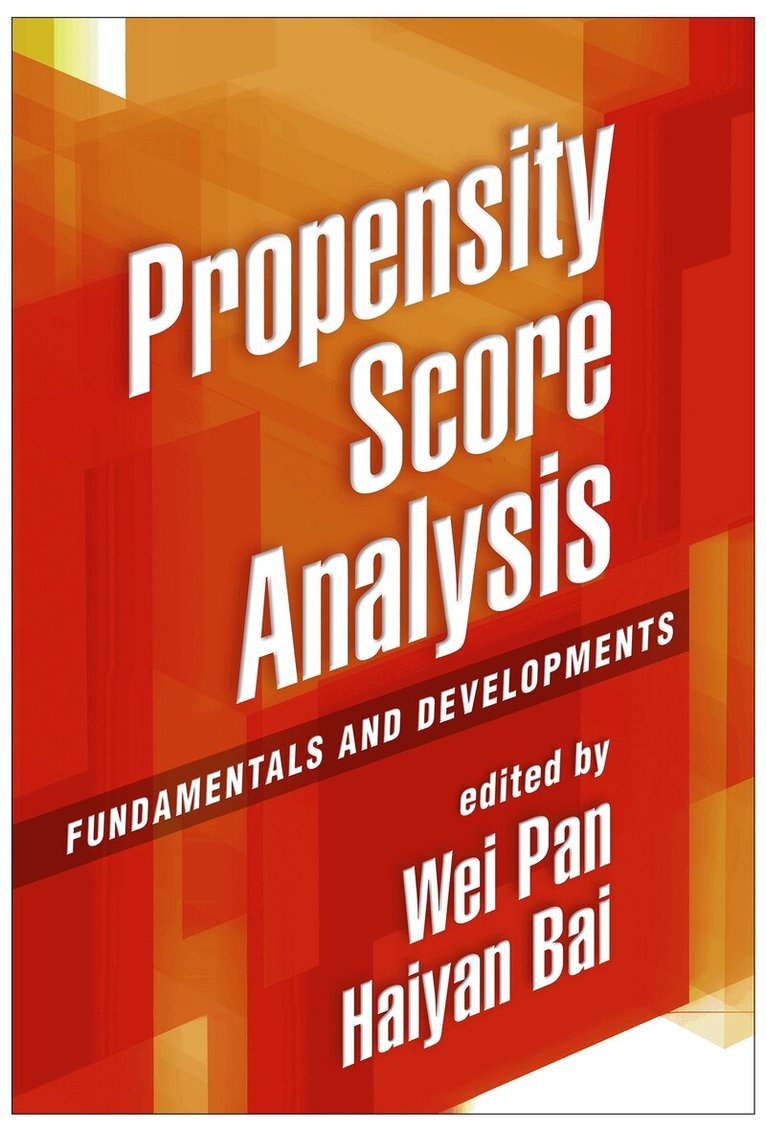
This book is designed to help researchers better design and analyze observational data from quasi-experimental studies and improve the validity of research on causal claims. It provides clear guidance on the use of different propensity score analysis (PSA) methods, from the fundamentals to complex, cutting-edge techniques. Experts in the field introduce underlying concepts and current issues and review relevant software programs for PSA. The book addresses the steps in propensity score estimation, including the use of generalized boosted models, how to identify which matching methods work best with specific types of data, and the evaluation of balance results on key background covariates after matching. Also covered are applications of PSA with complex data, working with missing data, controlling for unobserved confounding, and the extension of PSA to prognostic score analysis for causal inference. User-friendly features include statistical program codes and application examples. Data and software code for the examples are available at the companion website (www.guilford.com/pan-materials).
540 kr
Skickas
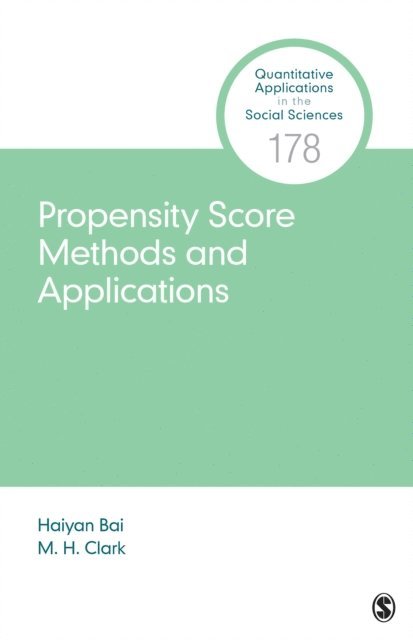
A concise, introductory text, Propensity Score Methods and Applications describes propensity score methods (PSM) and how they are used to balance the distributions of observed covariates between treatment conditions as a means to reduce selection bias. This new QASS title specifically focuses on the procedures of implementing PSM for research in social sciences, instead of merely demonstrating the effectiveness of the method. Using succinct and approachable language to introduce the basic concepts of PSM, authors Haiyan Bai and M. H. Clark present basic concepts, assumptions, procedures, available software packages, and step-by-step examples for implementing PSM using real-world data, with exercises at the end of each chapter allowing readers to replicate examples on their own.