Halaevalu F.Ofahengaue Vakalahi – författare
Visar alla böcker från författaren Halaevalu F.Ofahengaue Vakalahi. Handla med fri frakt och snabb leverans.
3 produkter
3 produkter
Inbunden, Engelska, 2009
537 kr
Skickas inom 5-8 vardagar
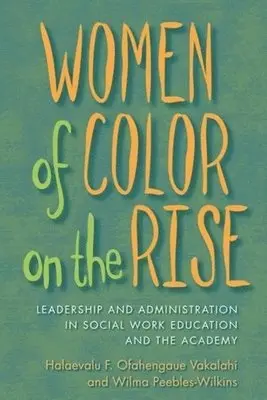
Social workers have long fought to bring diversity, inclusiveness, and economic justice to the communities in which they serve, but for decades the internal practices of the profession have contradicted its public persona, perpetuating myths and misconceptions about women of color and their ability to teach and lead. In these essays African American, Asian American, Latina, Pacific Islander, and Native American women share their experiences working within the field of social work, describing their rise to leadership and their efforts to maintain authority. Emphasizing themes of social change and justice, these narratives make visible the unique challenges faced by leaders and administrators of color, an issue that continues to affect women within the field today. Trading on decades of experience, Halaevalu F. O. Vakalahi and Wilma Peebles-Wilkins choose essays that specifically examine concerns and techniques facilitating the development of women of color as leaders. Their lessons inform future research, policy, and practice and are sure to enhance scholarship on diversity within the profession.There is even a chapter written by a university vice president, who focuses entirely on working within the academy. Altogether, these contributors prove that culturally based paradigms of leadership, historically devalued and suppressed, are crucial to women on the rise.
Inbunden, Engelska, 2014
1 103 kr
Skickas inom 10-15 vardagar
The collective, inclusive, and intersectional framework used in this book speaks to the significance of understanding aging across diverse cultures from multiple perspectives, but still as a shared human experience. The underlying message of the book is that although we are unique and different in our aging processes, we are ultimately connected through this physical, mental and spiritual experience of aging. Thus, regardless of whether we are service providers, service recipients, educators or merely fellow human beings, it is important that we approach the aging experience through a collective lens for discovering and sharing resources as we age; honoring the past while simultaneously accepting that the future is here. A few select examples of key findings from this collaborative work are as follows. First, despite progress in the field, certain issues remain to be addressed including the challenges of racism and sexism, mistreatment, the digital divide, poverty, and other social and economic crises in urban and rural communities as they relate to our aging population. Second, the need for sustaining a sense of independence among the aged and interdependence among supportive systems is warranted. Third, our elders continue to benefit from culturally competent services community-based health interventions and social services that addresses normative and emerging challenges for them. Fourth, spirituality in both indigenous and contemporary perspectives remains important for our elders’ development and quality of life.
Häftad, Engelska, 2016
1 071 kr
Skickas inom 10-15 vardagar
The collective, inclusive, and intersectional framework used in this book speaks to the significance of understanding aging across diverse cultures from multiple perspectives, but still as a shared human experience. The underlying message of the book is that although we are unique and different in our aging processes, we are ultimately connected through this physical, mental and spiritual experience of aging. Thus, regardless of whether we are service providers, service recipients, educators or merely fellow human beings, it is important that we approach the aging experience through a collective lens for discovering and sharing resources as we age; honoring the past while simultaneously accepting that the future is here. A few select examples of key findings from this collaborative work are as follows. First, despite progress in the field, certain issues remain to be addressed including the challenges of racism and sexism, mistreatment, the digital divide, poverty, and other social and economic crises in urban and rural communities as they relate to our aging population. Second, the need for sustaining a sense of independence among the aged and interdependence among supportive systems is warranted. Third, our elders continue to benefit from culturally competent services community-based health interventions and social services that addresses normative and emerging challenges for them. Fourth, spirituality in both indigenous and contemporary perspectives remains important for our elders’ development and quality of life.