Haley De Korne - Böcker
Visar alla böcker från författaren Haley De Korne. Handla med fri frakt och snabb leverans.
4 produkter
4 produkter
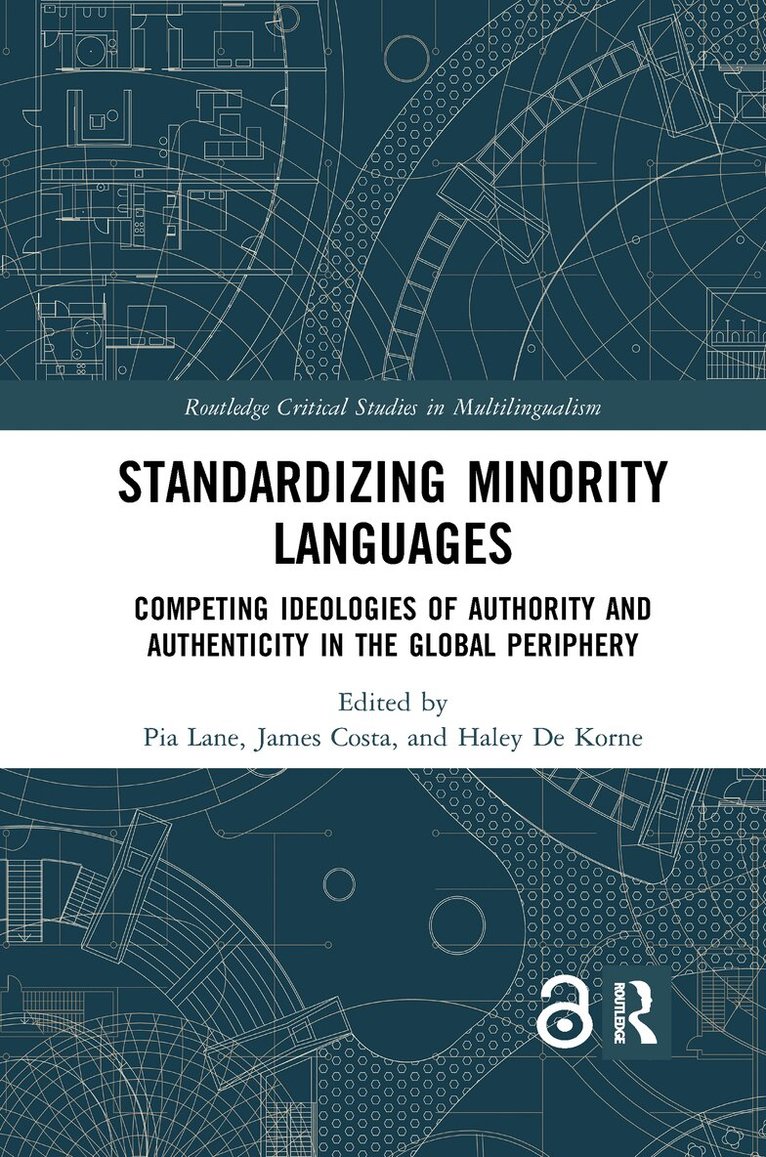
Standardizing Minority Languages
Competing Ideologies of Authority and Authenticity in the Global Periphery
Häftad, Engelska, 2020
650 kr
Skickas inom 10-15 vardagar
The Open Access version of this book, available at https://www.taylorfrancis.com/books/9781138125124, has been made available under a Creative Commons Attribution-Non Commercial-No Derivatives 4.0 license.This volume addresses a crucial, yet largely unaddressed dimension of minority language standardization, namely how social actors engage with, support, negotiate, resist and even reject such processes. The focus is on social actors rather than language as a means for analysing the complexity and tensions inherent in contemporary standardization processes. By considering the perspectives and actions of people who participate in or are affected by minority language politics, the contributors aim to provide a comparative and nuanced analysis of the complexity and tensions inherent in minority language standardisation processes. Echoing Fasold (1984), this involves a shift in focus from a sociolinguistics of language to a sociolinguistics of people.The book addresses tensions that are born of the renewed or continued need to standardize ‘language’ in the early 21st century across the world. It proposes to go beyond the traditional macro/micro dichotomy by foregrounding the role of actors as they position themselves as users of standard forms of language, oral or written, across sociolinguistic scales. Language policy processes can be seen as practices and ideologies in action and this volume therefore investigates how social actors in a wide range of geographical settings embrace, contribute to, resist and also reject (aspects of) minority language standardization.
Standardizing Minority Languages
Competing Ideologies of Authority and Authenticity in the Global Periphery
Inbunden, Engelska, 2017
2 361 kr
Skickas inom 10-15 vardagar
The Open Access version of this book, available at https://www.taylorfrancis.com/books/9781138125124, has been made available under a Creative Commons Attribution-Non Commercial-No Derivatives 4.0 license.This volume addresses a crucial, yet largely unaddressed dimension of minority language standardization, namely how social actors engage with, support, negotiate, resist and even reject such processes. The focus is on social actors rather than language as a means for analysing the complexity and tensions inherent in contemporary standardization processes. By considering the perspectives and actions of people who participate in or are affected by minority language politics, the contributors aim to provide a comparative and nuanced analysis of the complexity and tensions inherent in minority language standardisation processes. Echoing Fasold (1984), this involves a shift in focus from a sociolinguistics of language to a sociolinguistics of people.The book addresses tensions that are born of the renewed or continued need to standardize ‘language’ in the early 21st century across the world. It proposes to go beyond the traditional macro/micro dichotomy by foregrounding the role of actors as they position themselves as users of standard forms of language, oral or written, across sociolinguistic scales. Language policy processes can be seen as practices and ideologies in action and this volume therefore investigates how social actors in a wide range of geographical settings embrace, contribute to, resist and also reject (aspects of) minority language standardization.
1 666 kr
Skickas inom 5-8 vardagar
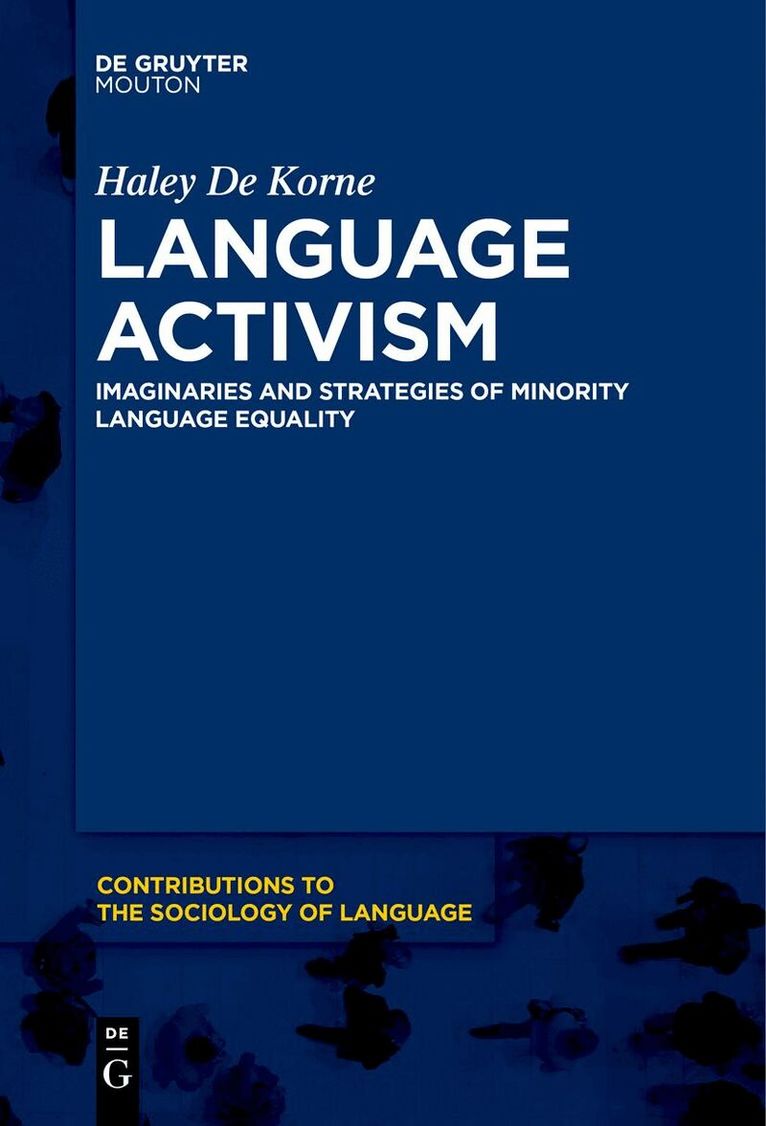
While top-down policies and declarations have yet to establish equal status and opportunities for speakers of all languages in practice, activists and advocates at local levels are playing an increasingly significant role in the creation of new social imaginaries and practices in multilingual contexts. This volume describes how social actors across multiple domains contribute to the elusive goal of linguistic equality or justice through their language activism practices. Through an ethnographic account of Indigenous Isthmus Zapotec language activism in Oaxaca, Mexico, this study illuminates the (sometimes conflicting) imaginaries of what positive social change is and how it should be achieved, and the repertoire of strategies through which these imaginaries are being pursued. Ethnographic and action research conducted from 2013-2018 in the multilingual Isthmus of Tehuantepec brings to light the experiences of educators, students, writers, scholars and diverse cultural activists whose aspirations and strategies of social change are significant in shaping the future language ecology. Their repertoire of strategies may inform and encourage language activists, scholars, and educators working for change in other contexts of linguistic diversity and inequality.
Del 114 - Contributions to the Sociology of Language [CSL]
Language Activism
Imaginaries and Strategies of Minority Language Equality
Häftad, Engelska, 2023
274 kr
Skickas inom 5-8 vardagar
While top-down policies and declarations have yet to establish equal status and opportunities for speakers of all languages in practice, activists and advocates at local levels are playing an increasingly significant role in the creation of new social imaginaries and practices in multilingual contexts. This volume describes how social actors across multiple domains contribute to the elusive goal of linguistic equality or justice through their language activism practices. Through an ethnographic account of Indigenous Isthmus Zapotec language activism in Oaxaca, Mexico, this study illuminates the (sometimes conflicting) imaginaries of what positive social change is and how it should be achieved, and the repertoire of strategies through which these imaginaries are being pursued. Ethnographic and action research conducted from 2013-2018 in the multilingual Isthmus of Tehuantepec brings to light the experiences of educators, students, writers, scholars and diverse cultural activists whose aspirations and strategies of social change are significant in shaping the future language ecology. Their repertoire of strategies may inform and encourage language activists, scholars, and educators working for change in other contexts of linguistic diversity and inequality.