E-bok
PDF, Engelska, 19971 499 kr
Läs direkt efter köp
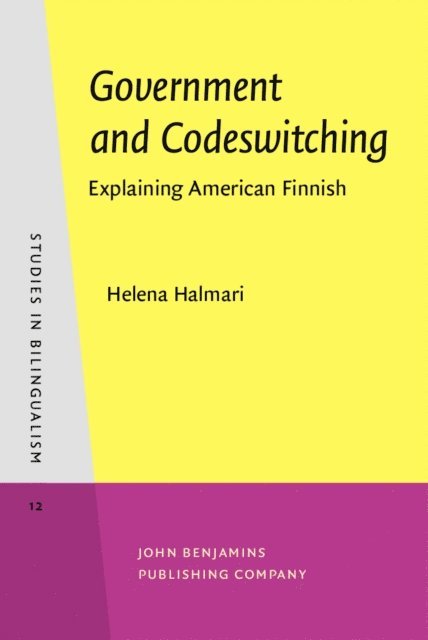
Bilingual codeswitching is a complex, multifaceted phenomenon, which calls for explanations on several different linguistic levels. This volume focuses on one such level: the level of syntax. An explanation for the regularities and consistencies in the codeswitching patterns of American Finns in their spontaneous conversations is sought for in the Universal Grammar -based principle of government as realized in case-assignment and agreement relations. A bulk of the Finnish-English intrasentential data get their explanation on the structural, hierarchical level, but this level of syntax is found to be interestingly intertwined with sociolinguistic, psycholinguistic, and discourse levels, which all contribute to variation in codeswitching patterns. The proposed principle of government is seen as one important explanation in typologically certain kinds of language pairs such as Finnish and English; however, this principle is not treated as a monolithic constraint, but rather as the leading tendency which is occasionally overridden by other than syntactic forces.The volume is intended as a complement - not as a contradiction - to earlier explanations of codeswitching phenomena. Its main message is: while all linguistic levels contribute to the construction of bilingual speech, the importance of syntax can not be ignored.