Halstead Paul Halstead – författare
Visar alla böcker från författaren . Handla med fri frakt och snabb leverans.
3 produkter
3 produkter
E-bok
Engelska, 2017366 kr
Läs direkt efter köp
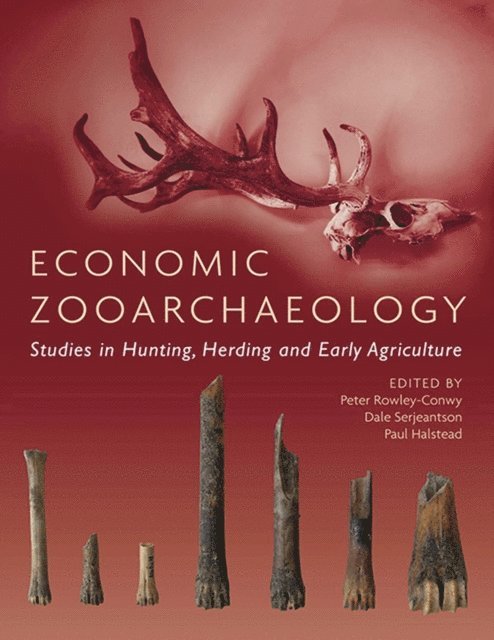
Economic archaeology is the study of how past peoples exploited animals and plants, using as evidence the remains of those animals and plants. The animal side is usually termed zooarchaeology, the plant side archaeobotany. What distinguishes them from other studies of ancient animals and plants is that their ultimate aim is to find out about human behaviour – the animal and plant remains are a means to this end. The 33 papers present a wide array of topics covering many areas of archaeological interest. Aspects of method and theory, animal bone identification, human palaeopathology, prehistoric animal utilisation in South America, and the study of dog cemeteries are covered. The long-running controversy over the milking of animals and the use of dairy products by humans is discussed as is the ecological impact of hunting by farmers, with studies from Serbia and Syria. For Britain, coverage extends from Mesolithic Star Carr, via the origins of agriculture and the farmers of Lismore Fields, through considerations of the Neolithic and Bronze Age. Outside Britain, papers discuss Neolithic subsistence in Cyprus and Croatia, Iron Age society in Spain, Medieval and post-medieval animal utilisation in northern Russia, and the claimed finding of a modern red deer skeleton in Egypt’s Eastern Desert. In exploring these themes, this volume celebrates the life and work of Tony Legge (zoo)archaeologist and teacher.
E-bok
PDF, Engelska, 2017367 kr
Läs direkt efter köp
Economic archaeology is the study of how past peoples exploited animals and plants, using as evidence the remains of those animals and plants. The animal side is usually termed zooarchaeology, the plant side archaeobotany. What distinguishes them from other studies of ancient animals and plants is that their ultimate aim is to find out about human behaviour – the animal and plant remains are a means to this end. The 33 papers present a wide array of topics covering many areas of archaeological interest. Aspects of method and theory, animal bone identification, human palaeopathology, prehistoric animal utilisation in South America, and the study of dog cemeteries are covered. The long-running controversy over the milking of animals and the use of dairy products by humans is discussed as is the ecological impact of hunting by farmers, with studies from Serbia and Syria. For Britain, coverage extends from Mesolithic Star Carr, via the origins of agriculture and the farmers of Lismore Fields, through considerations of the Neolithic and Bronze Age. Outside Britain, papers discuss Neolithic subsistence in Cyprus and Croatia, Iron Age society in Spain, Medieval and post-medieval animal utilisation in northern Russia, and the claimed finding of a modern red deer skeleton in Egypt’s Eastern Desert. In exploring these themes, this volume celebrates the life and work of Tony Legge (zoo)archaeologist and teacher.
E-bok
PDF, Engelska, 2016328 kr
Läs direkt efter köp
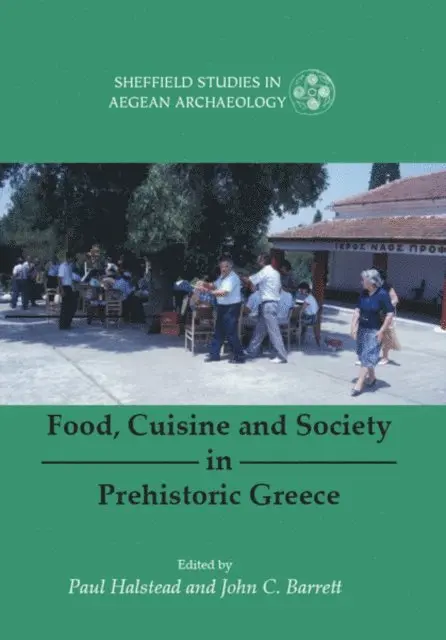
Food and drink, along with the material culture involved in their consumption, can signify a variety of social distinctions, identities and values. Thus, in Early Minoan Knossos, tableware was used to emphasize the difference between the host and the guests, and at Mycenaean Pylos the status of banqueters was declared as much by the places assigned to them as by the quality of the vessles form which they ate and drank. The ten contributions to this volume highlight the extraordinary opportunity for multi-disciplinary research in this area.