Hamid Krim – författare
Visar alla böcker från författaren Hamid Krim. Handla med fri frakt och snabb leverans.
5 produkter
5 produkter
Inbunden, Engelska, 2006
543 kr
Skickas inom 10-15 vardagar
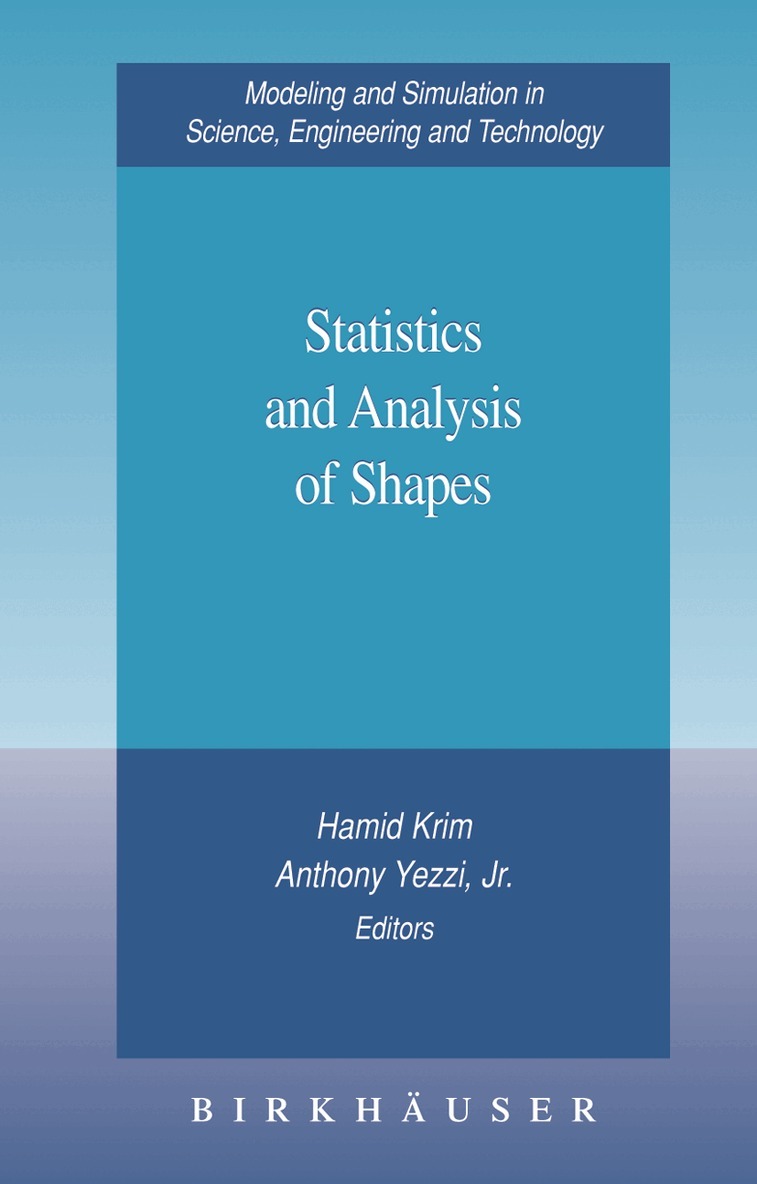
Shapes have been among man’s fascinations from thestoneage to thespace age. The scienti?c study of shapes may indeed be traced back to D’Arcy Thompson in his pioneering book On Growth and Form where shape was shown to be dependent on functionality [6]. Numerous de?nitions of a notion of a shape have been proposed in the past, each and every one highlighting aspects relevant to a particular application of interest. The advent of digital imagery, together with the ubiquitous exploitation of its characteristics in a variety of applications, have triggered a renewed and keen interest in further re?ning and possibly unifying the notion ofshape. The present contributed book is, to a large extent, motivated by this upsurge in activity and by the need for an update on recent accomplishments and trends. Theresearchactivityinshapeanalysisisdistinguishedbytwomainschools of thought: — The?rstapproximatesshapesbya?nite-dimensionalrepresentation(a set of landmarks), which is then subjected to various transformations to account for variability and to subsequently derive models. — The second, on the other hand, interprets shapes as closed contours in an in?nite-dimensional space, which, when subjected to transformations, morph into other shapes, thereby yielding a notion of similarity in the space of shapes. 1 Landmark-BasedShapeRepresentation Shapeisaboutscale,orientation,andrelationshipamongtheso-calledchar- teristic points/landmarks of an object-delineating contour. Such information about a data set better de?nes a shape. Equivalently, when such information is taken out of two data sets, the resulting shapes may be compared.
E-bok
PDF, Engelska, 2007712 kr
Läs direkt efter köp
Shapes have been among man’s fascinations from thestoneage to thespace age. The scienti?c study of shapes may indeed be traced back to D’Arcy Thompson in his pioneering book On Growth and Form where shape was shown to be dependent on functionality [6]. Numerous de?nitions of a notion of a shape have been proposed in the past, each and every one highlighting aspects relevant to a particular application of interest. The advent of digital imagery, together with the ubiquitous exploitation of its characteristics in a variety of applications, have triggered a renewed and keen interest in further re?ning and possibly unifying the notion ofshape. The present contributed book is, to a large extent, motivated by this upsurge in activity and by the need for an update on recent accomplishments and trends. Theresearchactivityinshapeanalysisisdistinguishedbytwomainschools of thought: — The?rstapproximatesshapesbya?nite-dimensionalrepresentation(a set of landmarks), which is then subjected to various transformations to account for variability and to subsequently derive models. — The second, on the other hand, interprets shapes as closed contours in an in?nite-dimensional space, which, when subjected to transformations, morph into other shapes, thereby yielding a notion of similarity in the space of shapes. 1 Landmark-BasedShapeRepresentation Shapeisaboutscale,orientation,andrelationshipamongtheso-calledchar- teristic points/landmarks of an object-delineating contour. Such information about a data set better de?nes a shape. Equivalently, when such information is taken out of two data sets, the resulting shapes may be compared.
Inbunden, Engelska, 2015
962 kr
Skickas inom 7-10 vardagar
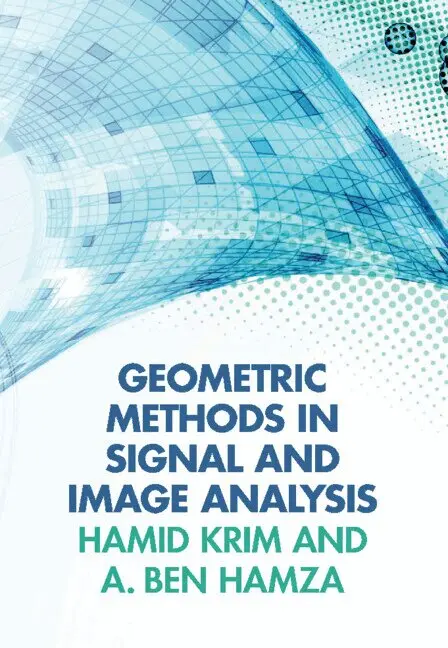
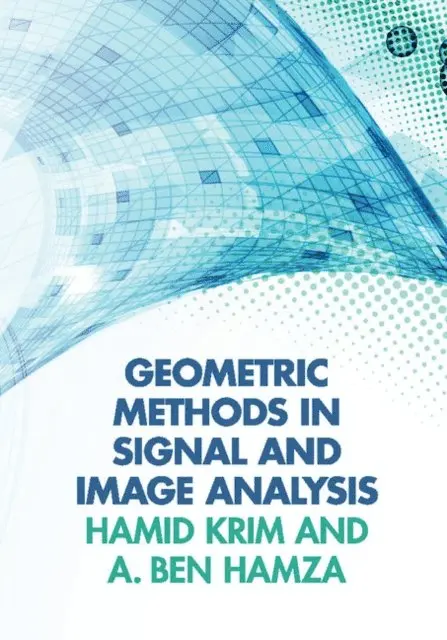
This comprehensive guide offers a new approach for developing and implementing robust computational methodologies that uncover the key geometric and topological information from signals and images. With the help of detailed real-world examples and applications, readers will learn how to solve complex signal and image processing problems in fields ranging from remote sensing to medical imaging, bioinformatics, robotics, security, and defence. With an emphasis on intuitive and application-driven arguments, this text covers not only a range of methods in use today, but also introduces promising new developments for the future, bringing the reader up-to-date with the state of the art in signal and image analysis. Covering basic principles as well as advanced concepts and applications, and with examples and homework exercises, this is an invaluable resource for graduate students, researchers, and industry practitioners in a range of fields including signal and image processing, biomedical engineering, and computer graphics.
E-bok
Engelska, 20151 084 kr
Läs direkt efter köp
This comprehensive guide offers a new approach for developing and implementing robust computational methodologies that uncover the key geometric and topological information from signals and images. With the help of detailed real-world examples and applications, readers will learn how to solve complex signal and image processing problems in fields ranging from remote sensing to medical imaging, bioinformatics, robotics, security, and defence. With an emphasis on intuitive and application-driven arguments, this text covers not only a range of methods in use today, but also introduces promising new developments for the future, bringing the reader up-to-date with the state of the art in signal and image analysis. Covering basic principles as well as advanced concepts and applications, and with examples and homework exercises, this is an invaluable resource for graduate students, researchers, and industry practitioners in a range of fields including signal and image processing, biomedical engineering, and computer graphics.
E-bok
PDF, Engelska, 20151 084 kr
Läs direkt efter köp
This comprehensive guide offers a new approach for developing and implementing robust computational methodologies that uncover the key geometric and topological information from signals and images. With the help of detailed real-world examples and applications, readers will learn how to solve complex signal and image processing problems in fields ranging from remote sensing to medical imaging, bioinformatics, robotics, security, and defence. With an emphasis on intuitive and application-driven arguments, this text covers not only a range of methods in use today, but also introduces promising new developments for the future, bringing the reader up-to-date with the state of the art in signal and image analysis. Covering basic principles as well as advanced concepts and applications, and with examples and homework exercises, this is an invaluable resource for graduate students, researchers, and industry practitioners in a range of fields including signal and image processing, biomedical engineering, and computer graphics.