Hamid R. Parsaei - Böcker
Visar alla böcker från författaren Hamid R. Parsaei. Handla med fri frakt och snabb leverans.
10 produkter
10 produkter
2 098 kr
Skickas inom 10-15 vardagar
The objective of this book is to support readers facing the urgency, challenges, analysis, and methodologies to reconfiguration. It presents a comprehensive framework for reconfiguring manufacturing enterprises and provides a set of valuable conceptual frameworks and methodologies for analyzing, evaluating, and assessing reconfiguration indices.This book offers practical guidance for implementing the Fourth Industrial Revolution (Industry 4.0). It presents open-ended problems pertaining to the concepts covered in the book and provides a new approach for reconfiguring industrial systems. Not only is this book for industrialists and academics, it will also appeal to undergraduate and graduate students studying industrial, mechanical, and manufacturing engineering. Scholars and practitioners in operations management will also find this book of interest.
715 kr
Skickas inom 10-15 vardagar
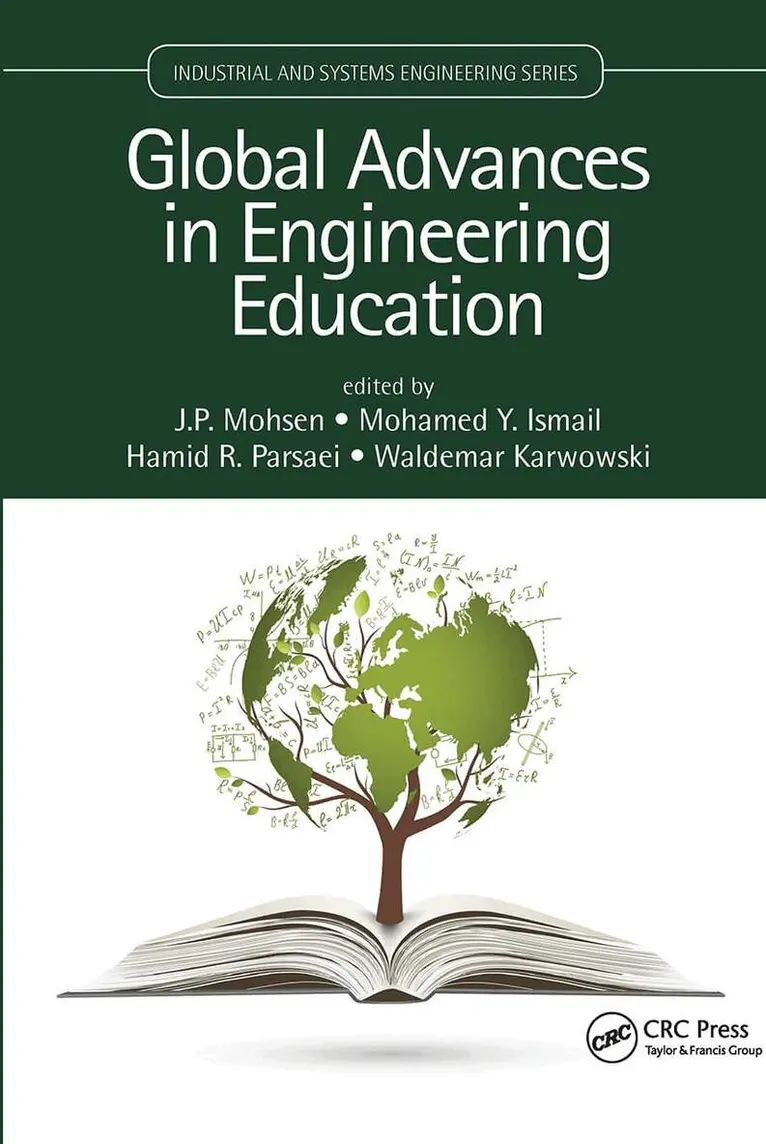
The engineering profession is at a critical juncture that requires reforming engineering education. The supply of engineers is declining whereas the nature of the demand is changing. Formulating a response to these challenges demands the adoption of new and innovative tools and methods for promoting the expansion of the community while supporting these evolving requirements. Initiatives to entice and retain students are being employed to support growth objectives. Modern technologies are reshaping reform efforts. This book discusses the state of affairs in the field of engineering education and presents practical steps for addressing the challenges in order to march toward a brighter future.Features Covers the latest state of engineering education in the North America, Europe, Middle East, North Africa, and Far East AsiaDiscusses advances in science, technology, engineering, and mathematics and community engagementOutlines applications of digital technologies to enhance learningProvides advances in remote and online instructions for engineering educationPresents discussions on innovation, leadership, and ethics
1 584 kr
Skickas inom 10-15 vardagar
The 1980s have witnessed a growth in the field of computer integrated manufacturing systems, as well as computer aided design, computer aided manufacturing, industrial robotics, automated assembly, cellular and modular material handling, computer networking and office automation. These new technologies are generally capital intensive and do not conform to traditional cost structures. The net result is a change in the way costs should be estimated and economic analyses performed. This collection of papers is an attempt to address the various issues associated with non-traditional methods for evaluation of advanced computer integrated technologies. Its coverage includes economic justification methods, models and techniques, costing and investment methods, economic analysis and justification resources and peripheral issues.
2 101 kr
Skickas inom 10-15 vardagar
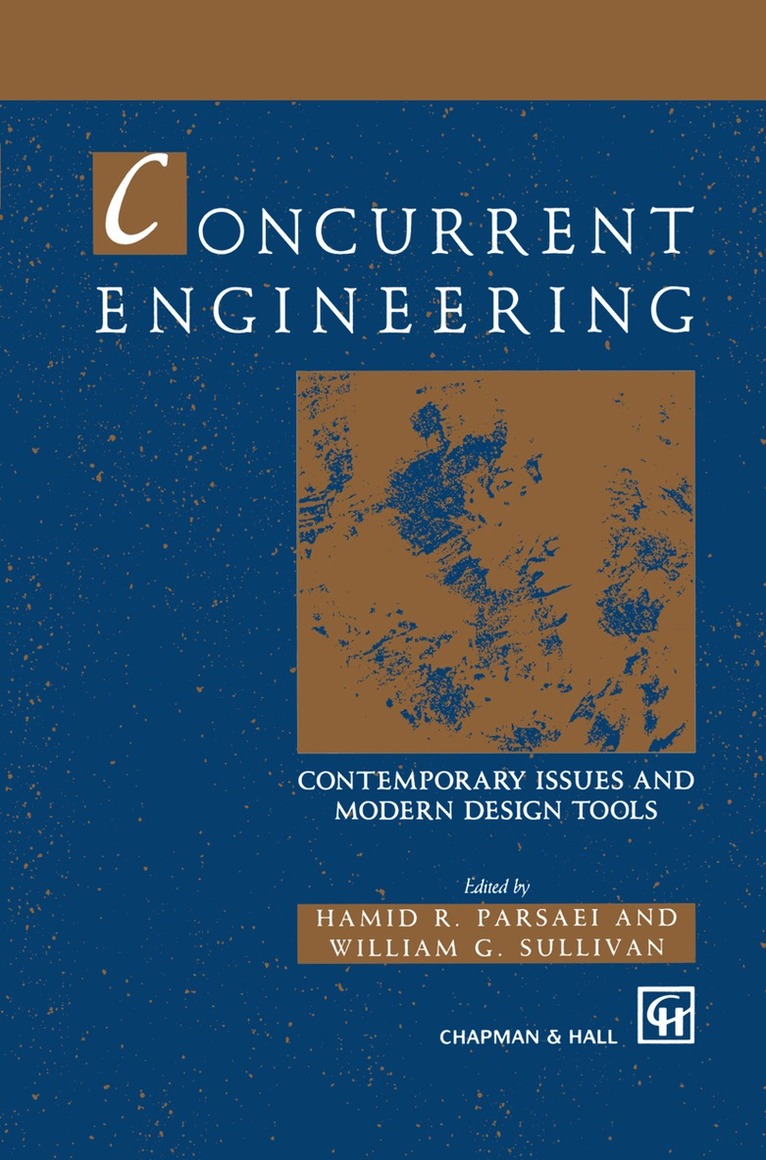
In the area of computer-integrated manufacturing, concurrent engineering is recognized as the manufacturing philosophy for the next decade. The mission of concurrent engineering (CE) is to develop competitive, high quality products and bring them to the global market place at a lower price and in a significantly reduced lead-time. However, practising the CE philosophy requires an ever-increasing number of design tools during the design phase. This book addresses the various issues associated with concurrent engineering, including proven tools for making CE a reality. It should serve as a reference for all those concerned with concurrent engineering both in industry and academia. This book should be of interest to research and development engineers in design, manufacturing and quality; graduate students, educators and researchers in industrial engineering; and practising industrial/manufacturing engineers.
1 584 kr
Skickas inom 10-15 vardagar
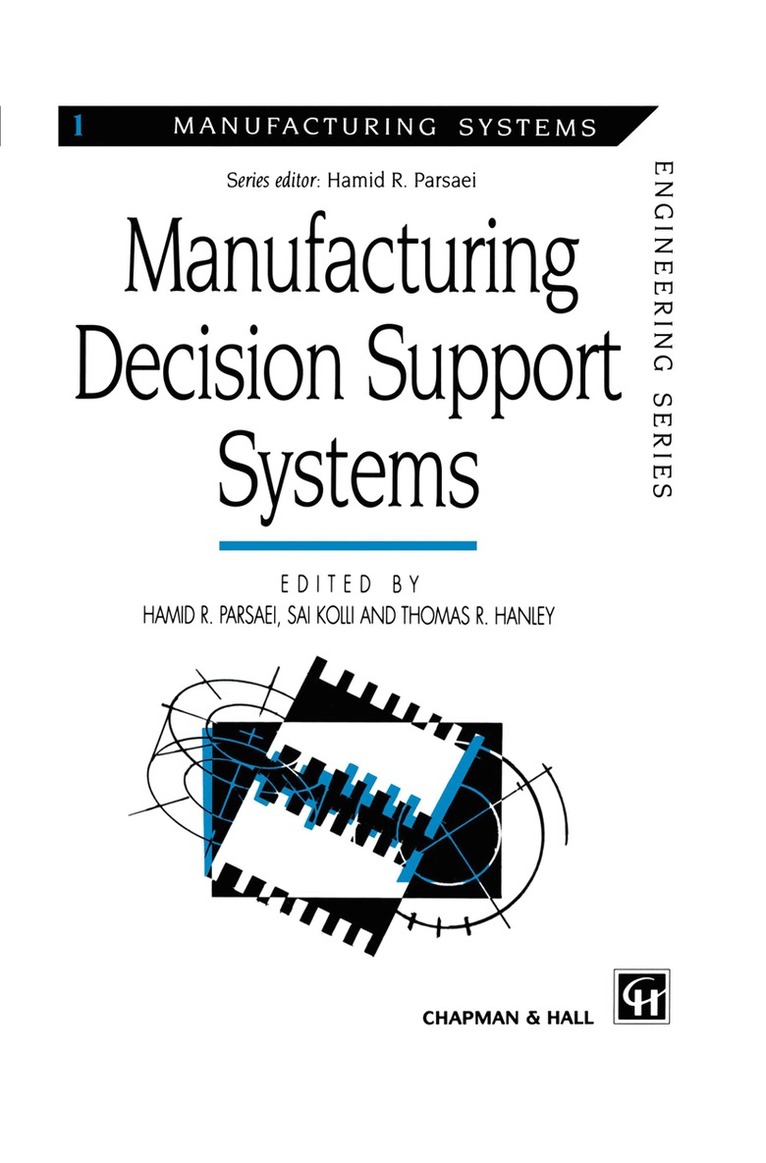
In today's computer-integrated manufacturing environment, decision-makers typically require access to a vast amount of data to support and analyze their complex decision problems at the strategic and tactical levels. Increasingly, there is a need for decision support systems that allow decision-makers to communicate and solve their problems interactively. This text provides a forum for research and applications dealing with the design, development and implementation of decision support systems in manufacturing. It should appeal to all those concerned with decision support for manufacturing.
1 597 kr
Skickas inom 10-15 vardagar
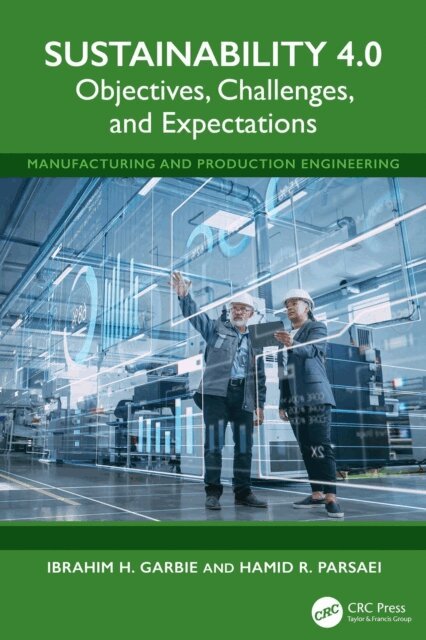
This book presents a fresh perspective by exploring the various layers of sustainability within the whole manufacturing and incorporating Industry 4.0 and smart manufacturing principles. The concept can be applied to manufacturing systems, focusing on core, chosen, and given layers. Each layer of the system manufacturing can be analyzed independently to identify key components and evaluate their sustainability impact.Sustainability 4.0: Objectives, Challenges, and Expectations provides a thorough examination and profound understanding of Sustainability 4.0, a crucial goal set forth by the United Nations (UN). This book introduces an innovative index created to measure sustainability and sustainable development within manufacturing enterprise systems. The index evaluates machine design, manufacturing processes, and manufacturing systems. A distinct methodology is outlined also for assessing an enterprise’s sustainability concerning Industry 4.0 including emerging technologies, technology selection, adoption, and site readiness and implementation. This book discusses the impact of emerging technologies associated with Industry 4.0 on sustainability practices, as well as a flexible framework for evaluating the sustainability of operations amidst technological advancements and evolving industry standards.This book is recommended as a valuable reference for senior‑year undergraduate students, graduate students, postgraduate students, academic researchers, and industrial practitioners. The insights offered within its pages are particularly beneficial for technical audiences in search of solutions, case studies, and prototype implementations.
1 685 kr
Skickas inom 10-15 vardagar
The engineering profession is at a critical juncture that requires reforming engineering education. The supply of engineers is declining whereas the nature of the demand is changing. Formulating a response to these challenges demands the adoption of new and innovative tools and methods for promoting the expansion of the community while supporting these evolving requirements. Initiatives to entice and retain students are being employed to support growth objectives. Modern technologies are reshaping reform efforts. This book discusses the state of affairs in the field of engineering education and presents practical steps for addressing the challenges in order to march toward a brighter future.Features Covers the latest state of engineering education in the North America, Europe, Middle East, North Africa, and Far East AsiaDiscusses advances in science, technology, engineering, and mathematics and community engagementOutlines applications of digital technologies to enhance learningProvides advances in remote and online instructions for engineering educationPresents discussions on innovation, leadership, and ethics
1 578 kr
Skickas inom 10-15 vardagar
During the last two decades, a tremendous growth in the popularity and applications of computers in manufacturing has occurred. Computer aided design, computer-aided manufacturing, flexible manufacturing systems, group technology and many others are considered by many manufacturing executives as the most promising technologies and philosophies that, if successfully implemented, can reduce costs and enable the US manufacturing companies to become more competitive in the global market. In the computer-integrated manufacturing environ ment, the decision processes are often more involved. The decision makers are frequently required to have access to a vast amount of data to support and analyze their complex decision problems at strategic and tactical levels. Decision support systems are often referred to as computer-based information technologies that allow the decision makers to interactively communicate and solve the decision problems. Manufacturing Decision Support Systems is intended to report the latest developments and address the central issues in this area. This volume consists of 14 refereed chapters, written by leading researchers from academia and industry.
2 101 kr
Skickas inom 10-15 vardagar
In the area of computer-integrated manufacturing, concurrent engineering is recognized as the manufacturing philosophy for the next decade.
1 578 kr
Skickas inom 10-15 vardagar
The 1980s have witnessed a tremendous growth in the field of computer integrated manufacturing systems. The other major areas of development have been computer-aided design, computer-aided manufacturing, industrial robotics, automated assembly, cellular and modular material handling, computer networking and office automation to name just a few. These new technologies are generally capital intensive and do not conform to traditional cost structures. The net result is a tremendous change in the way costs should be estimated and economic analyses performed. The majority of existing engineering economy texts still profess application of traditional analysis methods. But, as was men tioned above, it is clear that the basic trend in manufacturing industries is itself changing. So it is quite obvious that the practice of traditional economic analysis methods should change too. This book is an attempt to address the various issues associated with non-traditional methods for evaluation of advanced computer-integrated technologies. This volume consists of twenty refereed articles which are grouped into five parts. Part one, Economic Justification Methods, consists of six articles. In the first paper, Soni et at. present a new classification for economic justification methods for advanced automated manufacturing systems. In the second, Henghold and LeClair look at strengths and weaknesses of expert systems in general and more specifically, an ap plication aimed at investment justification in advanced technology. The third paper, by Carrasco and Lee, proposes an enhanced economic methodology to improve the needs analysis, conceptual design and de tailed design activities associated with technology modernization.