Han Lamers - Böcker
Visar alla böcker från författaren Han Lamers. Handla med fri frakt och snabb leverans.
6 produkter
6 produkter
607 kr
Skickas inom 10-15 vardagar
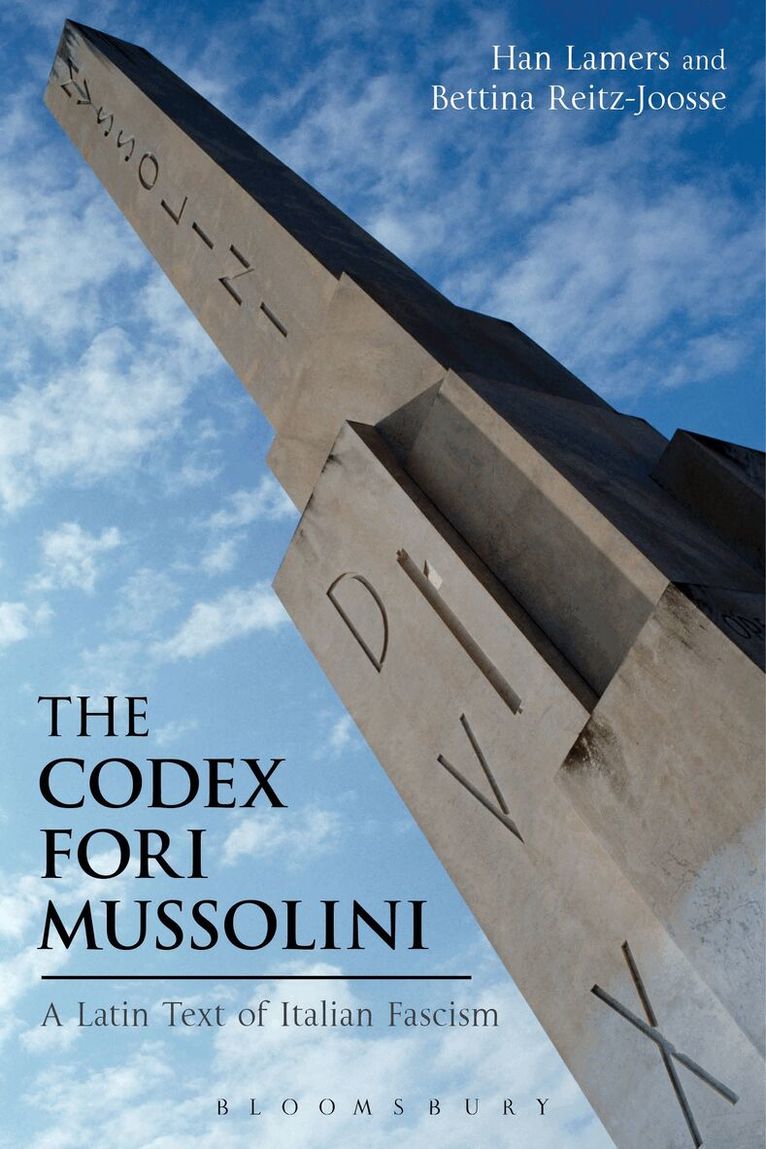
The year is 1932. In Rome, the Fascist leader Benito Mussolini unveils a giant obelisk of white marble, bearing the Latin inscription MVSSOLINI DVX. Invisible to the cheering crowds, a metal box lies immured in the obelisk’s base. It contains a few gold coins and, written on a piece of parchment, a Latin text: the Codex fori Mussolini. What does this text say? Why was it buried there? And why was it written in Latin?The Codex, composed by the classical scholar Aurelio Giuseppe Amatucci (1867-1960), presents a carefully constructed account of the rise of Italian Fascism and its leader, Benito Mussolini. Though written in the language of Roman antiquity, the Codex was supposed to reach audiences in the distant future. Placed under the obelisk with future excavation and rediscovery in mind, the Latin text was an attempt at directing the future reception of Italian Fascism. This book renders the Codex accessible to scholars and students of different disciplines, offering a thorough and wide-ranging introduction, a clear translation, and a commentary elucidating the text’s rhetorical strategies, historical background, and specifics of phrasing and reference. As the first detailed study of a Fascist Latin text, it also throws new light on the important role of the Latin language in Italian Fascist culture.
1 958 kr
Skickas inom 10-15 vardagar
The year is 1932. In Rome, the Fascist leader Benito Mussolini unveils a giant obelisk of white marble, bearing the Latin inscription MVSSOLINI DVX. Invisible to the cheering crowds, a metal box lies immured in the obelisk’s base. It contains a few gold coins and, written on a piece of parchment, a Latin text: the Codex fori Mussolini. What does this text say? Why was it buried there? And why was it written in Latin?The Codex, composed by the classical scholar Aurelio Giuseppe Amatucci (1867-1960), presents a carefully constructed account of the rise of Italian Fascism and its leader, Benito Mussolini. Though written in the language of Roman antiquity, the Codex was supposed to reach audiences in the distant future. Placed under the obelisk with future excavation and rediscovery in mind, the Latin text was an attempt at directing the future reception of Italian Fascism. This book renders the Codex accessible to scholars and students of different disciplines, offering a thorough and wide-ranging introduction, a clear translation, and a commentary elucidating the text’s rhetorical strategies, historical background, and specifics of phrasing and reference. As the first detailed study of a Fascist Latin text, it also throws new light on the important role of the Latin language in Italian Fascist culture.
Del 247 - Brill's Studies in Intellectual History
Greece Reinvented
Transformations of Byzantine Hellenism in Renaissance Italy
Inbunden, Engelska, 2015
3 355 kr
Skickas inom 5-8 vardagar
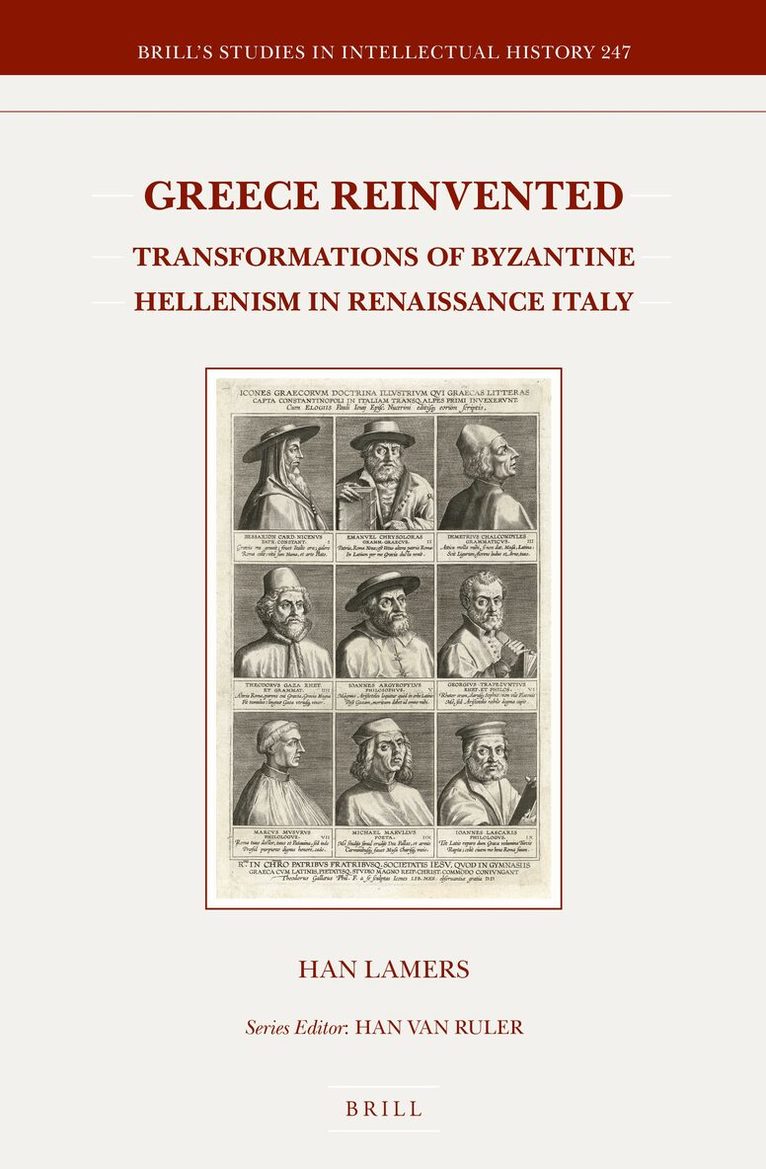
Greece Reinvented discusses the transformation of Byzantine Hellenism as the cultural elite of Byzantium, displaced to Italy, constructed it. It explores why and how Byzantine migrants such as Cardinal Bessarion, Ianus Lascaris, and Giovanni Gemisto adopted Greek personas to replace traditional Byzantine claims to the heirship of ancient Rome. In Greece Reinvented, Han Lamers shows that being Greek in the diaspora was both blessing and burden, and explores how these migrants’ newfound ‘Greekness’ enabled them to create distinctive positions for themselves while promoting group cohesion. These Greek personas reflected Latin understandings of who the Greeks ‘really’ were but sometimes also undermined Western paradigms. Greece Reinvented reveals some of the cultural tensions that bubble under the surface of the much-studied transmission of Greek learning from Byzantium to Italy.
Del 303 - Brill's Studies in Intellectual History
Receptions of Hellenism in Early Modern Europe
15th-17th Centuries
Inbunden, Engelska, 2019
2 960 kr
Skickas inom 5-8 vardagar
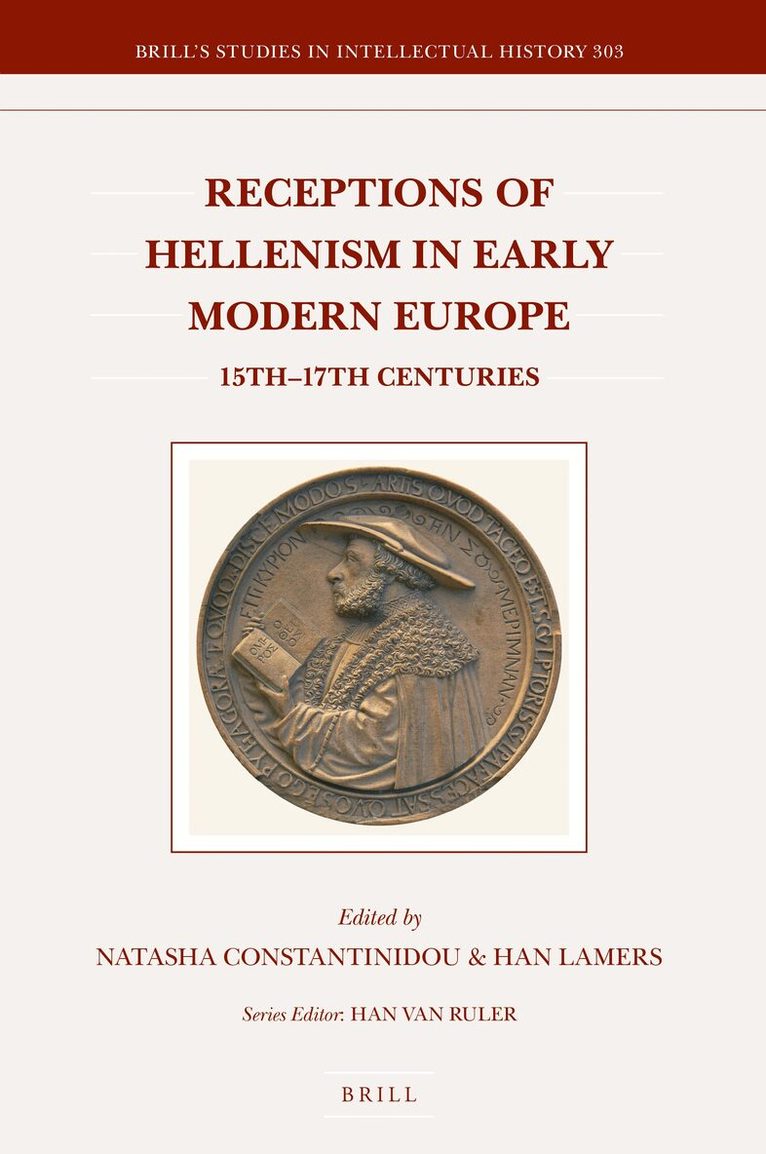
This volume, edited by Natasha Constantinidou and Han Lamers, investigates modes of receiving and responding to Greeks, Greece, and Greek in early modern Europe (15th-17th centuries). The book's seventeen detailed studies illuminate the reception of Greek culture (the classical, Byzantine, and even post-Byzantine traditions), the Greek language (ancient, vernacular, and 'humanist'), as well as the people claiming, or being assigned, Greek identities during this period in different geographical and cultural contexts.Discussing subjects as diverse as, for example, Greek studies and the Reformation, artistic interchange between Greek East and Latin West, networks of communication in the Greek diaspora, and the ramifications of Greek antiquarianism, the book aims at encouraging a more concerted debate about the role of Hellenism in early modern Europe that goes beyond disciplinary boundaries, and opening ways towards a more over-arching understanding of this multifaceted cultural phenomenon.Contributors: Aslıhan Akışık-Karakullukçu, Michele Bacci, Malika Bastin-Hammou, Peter Bell, Michail Chatzidakis, Federica Ciccolella, Calliope Dourou, Anthony Ellis, Niccolò Fattori, Maria Luisa Napolitano, Janika Päll, Luigi-Alberto Sanchi, Niketas Siniossoglou, William Stenhouse, Paola Tomè, Raf Van Rooy, and Stefan Weise.
Del 21 - Renaissance Society of America
Latin Poems of Manilius Cabacius Rallus of Sparta. On Longing, Fortune, and Displacement
A Critical Edition with Annotations and a Translation
Inbunden, Engelska, 2023
2 568 kr
Skickas inom 5-8 vardagar
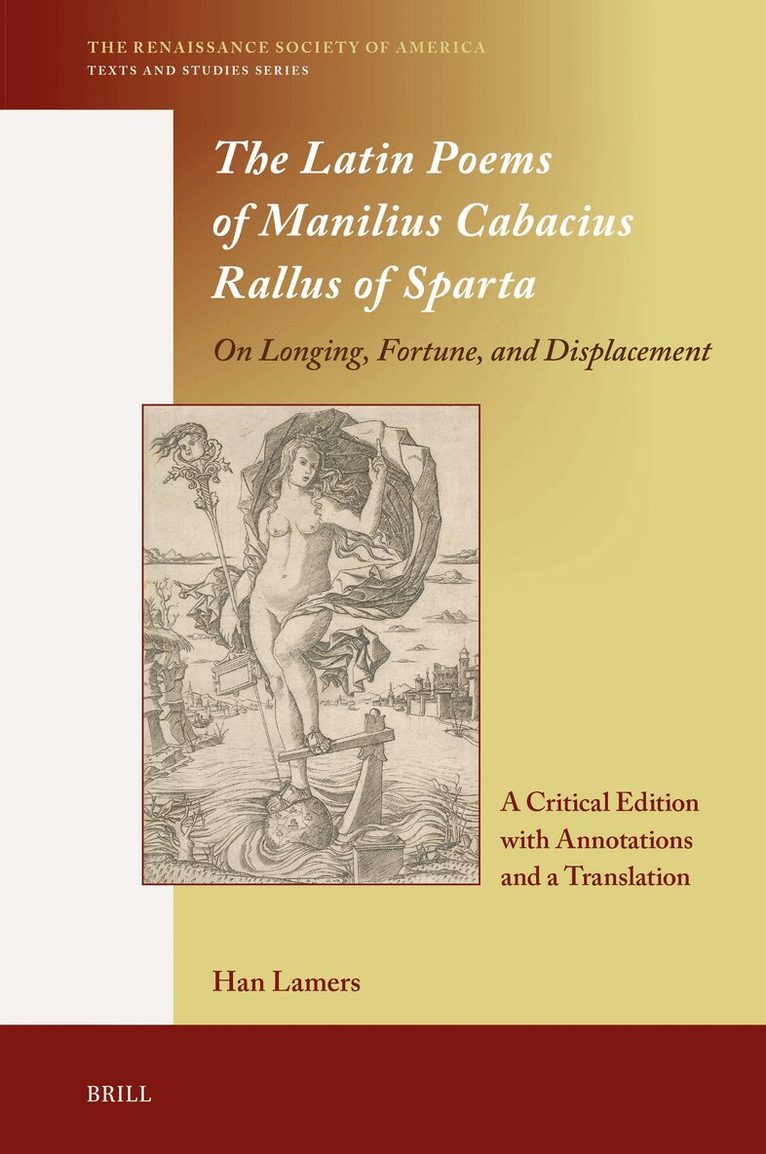
The Latin Poems of Manilius Cabacius Rallus of Sparta presents the poetic oeuvre of a forgotten poet of Renaissance Rome. A Greek by birth, Manilius Cabacius Rallus (c. 1447–c. 1523) spent most of his life far from his motherland, unable to return. Through his poems, composed in a range of metres and genres, Rallus engaged with some major events and personalities of his time, including Angelo Poliziano, Ianus Lascaris, and Pope Leo X. His poems also reflect on timeless human experiences such as helplessness in the face of fortune and nostalgia for what is lost. Han Lamers edited the Latin text of Rallus’ poems (most of them printed for the last time in 1520) and added annotations and an English prose translation.
Del 46 - Supplementa Humanistica Lovaniensia
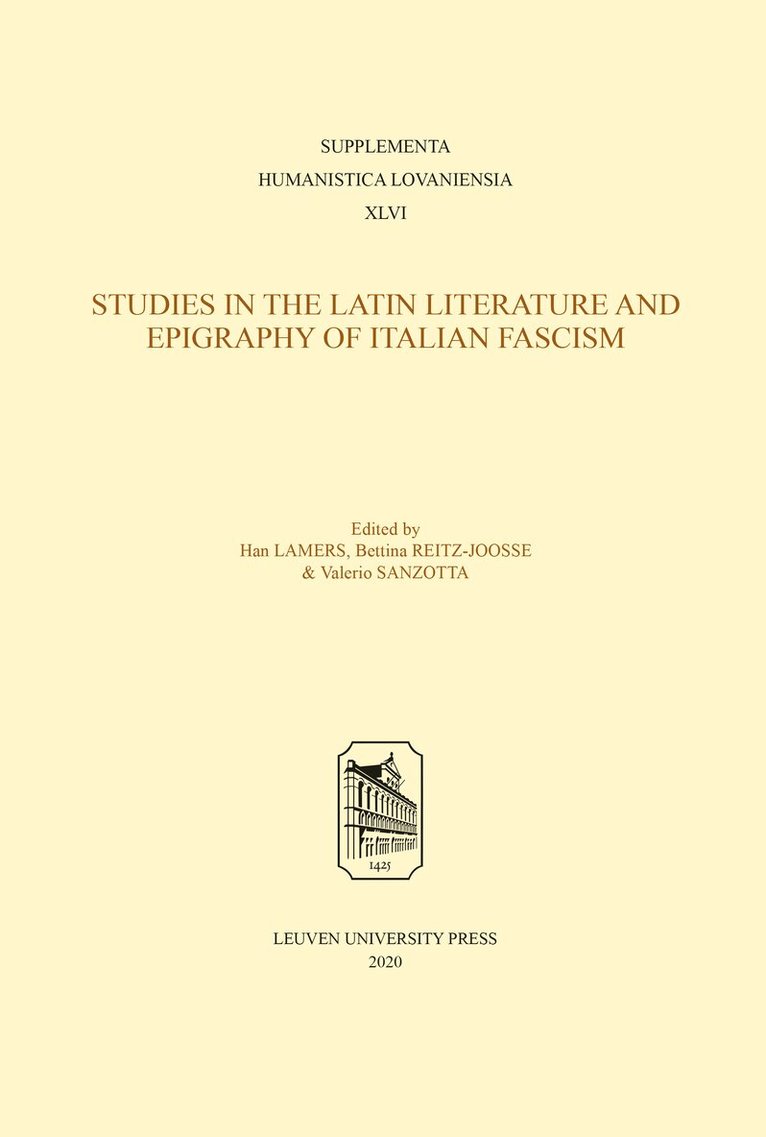
Studies in the Latin Literature and Epigraphy in Italian Fascism
Häftad, Latin, 2020
851 kr
Skickas
This book deals with the use of Latin as a literary and epigraphic language under Italian Fascism (1922-1943). The myth of Rome lay at the heart of Italian Fascist ideology, and the ancient language of Rome, too, played an important role in the regime's cultural politics. This collection deepens our understanding of 'Fascist Latinity', presents a range of previously little-known material, and opens up a number of new avenues of research. The chapters explore the pivotal role of Latin in constructing a link between ancient Rome and Fascist Italy; the different social and cultural contexts in which Latin texts functioned in the ventennio fascista; and the way in which 'Fascist Latinity' relied on, and manipulated, the 'myth of Rome' of late nineteenth- and early twentieth-century Italy.Contributors: William Barton (Ludwig Boltzmann Institute for Neo-Latin Studies), Xavier van Binnebeke (KU Leuven), Paolo Fedeli (Universita degli Studi di Bari Aldo Moro), Han Lamers (University of Oslo), Johanna Luggin (Ludwig Boltzmann Institute for Neo-Latin Studies), Antonino Nastasi (Rome), Bettina Reitz-Joosse (University of Groningen), Dirk Sacre (KU Leuven), Valerio Sanzotta (Ludwig Boltzmann Institute for Neo-Latin Studies), Wolfgang Strobl (Toblach)