Han Moo-young Han – författare
Visar alla böcker från författaren Han Moo-young Han. Handla med fri frakt och snabb leverans.
4 produkter
4 produkter
E-bok
Engelska, 2016258 kr
Läs direkt efter köp
We have lost one of the giants of the twentieth century physics when Yoichiro Nambu passed away in July, 2015, at the age of 94.Today''s Standard Model, though still incomplete in many respects, is the culmination of the most successful theory of the Universe to date, and it is built upon foundations provided by discoveries made by Nambu in the 1960s: the mechanism of spontaneously broken symmetry in Nature (with G Jona-Lasinio) and the hidden new SU(3) symmetry of quarks and gluons (with M-Y Han).In this volume honoring Nambu''s memory, World Scientific Publishing presents a unique collection of papers written by his former colleagues, collaborating researchers and former students and associates, not only citing Nambu''s great contributions in physics but also many personal and private reminiscences, some never told before. This volume also contains the very last scientific writing by Professor Nambu himself, discussing the development of particle physics.This book is a volume for all who benefited not only from Nambu''s contributions toward understanding the Universe but also his warm and kind persona. It is a great addition to the history of contemporary physics.
E-bok
PDF, Engelska, 2004309 kr
Läs direkt efter köp
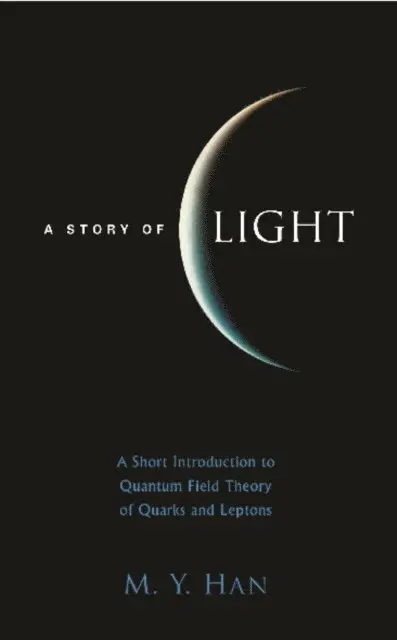
This book presents the essential aspects of relativistic quantum field theory, with minimal use of mathematics. It covers the development of quantum field theory from the original quantization of electromagnetic field to the gauge field theory of interactions among quarks and leptons.Aimed at both scientists and non-specialists, it requires only some rudimentary knowledge of the Lagrangian and Hamiltonian formulation of Newtonian mechanics and a basic understanding of the special theory of relativity and quantum mechanics.
E-bok
PDF, Engelska, 1999229 kr
Läs direkt efter köp
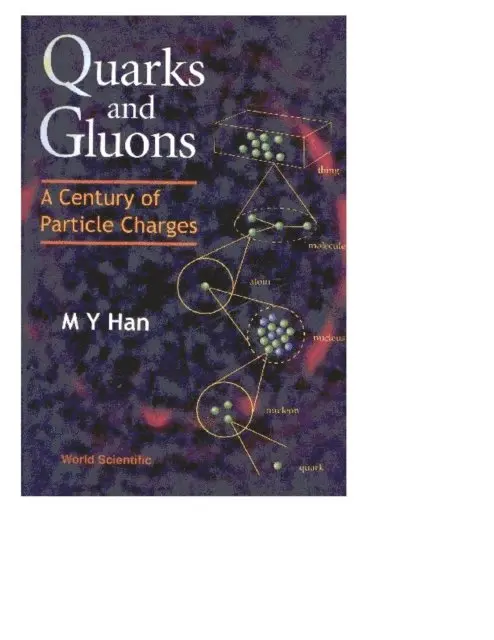
Our journey in search of the origin of matter — and, by extension, the origin of the Universe itself — has taken us deeper and deeper inside atoms. First to come into view was the atomic nucleus, and still further downscale the individual protons and neutrons that constitute the nucleus. At least for three decades, nucleons (protons and neutrons) were considered to be our final destination. Then, peering into them, we detected shadows of yet another layer of matter that lurks inside. Unable so far to crack open a nucleon and bring out one of these shadowy objects for observation and measurement, we can only guess what they are. We have named them quarks. We believe that two types of quarks — one named “up” and the other “down” — make up the proton and the neutron. Quarks are held together by a force dubbed the chromo force, represented by particles named gluons, which are just as unseen as quarks. So it is the quarks and gluons that lie at the bottom of all known matter!In this important book, the major developments in atomic, nuclear, particle and quark physics over the past one hundred years are presented in a style that is both accessible to the layperson and of value to the expert. It provides a brief history of particles, charting the discovery of electrons and photons, antimatter, atomic nuclei, strong and weak forces, and quarks and gluons. In particular, it traces the concept of “conserved charges”, a phenomenon that is consistently manifested in each of these milestone developments in modern physics.
E-bok
Engelska, 2014258 kr
Läs direkt efter köp
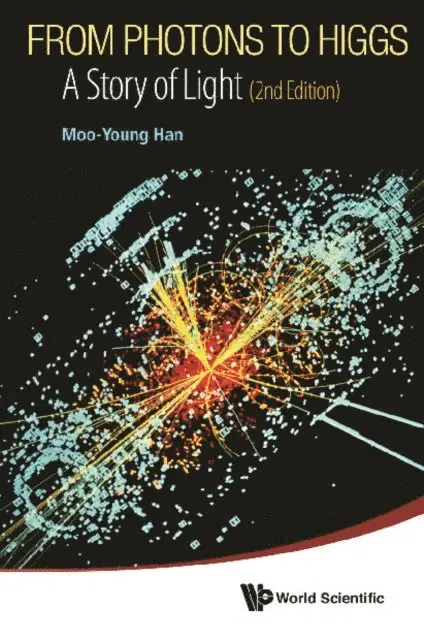
This book presents a brief introduction to the quantum field theory of the Standard Model for quarks and leptons. With minimal use of mathematics, it covers the basics of quantum field theory, local gauge field theory, spontaneous symmetry breaking mechanism, the Higgs mechanism and quantum chromodynamics.From the time when the first edition was published until today, the field of particle physics has seen some major break-through with the possible discovery of Higgs particle, also known as the Higgs boson. In the second edition, the famous Higgs mechanism is included to explain the symmetry breaking in the Standard Model and the origin of mass, and all of this is explained in high-school level algebra.Aimed at both scientists and non-specialists, it requires only some rudimentary knowledge of the Lagrangian and Hamiltonian formulation of Newtonian mechanics as well as a basic understanding of the special theory of relativity and quantum mechanics to enjoy this book.