Hang Z. Yu – författare
1 666 kr
Skickas inom 10-15 vardagar
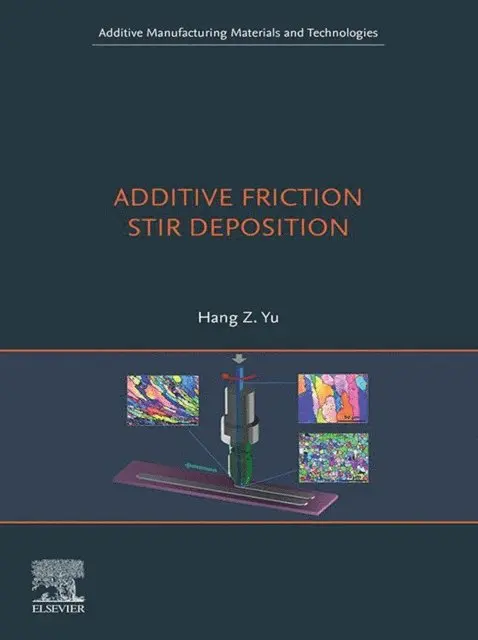
Additive Friction Stir Deposition is a comprehensive summary of the state-of-the-art understanding on this emerging solid-state additive manufacturing technology. Sections cover additive friction stir deposition, encompassing advances in processing science, metallurgical science and innovative applications. The book presents a clear description of underlying physical phenomena, shows how the process determines the printing quality, covers resultant microstructure and properties in the as-printed state, highlights its key capabilities and limitations, and explores niche applications in repair, cladding and multi-material 3D printing.
Serving as an educational and research guide, this book aims to provide a holistic picture of additive friction stir deposition-based solid-state additive manufacturing as well as a thorough comparison to conventional beam-based metal additive manufacturing, such as powder bed fusion and directed energy deposition.
Provides a clear process description of additive friction stir deposition and highlights key capabilities Summarizes the current research and application of additive friction stir deposition, including material flow, microstructure evolution, repair and dissimilar material cladding Discusses future applications and areas of research for this technology2 370 kr
Läs direkt efter köp
1 553 kr
Skickas
1 909 kr
Läs direkt efter köp
Timely summary of state-of-the-art solid-state metal 3D printing technologies, focusing on fundamental processing science and industrial applications
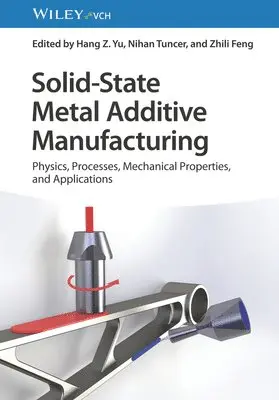
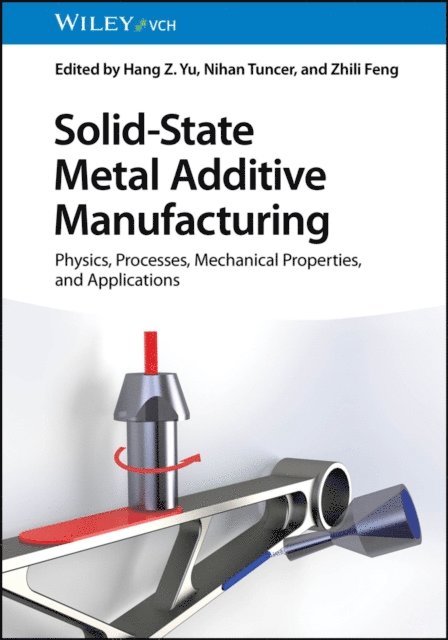
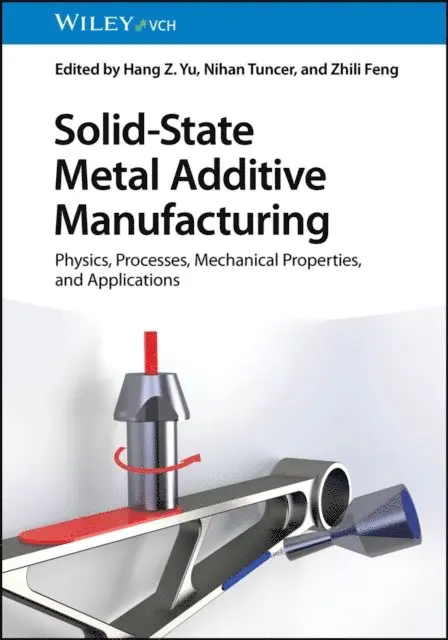
Solid-State Metal Additive Manufacturing: Physics, Processes, Mechanical Properties, and Applications provides detailed and in-depth discussion on different solid-state metal additive manufacturing processes and applications, presenting associated methods, mechanisms and models, and unique benefits, as well as a detailed comparison to traditional fusion-based metal additive manufacturing.
The text begins with a high-level overview of solid-state metal additive manufacturing with an emphasis on its position within the metal additive manufacturing spectrum and its potential for meeting specific demands in the aerospace, automotive, and defense industries. Next, each of the four categories of solid-state additive technologies—cold spray additive manufacturing, additive friction stir deposition, ultrasonic additive manufacturing, and sintering-based processes—is discussed in depth, reviewing advances in processing science, metallurgical science, and innovative applications. Finally, the future directions of these solid-state processes, especially the material innovation and artificial intelligence aspects, are discussed.
Sample topics covered in Solid-State Metal Additive Manufacturing include:
Physical processes and bonding mechanisms in impact-induced bonding and microstructures and microstructural evolution in cold sprayed materialsProcess fundamentals, dynamic microstructure evolution, and potential industrial applications of additive friction stir depositionMicrostructural and mechanical characterization and industrial applications of ultrasonic additive manufacturingPrinciples of solid-state sintering, binder jetting-based metal printing, and sintering-based metal additive manufacturing methods for magnetic materialsCritical issues inherent to melting and solidification, such as porosity, high residual stress, cast microstructure, anisotropic mechanical properties, and hot crackingSolid-State Metal Additive Manufacturing is an essential reference on the subject for academic researchers in materials science, mechanical, and biomedicine, as well as professional engineers in various manufacturing industries, especially those involved in building new additive technologies.
1 909 kr
Läs direkt efter köp
Timely summary of state-of-the-art solid-state metal 3D printing technologies, focusing on fundamental processing science and industrial applications
Solid-State Metal Additive Manufacturing: Physics, Processes, Mechanical Properties, and Applications provides detailed and in-depth discussion on different solid-state metal additive manufacturing processes and applications, presenting associated methods, mechanisms and models, and unique benefits, as well as a detailed comparison to traditional fusion-based metal additive manufacturing.
The text begins with a high-level overview of solid-state metal additive manufacturing with an emphasis on its position within the metal additive manufacturing spectrum and its potential for meeting specific demands in the aerospace, automotive, and defense industries. Next, each of the four categories of solid-state additive technologies—cold spray additive manufacturing, additive friction stir deposition, ultrasonic additive manufacturing, and sintering-based processes—is discussed in depth, reviewing advances in processing science, metallurgical science, and innovative applications. Finally, the future directions of these solid-state processes, especially the material innovation and artificial intelligence aspects, are discussed.
Sample topics covered in Solid-State Metal Additive Manufacturing include:
Physical processes and bonding mechanisms in impact-induced bonding and microstructures and microstructural evolution in cold sprayed materialsProcess fundamentals, dynamic microstructure evolution, and potential industrial applications of additive friction stir depositionMicrostructural and mechanical characterization and industrial applications of ultrasonic additive manufacturingPrinciples of solid-state sintering, binder jetting-based metal printing, and sintering-based metal additive manufacturing methods for magnetic materialsCritical issues inherent to melting and solidification, such as porosity, high residual stress, cast microstructure, anisotropic mechanical properties, and hot crackingSolid-State Metal Additive Manufacturing is an essential reference on the subject for academic researchers in materials science, mechanical, and biomedicine, as well as professional engineers in various manufacturing industries, especially those involved in building new additive technologies.