Hanna Laako - Böcker
Visar alla böcker från författaren Hanna Laako. Handla med fri frakt och snabb leverans.
3 produkter
3 produkter
2 100 kr
Skickas inom 10-15 vardagar
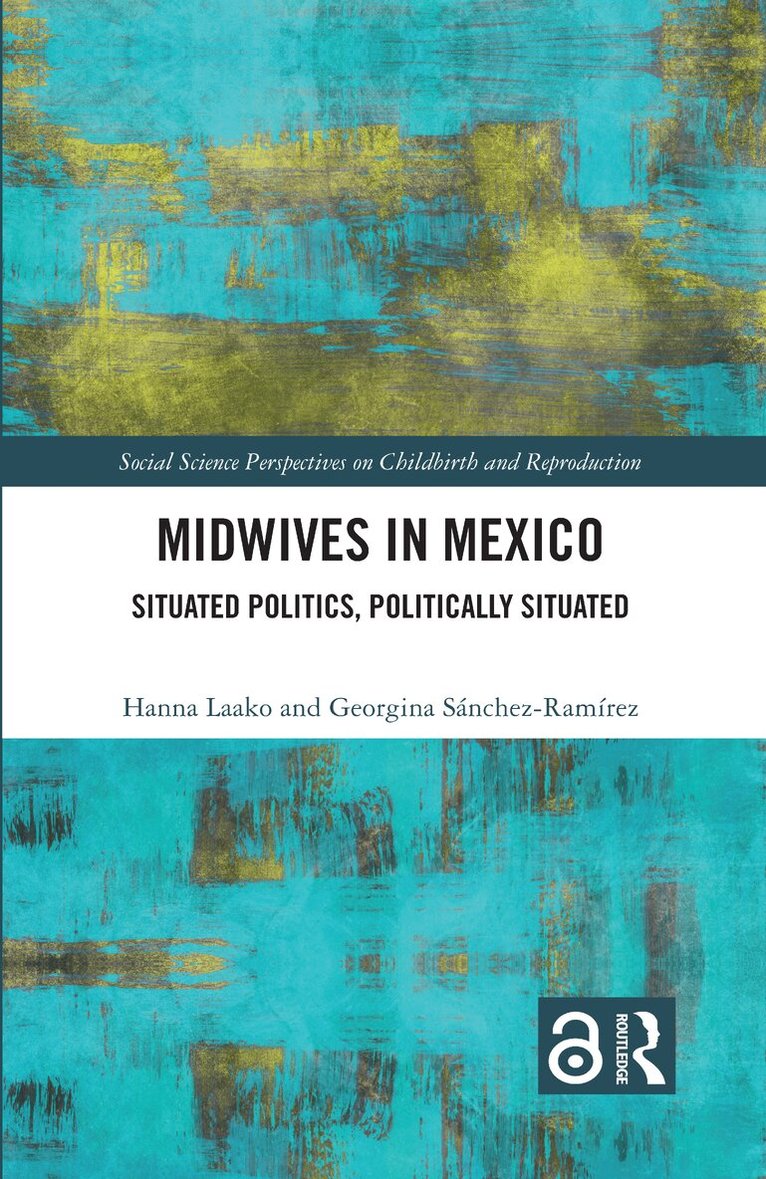
This book presents the contemporary history and dynamics of Mexican midwifery - professional, (post)modern or autonomous, traditional and Indigenous - as profoundly political and embedded in differing societal stratifications.By situated politics, the authors refer to various networks, spaces and territories, which are also constructed by the midwives. By politically situated, the authors refer to various intersections, unsettled relations and contexts in which Mexican midwives are positioned. Examining Mexican midwiferies in depth, the volume sharpens the focus on the worlds in which midwives are profoundly immersed as agents in generating and participating in movements, alliances, health professions, communities, homes, territories and knowledges. The chapters provide a complex panorama of midwives in Mexico with an array of insights into their professional and political autonomy, (post)coloniality, body-territoriality, the challenges of defining midwifery, and above all, into the ways in which contemporary Mexican midwiferies relate to a complex set of human rights.The book will be of interest to a range of scholars from anthropology, sociology, politics, global health, gender studies, development studies, and Latin American studies, as well as to midwives and other professionals involved in childbirth policy and practice.The Open Access version of this book, available at http://www.taylorfrancis.com, has been made available under a Creative Commons Attribution-Non Commercial-No Derivatives (CC-BY-NC-ND) 4.0 license.
574 kr
Skickas inom 10-15 vardagar
This book presents the contemporary history and dynamics of Mexican midwifery - professional, (post)modern or autonomous, traditional and Indigenous - as profoundly political and embedded in differing societal stratifications.By situated politics, the authors refer to various networks, spaces and territories, which are also constructed by the midwives. By politically situated, the authors refer to various intersections, unsettled relations and contexts in which Mexican midwives are positioned. Examining Mexican midwiferies in depth, the volume sharpens the focus on the worlds in which midwives are profoundly immersed as agents in generating and participating in movements, alliances, health professions, communities, homes, territories and knowledges. The chapters provide a complex panorama of midwives in Mexico with an array of insights into their professional and political autonomy, (post)coloniality, body-territoriality, the challenges of defining midwifery, and above all, into the ways in which contemporary Mexican midwiferies relate to a complex set of human rights.The book will be of interest to a range of scholars from anthropology, sociology, politics, global health, gender studies, development studies, and Latin American studies, as well as to midwives and other professionals involved in childbirth policy and practice.The Open Access version of this book, available at http://www.taylorfrancis.com, has been made available under a Creative Commons Attribution-Non Commercial-No Derivatives (CC-BY-NC-ND) 4.0 license.
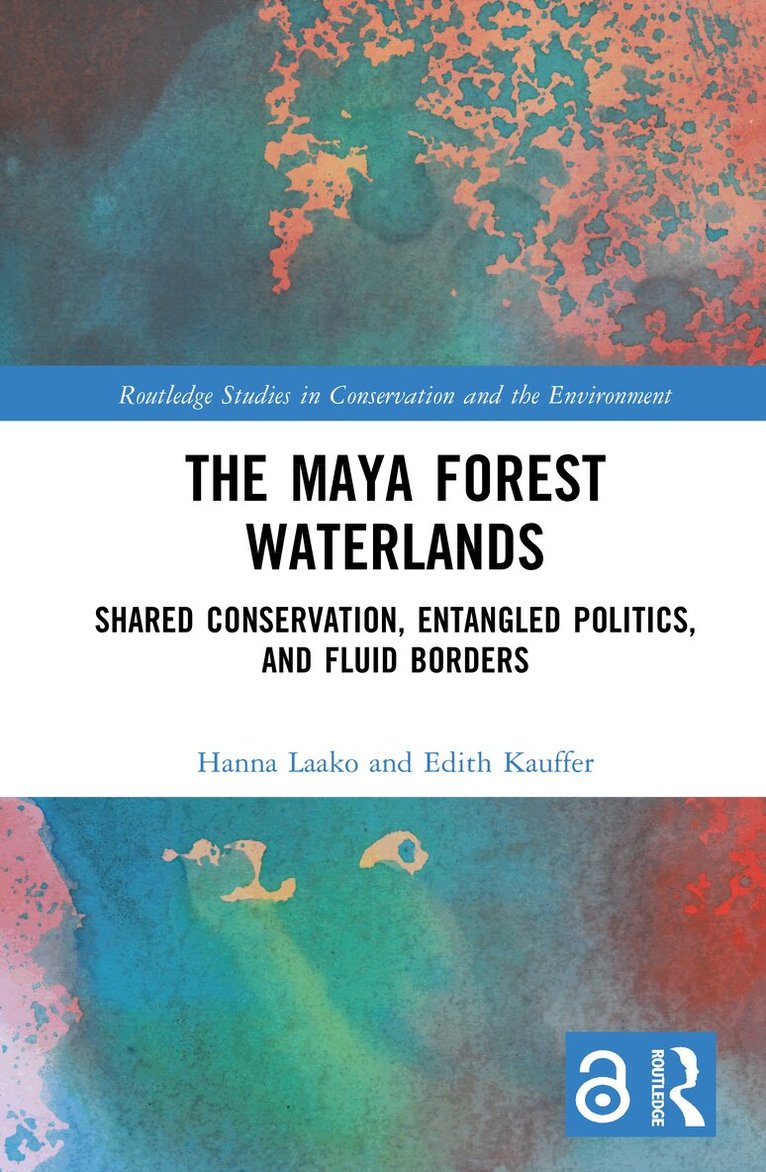
Maya Forest Waterlands
Shared Conservation, Entangled Politics, and Fluid Borders
Inbunden, Engelska, 2025
2 100 kr
Skickas inom 10-15 vardagar
This book examines the entanglements and blurred edges of nature conservation and geopolitical relations in the borderlands of the trinational Maya Forest.Maya Forest is an umbrella term for transboundary conservation developed by scientists and conservationists in the 1990s to protect the threatened rainforest in the borderlands of Mexico, Belize, and Guatemala. Currently, the Maya Forest is a biodiversity hotspot composed of a network of protected areas and heritage sites. However, issues related to water, land, and forests have often been treated as separate political units, and not as part of the same history. Written by two authors with decades of hands-on experience in this region, this book sheds light on the complex dynamics by which conservation and natural resource management geopolitically shape borderlands such as the Maya Forest. The book introduces the novel concept of forest waterlands as borderlands and fluid edges, which are now subject to concern by conservationists. These are entangled spaces in which conservation, peoples, and politics interact, connect, and disconnect with the nexus of waters, forests, and lands. The book sheds light on the building and mapping of the Maya Forest ecoregion, with particular attention to water as an often neglected, but unifying element. It showcases how the Maya Forest is a distinct region characterized by transformations entangled with the Maya, trails of biological stations, the shared history of chicleros (chewing-gum hunters), fluid international rivers and transboundary basins, and various geopolitical discrepancies. It offers a contemporary glimpse into the Maya Forest’s intertwined bio- and geopolitics, which urge us to rethink borders and boundaries.This book will be of great interest to students and scholars of nature conservation, global environmental politics, geopolitics, borderlands, international relations, and natural resource management.