Hanna Zipernovszky – författare
Visar alla böcker från författaren Hanna Zipernovszky. Handla med fri frakt och snabb leverans.
2 produkter
2 produkter
E-bok
PDF, Tyska, 2017397 kr
Läs direkt efter köp
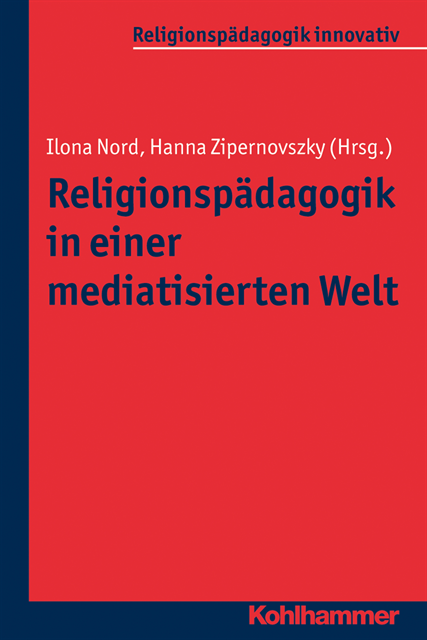
Im Religionsunterricht führen Digitalisierungs- und Mediatisierungsprozesse zur Transformation traditioneller und zur Entwicklung neuer Medienformate und fordern heraus, das Verhältnis von Religionspädagogik und Medien neu zu bestimmen.Hierzu beleuchtet dieser Band zunächst die Bedeutung von Medien für ausgewählte theologische Einzeldisziplinen und stellt aktuelle medienpädagogische und -didaktische Ansätze vor. Im Zentrum entwickeln die AutorInnen didaktische Perspektiven auf Methoden (z. B. internetbasierte Archivarbeit, Einsatz von digitalem Lehrmaterial), sowie auf gegenwärtige Fragestellungen der Religionspädagogik (Inklusion, Cybermobbing, u. v. m.) und arbeiten didaktische Herausforderungen für einen Religionsunterricht in einer mediatisierten Welt heraus.Als Ergebnis einer deutsch-schwedischen Lehr- und Forschungskooperation setzt dieser Band ein Plädoyer für ein erweitertes Bildungsverständnis, das eine zukunftsorientierte Vernetzung pluraler Formen von Bildung fokussiert. Es ist konzipiert für Studierende der Fächer Theologie und Religionswissenschaft sowie für Religionslehrkräfte.
E-bok
PDF, Engelska, 2017397 kr
Läs direkt efter köp
In religious education, digitization and mediatization processes result in the transformation of conventional media formats. This leads to the development of new media formats, which in turn necessitates a redefinition of the relationship between religious education and the media.Keeping this in mind, this volume first examines the importance of media for specific theological disciplines, and then discusses current media-pedagogical and media-didactic approaches. Later in the book, the authors develop didactic perspectives on various methods; these include internet-based archive work and the use of digital teaching materials. They also deal with current questions regarding religious education, such as inclusion and cyber bullying, etc. Finally, they identify some of the main didactic challenges for religious instruction in a mediatized world.This volume is a plea for a wider understanding of education, and is based in part on a German-Swedish teaching and research cooperation. Following this example, it focuses on a future-oriented networking of plural forms of education. This resource is designed for students of theology and religious sciences as well as for religious education teachers.