Hannah C. Erlwein – författare
Visar alla böcker från författaren Hannah C. Erlwein. Handla med fri frakt och snabb leverans.
3 produkter
3 produkter
Häftad, Engelska, 2025
546 kr
Skickas inom 10-15 vardagar
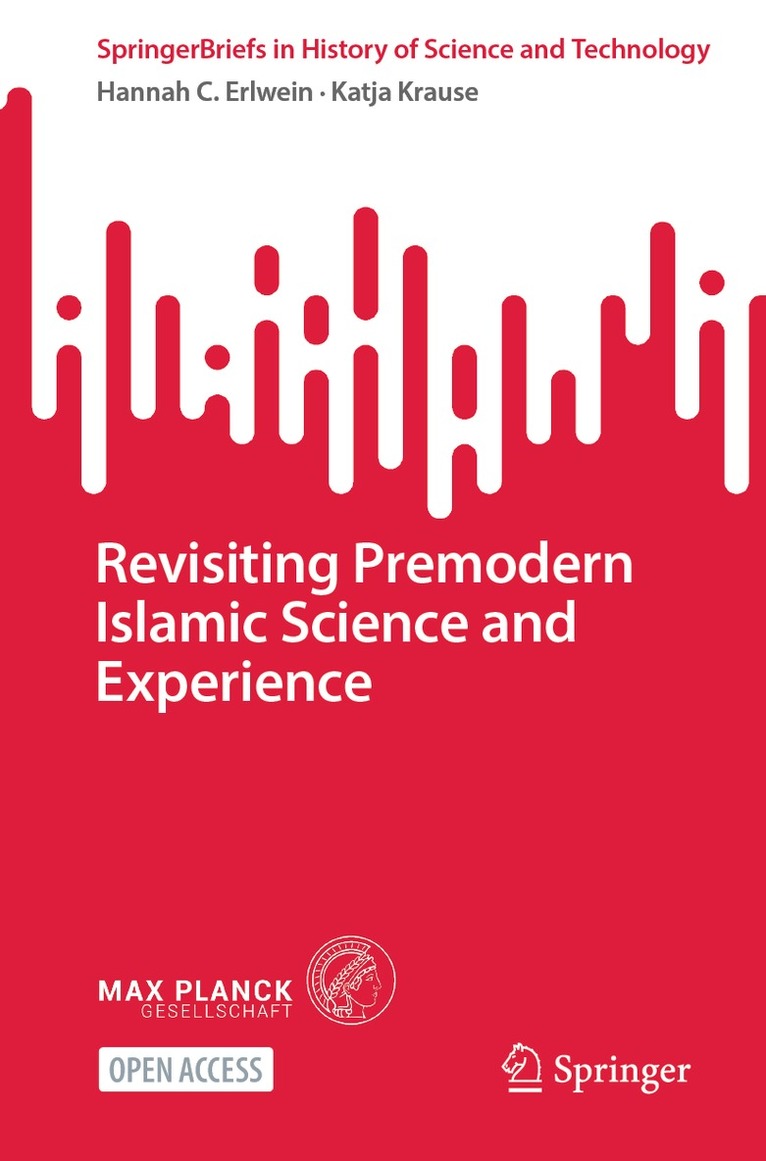
This open access book takes a fresh look at the nature and place of experience in premodern Islamic science. It seeks to answer two questions: What kind of experience constituted premodern Islamic science? And in what ways did that experience constitute science? Answering these questions, the authors critique the trajectory of most existing histories of the period, which tend to reduce “experience” to empirical method or practice. This view reflects the emphasis that histories of modern science, especially of the Scientific Revolution, have placed on empiricism—the standard against which Islamic actors were then measured. This book offers a new historiography, arguing that experience had a far wider scope in the world of Islamic science. Combining an innovative theoretical framework with three case studies and a reflective epilogue by renowned experts in the field, this work offers the history of science a solid foundation on which to build its analyses of premodern science and the modality, scope, and role of experience therein. As a result, it speaks to specialists in the history of premodern Islamic science and historians of science in general to reconsider their historiographical assumptions.
Inbunden, Engelska, 2019
1 518 kr
Skickas inom 5-8 vardagar
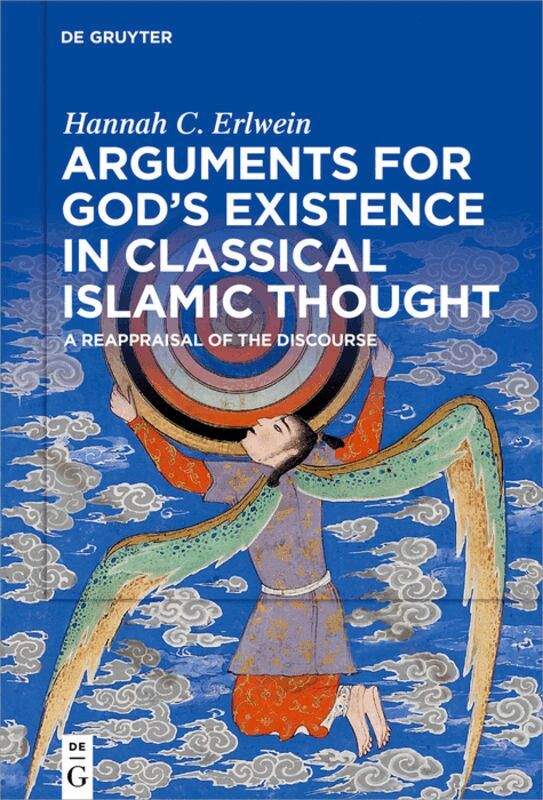
The endeavour to prove God’s existence through rational argumentation was an integral part of classical Islamic theology (kalām) and philosophy (falsafa), thus the frequently articulated assumption in the academic literature. The Islamic discourse in question is then often compared to the discourse on arguments for God’s existence in the western tradition, not only in terms of its objectives but also in terms of the arguments used: Islamic thinkers, too, put forward arguments that have been labelled as cosmological, teleological, and ontological. This book, however, argues that arguments for God’s existence are absent from the theological and philosophical works of the classical Islamic era. This is not to say that the arguments encountered there are flawed arguments for God’s existence. Rather, it means that the arguments under consideration serve a different purpose than to prove that God exists. Through a close reading of the works of several mutakallimūn and falāsifa from the 3rd‒7th/9th‒13th century, such as al-Bāqillānī and Fakhr al-Dīn al-Rāzī as well as Ibn Sīnā and Ibn Rushd, this book proffers a re-evaluation of the discourse in question, and it suggests what its participants sought to prove if it is not that God exists.
E-bok
Engelska, 20191 530 kr
Läs direkt efter köp
The endeavour to prove God’s existence through rational argumentation was an integral part of classical Islamic theology (kalām) and philosophy (falsafa), thus the frequently articulated assumption in the academic literature. The Islamic discourse in question is then often compared to the discourse on arguments for God’s existence in the western tradition, not only in terms of its objectives but also in terms of the arguments used: Islamic thinkers, too, put forward arguments that have been labelled as cosmological, teleological, and ontological. This book, however, argues that arguments for God’s existence are absent from the theological and philosophical works of the classical Islamic era. This is not to say that the arguments encountered there are flawed arguments for God’s existence. Rather, it means that the arguments under consideration serve a different purpose than to prove that God exists. Through a close reading of the works of several mutakallimūn and falāsifa from the 3rd‒7th/9th‒13th century, such as al-Bāqillānī and Fakhr al-Dīn al-Rāzī as well as Ibn Sīnā and Ibn Rushd, this book proffers a re-evaluation of the discourse in question, and it suggests what its participants sought to prove if it is not that God exists.