Hannah Wittman - Böcker
Visar alla böcker från författaren Hannah Wittman. Handla med fri frakt och snabb leverans.
4 produkter
4 produkter
Del 101 - CEDLA Latin American Studies
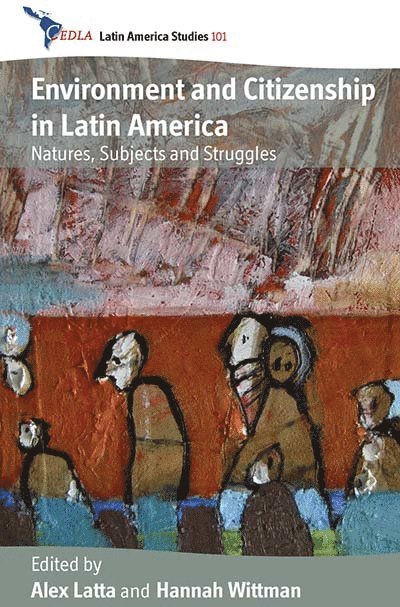
Environment and Citizenship in Latin America
Natures, Subjects and Struggles
Inbunden, Engelska, 2012
1 956 kr
Skickas inom 3-6 vardagar
This book is a major contribution to our understanding of environmental politics in Latin America. The chapters present a wealth of original research that shows that environmental concerns are part of the daily life of indigenous populations and other grassroots groups. The theoretical frame of environmental citizenship provides a compelling way for thinking about how their environmental demands are closely linked to their national identity, political participation, land and resources. * Kathryn Hochstetler, University of Waterloo Scholarship related to environmental questions in Latin America has only recently begun to coalesce around citizenship as both an empirical site of inquiry and an analytical frame of reference. This has led to a series of new insights and perspectives, but few efforts have been made to bring these various approaches into a sustained conversation across different social, temporal and geographic contexts.This volume is the result of a collaborative endeavour to advance debates on environmental citizenship, while simultaneously and systematically addressing broader theoretical and methodological questions related to the particularities of studying environment and citizenship in Latin America. Providing a window onto leading scholarship in the field, the book also sets an ambitious agenda to spark further research. Alex Latta is an Associate Professor in the Department of Global Studies at Wilfrid Laurier University and in the Balsillie School of International Affairs. Hannah Wittman is an Assistant Professor of Sociology and Associate Member of the Latin American Studies Program at Simon Fraser University.
231 kr
Skickas inom 5-8 vardagar
298 kr
Tillfälligt slut
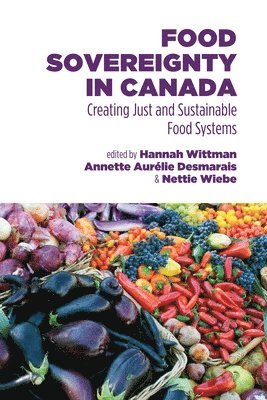
Contemporary Canadian agricultural and food policies are contributing to the current global food crisis: the industrialized, high-input, export-driven agricultural production sector, coupled with concentrated corporate processing and retailing, are ecologically unsustainable, increasingly unaffordable, unhealthy and socially unjust. Employing an interdisciplinary and multi-sectoral approach, Food Sovereignty in Canada explores how communities all over the country are actively engaged in implementing alternative agricultural and food models within the framework of food sovereignty - taking control over food-producing resources, markets and agricultural policy. This framework offers Canadian citizens, researchers and policymakers the opportunity to build alternative agricultural and food models that are less environmentally damaging and that keep farmers on the land while ensuring that those living in cities have access to healthy and safe food. Achieving food sovereignty requires conceptual and practical changes, reshaping menus, farming, communities, relationships, values and policy, but, as the authors clearly demonstrate, the urgent work of building food sovereignty in Canada is well under way.In case studies of practical action, Food Sovereignty in Canada provides an analysis of indigenous food sovereignty, orderly marketing, community gardens, the political engagement of nutritionists, experiences with urban agriculture and the strengthening of links between rural and urban communities. It also highlights policy-related challenges to building community-based agriculture and food systems that are ecologically sustainable and socially just. This book is essential reading for anyone interested in holistic, healthy and sustainable food production and consumption.
566 kr
Skickas inom 3-6 vardagar
Scholarship related to environmental questions in Latin America has only recently begun to coalesce around citizenship as both an empirical site of inquiry and an analytical frame of reference. This has led to a series of new insights and perspectives, but few efforts have been made to bring these various approaches into a sustained conversation across different social, temporal and geographic contexts. This volume is the result of a collaborative endeavour to advance debates on environmental citizenship, while simultaneously and systematically addressing broader theoretical and methodological questions related to the particularities of studying environment and citizenship in Latin America. Providing a window onto leading scholarship in the field, the book also sets an ambitious agenda to spark further research.