Hanne Norreklit – författare
599 kr
Läs direkt efter köp
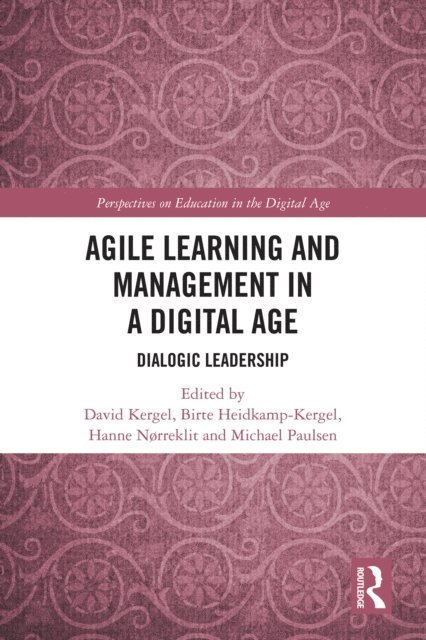
This book offers a detailed theoretical analysis of the fields of learning and management in the digital age. Taking an interdisciplinary approach, it opens a dialogue between agile management theory and agile learning theory.
The book argues that there is a tension between participative and action-orientated approaches on the one hand and neoliberal enclosure of the actor on the other hand. It takes this as an opportunity for interdisciplinary dialogue between learning theories and management concepts. With contributions from a range of international experts, chapters discuss the need for suitable theoretical, epistemological, and ethical foundations as well as practice-orientated methods for learning and management to implement appropriate strategies and meet educational challenges.
This highly topical book will be of great interest to academics, postgraduate students, and researchers in the fields of digital learning, educational theory, management theory, and communication studies.
599 kr
Läs direkt efter köp
This book offers a detailed theoretical analysis of the fields of learning and management in the digital age. Taking an interdisciplinary approach, it opens a dialogue between agile management theory and agile learning theory.
The book argues that there is a tension between participative and action-orientated approaches on the one hand and neoliberal enclosure of the actor on the other hand. It takes this as an opportunity for interdisciplinary dialogue between learning theories and management concepts. With contributions from a range of international experts, chapters discuss the need for suitable theoretical, epistemological, and ethical foundations as well as practice-orientated methods for learning and management to implement appropriate strategies and meet educational challenges.
This highly topical book will be of great interest to academics, postgraduate students, and researchers in the fields of digital learning, educational theory, management theory, and communication studies.
819 kr
Läs direkt efter köp
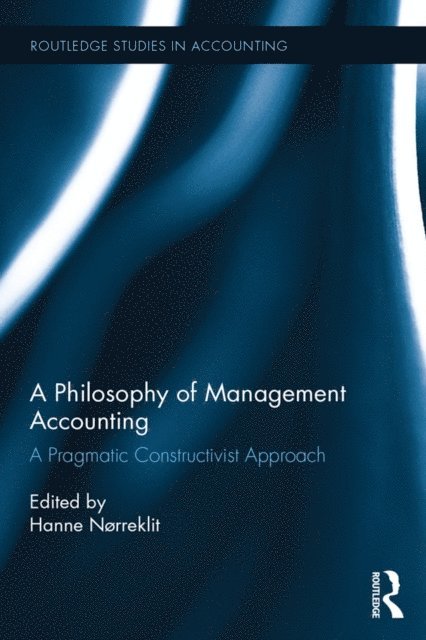
The book introduces pragmatic constructivism as a paradigm for understanding actors’ construction of functioning practice and for developing methods and concepts for managing and observing that practice. The book explores, understands and theorises organisational practices as constructed through the activities of all organisational actors. Actors always act under presumptions of a specific actor-world-relation which they continuously construct, adjust and reconstruct in light of new experiences, contexts and communication. The outcome of the actor-world-relation is a reality construction. The reality construction may function successfully or it may be hampered by fictitious and illusionary elements, due to missing or faulty actor-world relations. The thesis is that four dimensions of reality – facts, possibilities, values and communication – must be integrated in the actor-world-relation if the construct is to form a successful basis for effective, functioning actions.
Drawing on pragmatic constructivism, the book provides concepts and ideas for studies regarding actors and their use of management accounting models in their construction of organized reality. It concentrates on researching and conceptualizing what creates functioning reality construction. It develops concept and methods for understanding, analysing and managing the actors’ reality constructions. It is intended for people who do research on or work actively with developing management accounting.
819 kr
Läs direkt efter köp
The book introduces pragmatic constructivism as a paradigm for understanding actors’ construction of functioning practice and for developing methods and concepts for managing and observing that practice. The book explores, understands and theorises organisational practices as constructed through the activities of all organisational actors. Actors always act under presumptions of a specific actor-world-relation which they continuously construct, adjust and reconstruct in light of new experiences, contexts and communication. The outcome of the actor-world-relation is a reality construction. The reality construction may function successfully or it may be hampered by fictitious and illusionary elements, due to missing or faulty actor-world relations. The thesis is that four dimensions of reality – facts, possibilities, values and communication – must be integrated in the actor-world-relation if the construct is to form a successful basis for effective, functioning actions.
Drawing on pragmatic constructivism, the book provides concepts and ideas for studies regarding actors and their use of management accounting models in their construction of organized reality. It concentrates on researching and conceptualizing what creates functioning reality construction. It develops concept and methods for understanding, analysing and managing the actors’ reality constructions. It is intended for people who do research on or work actively with developing management accounting.
207 kr
Läs direkt efter köp
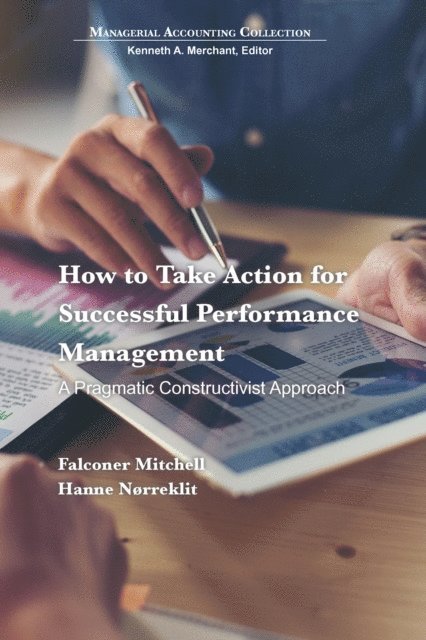
Managerial personnel involved in such activity will hold many beliefs about how their organization functions. This text uses the philosophy of pragmatic constructivism to show how managerial beliefs that underlie action can be made explicit and so facilitate their assessment and improvement. This involves recognizing and integrating the four dimensions (facts, possibilities, values, and communication) that represent how managers relate to the reality in which they operate.
When managerial beliefs are based on an accurate representation of reality, they are more likely to be successful. Problems occur where reality is misrepresented in managerial beliefs. This is especially so in performance management, as the book illustrates using real-world examples. Specific topics addressed include planning and decision making, performance management of investment center managers, strategic performance management, and operational performance management.