Hannes Schuepp – författare
Visar alla böcker från författaren Hannes Schuepp. Handla med fri frakt och snabb leverans.
6 produkter
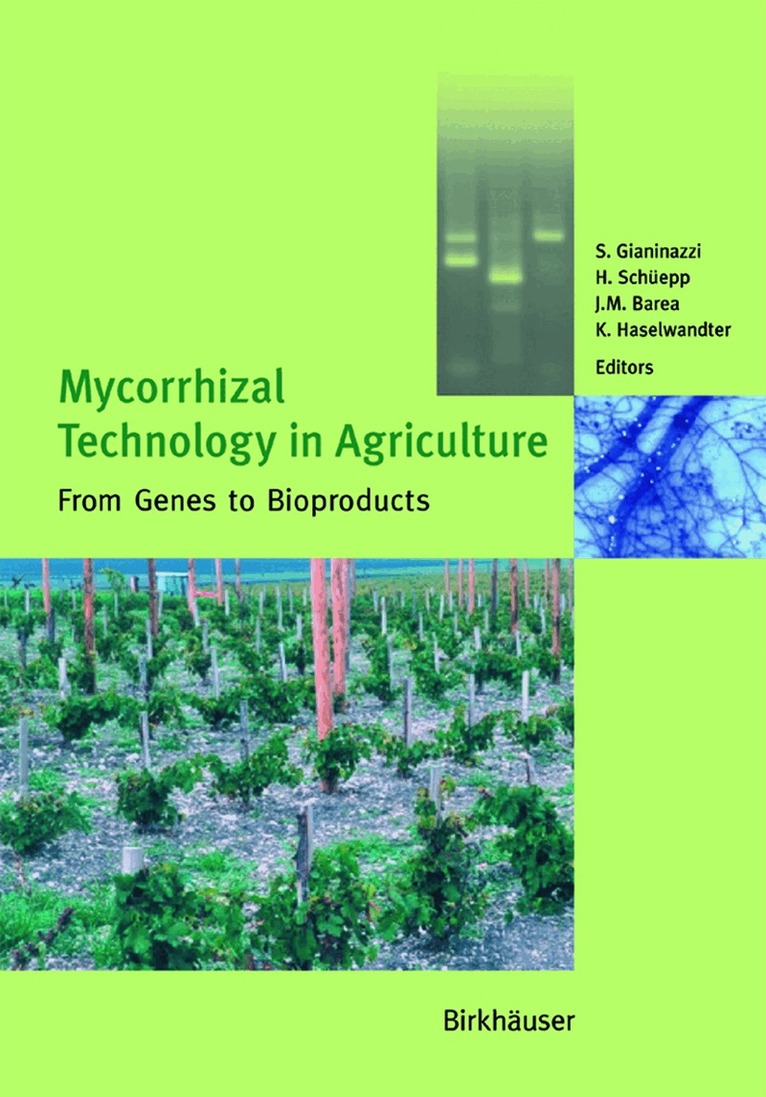
Mycorrhizal Technology in Agriculture
From Genes to Bioproducts
Av K. Haselwandter, J.M. Barea m. fl.
E-bok, 2012
2111 kr
Lägg i varukorg
Arbuscular Mycorrhiza (AM) is the most common mycorrhizal type involved in agricultural systems, and the most widespread plant root symbiosis. The fungi involved (Glomales) are known to promote plant growth and health by acting as biofertilizers, bioprotectors and bioregulators. The main aim of …
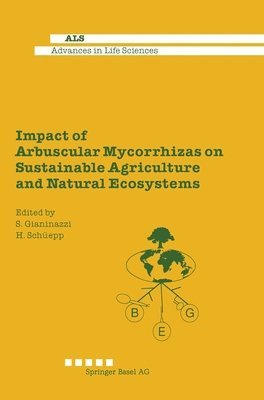
Impact of Arbuscular Mycorrhizas on Sustainable Agriculture and Natural Ecosystems
Av Hannes Schuepp, Silvio Gianiazzi
E-bok, 2012
734 kr
Lägg i varukorg
This book, prepared by participants of the European network COST ACTION 810 (1989-93) is the outcome of a meeting held in Switzerland (Einsiedeln, September 29 to October 2, 1993) on the "Impact of arbuscular mycorrhizas on sustainable agriculture and natural ecosystems". COST(Cooperation …
Mycorrhizal Technology in Agriculture
From Genes to Bioproducts
Av S. Gianinazzi, Hannes Schüepp m. fl.
Häftad, 2012
1639 kr
Lägg i varukorg
Arbuscular Mycorrhiza (AM) is the most common mycorrhizal type involved in agricultural systems, and the most widespread plant root symbiosis. The fungi involved (Glomales) are known to promote plant growth and health by acting as biofertilizers, bioprotectors and bioregulators. The main aim of …
Impact of Arbuscular Mycorrhizas on Sustainable Agriculture and Natural Ecosystems
Av Silvio Gianiazzi, Hannes Schüepp
Häftad, 2013
551 kr
Lägg i varukorg
This book, prepared by participants of the European network COST ACTION 810 (1989-93) is the outcome of a meeting held in Switzerland (Einsiedeln, September 29 to October 2, 1993) on the "Impact of arbuscular mycorrhizas on sustainable agriculture and natural ecosystems". COST(Cooperation …
Impact of Arbuscular Mycorrhizas on Sustainable Agriculture and Natural Ecosystems
Av Silvio Gianiazzi, Hannes Schuepp
Inbunden, 1994
877 kr
Lägg i varukorg
Mycorrhizal Technology in Agriculture
From Genes to Bioproducts
Av S. Gianinazzi, Hannes Schüepp m. fl.
Inbunden, 2002
1639 kr
Lägg i varukorg
Arbuscular Mycorrhiza (AM) is the most common mycorrhizal type involved in agricultural systems, and the most widespread plant root symbiosis. The fungi involved (Glomales) are known to promote plant growth and health by acting as biofertilizers, bioprotectors and bioregulators. The main aim of …