Hanno Sauer - Böcker
Visar alla böcker från författaren Hanno Sauer. Handla med fri frakt och snabb leverans.
13 produkter
13 produkter
731 kr
Skickas inom 5-8 vardagar
332 kr
Skickas inom 10-15 vardagar
In recent research, dual-process theories of cognition have been the primary model for explaining moral judgment and reasoning. These theories understand moral thinking in terms of two separate domains: one deliberate and analytic, the other quick and instinctive. This book presents a new theory of the philosophy and cognitive science of moral judgment. Hanno Sauer develops and defends an account of "triple-process" moral psychology, arguing that moral thinking and reasoning are only insufficiently understood when described in terms of a quick but intuitive and a slow but rational type of cognition. This approach severely underestimates the importance and impact of dispositions to initiate and engage in critical thinking – the cognitive resource in charge of counteracting my-side bias, closed-mindedness, dogmatism, and breakdowns of self-control. Moral cognition is based, not on emotion and reason, but on an integrated network of intuitive, algorithmic and reflective thinking.Moral Thinking, Fast and Slow will be of great interest to philosophers and students of ethics, philosophy of psychology and cognitive science.
2 088 kr
Skickas inom 10-15 vardagar
This book develops a unified theory of moral progress. The author argues that there are mechanisms in place that consistently drive societies towards moral improvement and that a sophisticated, naturalistically respectable form of teleology can be defended.The book’s main aim is to flesh out the process of moral progress in more detail, and to show how, when the right mechanisms and institutions of moral progress are matched together, they create pressure for the desired types of moral gains to manifest. The first part of the book deals with two issues: the conceptual one about what moral progress is, and the broadly empirical one whether it is possible. It shows that cultural evolution successfully explains the origins of modern forms of morally welcome change. The second part argues that there is logical space for a moderate, scientifically credible form of teleology, and that the converse case for moral decline is weak. It addresses the types, drivers, and institutions of moral progress that allow for the storage, transmission, and cumulative improvement of our normative infrastructure over time. Finally, the third part demonstrates why moral progress cannot be accounted for in metaethically realist terms.Moral Teleology will be of interest to researchers and advanced students working in ethics, moral epistemology, and moral psychology.The Open Access version of this book, available at http://www.taylorfrancis.com, has been made available under a Creative Commons Attribution-Non Commercial-No Derivatives (CC-BY-NC-ND) 4.0 license.
576 kr
Skickas inom 10-15 vardagar
This book develops a unified theory of moral progress. The author argues that there are mechanisms in place that consistently drive societies towards moral improvement and that a sophisticated, naturalistically respectable form of teleology can be defended.The book’s main aim is to flesh out the process of moral progress in more detail, and to show how, when the right mechanisms and institutions of moral progress are matched together, they create pressure for the desired types of moral gains to manifest. The first part of the book deals with two issues: the conceptual one about what moral progress is, and the broadly empirical one whether it is possible. It shows that cultural evolution successfully explains the origins of modern forms of morally welcome change. The second part argues that there is logical space for a moderate, scientifically credible form of teleology, and that the converse case for moral decline is weak. It addresses the types, drivers, and institutions of moral progress that allow for the storage, transmission, and cumulative improvement of our normative infrastructure over time. Finally, the third part demonstrates why moral progress cannot be accounted for in metaethically realist terms.Moral Teleology will be of interest to researchers and advanced students working in ethics, moral epistemology, and moral psychology.The Open Access version of this book, available at http://www.taylorfrancis.com, has been made available under a Creative Commons Attribution-Non Commercial-No Derivatives (CC-BY-NC-ND) 4.0 license.
1 245 kr
Tillfälligt slut
In this crisply written book, Hanno Sauer offers the first book-length treatment of debunking arguments in ethics, developing an empirically informed and philosophically sophisticated account of genealogical arguments and their significance for the reliability of moral cognition. He breaks new ground by introducing a series of novel distinctions into the current debate, which allows him to develop a framework for assessing the prospects of debunking or vindicating our moral intuitions. He also challenges the justification of some of our moral judgments by showing that they are based on epistemically defective processes. His book is an original, cutting-edge contribution to the burgeoning field of empirically informed metaethics, and will interest philosophers, psychologists, and anyone interested in how - and whether - moral judgment works.
415 kr
Skickas inom 7-10 vardagar
In this crisply written book, Hanno Sauer offers the first book-length treatment of debunking arguments in ethics, developing an empirically informed and philosophically sophisticated account of genealogical arguments and their significance for the reliability of moral cognition. He breaks new ground by introducing a series of novel distinctions into the current debate, which allows him to develop a framework for assessing the prospects of debunking or vindicating our moral intuitions. He also challenges the justification of some of our moral judgments by showing that they are based on epistemically defective processes. His book is an original, cutting-edge contribution to the burgeoning field of empirically informed metaethics, and will interest philosophers, psychologists, and anyone interested in how - and whether - moral judgment works.
901 kr
Skickas inom 10-15 vardagar
In recent research, dual-process theories of cognition have been the primary model for explaining moral judgment and reasoning. These theories understand moral thinking in terms of two separate domains: one deliberate and analytic, the other quick and instinctive. This book presents a new theory of the philosophy and cognitive science of moral judgment. Hanno Sauer develops and defends an account of "triple-process" moral psychology, arguing that moral thinking and reasoning are only insufficiently understood when described in terms of a quick but intuitive and a slow but rational type of cognition. This approach severely underestimates the importance and impact of dispositions to initiate and engage in critical thinking – the cognitive resource in charge of counteracting my-side bias, closed-mindedness, dogmatism, and breakdowns of self-control. Moral cognition is based, not on emotion and reason, but on an integrated network of intuitive, algorithmic and reflective thinking.Moral Thinking, Fast and Slow will be of great interest to philosophers and students of ethics, philosophy of psychology and cognitive science.
258 kr
Skickas
AN ECONOMIST BOOK OF THE YEAR'An ambitious and anecdote-rich sweeping history of morality's growing influence over our lives' WALL STREET JOURNAL'This fat, complex, good-natured and intriguing book is full of such memorable material...startling and often thrilling' SPECTATOR'A heroic effort...rich with complex narrative, full of unexpected twists like the inquisitors' tale' ECONOMISTFor almost five million years, humans have been locked in a relationship with morality, inventing and reinventing the concepts of 'Good' and 'Evil', and weaving them into our cities, laws and customs.Morality is a concept that can feel joyless and claustrophobic, associated with restraint and coercion, restriction and sacrifice, inquisition, confession and a guilty conscience. For many, it is a device used to shame us into compliance. This impression is not necessarily incorrect, but it is most certainly incomplete.Hanno Sauer traces humanity's fundamental moral transformations from our earliest ancestors through to the present day, when it can often seem that we have never disagreed more over what it means to be good, and what it means to be right. But we can use our past as a basis for a new understanding of our future. Our current political disagreements may feel like the end of the world, but where will the evolution of morality take us next?
133 kr
Kommande
AN ECONOMIST BOOK OF THE YEAR 'Blending insights from evolutionary biology, cognitive science and anthropology, Sauer has made a heroic effort to chart how morality has changed' Economist'The best thing on morality I have ever read' Paul Bloom'A brisk, engaging survey covering five million years of human history' Financial TimesThe history of humankind is punctuated by a series of transformational leaps. Just as good and evil cannot exist without the other, each new configuration for how we live together - how we distinguish and enforce right from wrong - was accompanied by new sins. Collaboration gives rise to division; culture requires exclusion; and justice demands punishment. The morality of early civilisations is markedly different from that in the dark ages or the enlightenment. As for the present day, did morality follow us here? Or did it lead the way? Philosopher and professor of Ethics Hanno Sauer traces the path of our moral transformations from our earliest ancestors to this very moment and beyond.
279 kr
Skickas inom 3-6 vardagar
279 kr
Skickas inom 3-6 vardagar
190 kr
Skickas inom 3-6 vardagar
243 kr
Skickas
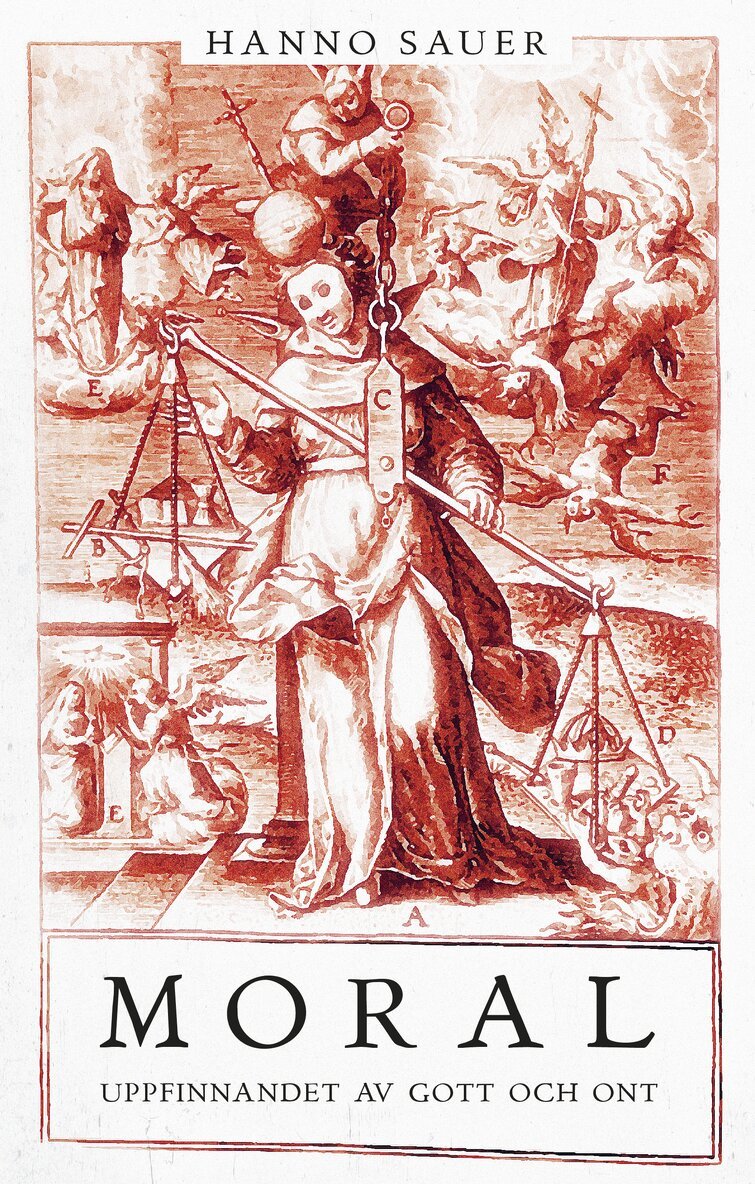
Man brukar skilja mellan moral och etik. Moral är de föreställningar om rätt och fel, gott och ont som finns i och håller ihop ett samhälle. Etik är läran om moral, de olika teorier som utvecklats av filosofer genom århundradena. Denna bok handlar om moralens historia. Filosofen Hanno Sauer skildrar avgörande omvälvningarna i det moraliska medvetandets utveckling, från framväxten av mänskligt samarbete för fem miljoner år sedan fram till våra dagars upptagenhet av identitet. Den handlar om hur institutioner, tekniker, och kunskaper utvecklats i samspel med värden och normer – och om att varje framsteg har ett pris som skapar nya moraliska utmaningar. Vår tidiga evolution gjorde oss samarbetsinriktade, men också fientliga mot alla som inte tillhörde vår grupp – den som säger ”vi” säger snart också ”dom”. Moderniteten födde en idé om moralisk jämlikhet, men också kolonialism. Dagens försök att göra oss kvitt arvet av godtycke och diskriminering, med rasism, sexism och homofobi, visar sig också skapa polarisering och identitetskonflikter. Sauer beskriver hur det han kallar vår moraliska infrastruktur utvecklats i omgångar. I sju kapitel, med nedslag 5000000, 500000, 50000, 5000, 500, 50 respektive 5 år tillbaka skildrar han uppkomsten av föreställningar om samarbete och konflikt, vi och dom, brott och straff, jämlikhet och ojämlikhet, autonomi och individualitet, sårbarhet och tillhörighet, respekt och diskriminering. Det han erbjuder är inte historieskrivning i traditionell mening med händelser, årtal och namn, utan en sorts ”djup historia”. Baserad på biologisk, historisk och samhällsvetenskaplig forskning framkastar Sauer ett scenario för hur det ungefär kan ha gått till. Hanno Sauer, född 1984, är verksam vid filosofiska institutionen vid universitetet i Utrecht där han undervisar och forskar i etik. Boken var nominerad till 2023 års tyska fackbokpris. Sauer har tidigare kommit ut med bland annat "Moral Thinking, Fast and Slow" (2018) och "Moral Teleology: A History of Progress" (2023).