Hans A. Pohlsander – författare
Visar alla böcker från författaren Hans A. Pohlsander. Handla med fri frakt och snabb leverans.
8 produkter
8 produkter
Inbunden, Engelska, 2004
2 237 kr
Skickas inom 5-8 vardagar
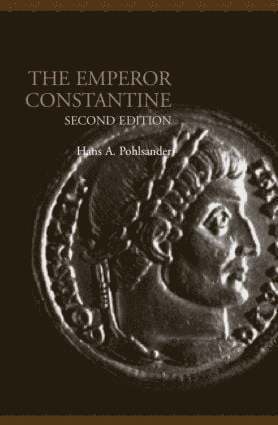
First published in 2004. The Emperor Constantine provides a convenient and concise intro- duction to one of the most important figures in ancient history. Taking into account the historiographical debates of the twentieth and twenty-first centuries, Hans A. Pohlsander assesses Constantine’s achievements. Key topics discussed include: How Constantine rose to power; The relationship between church and state during his reign; Constantine’s ability as a soldier and statesmen; The conflict with Licinius. This second edition is updated throughout to take into account the latest research on the subject. Also included is a revised introduction and an expanded bibliography.
Häftad, Engelska, 2004
600 kr
Skickas inom 10-15 vardagar
First published in 2004. The Emperor Constantine provides a convenient and concise intro- duction to one of the most important figures in ancient history. Taking into account the historiographical debates of the twentieth and twenty-first centuries, Hans A. Pohlsander assesses Constantine’s achievements. Key topics discussed include: How Constantine rose to power; The relationship between church and state during his reign; Constantine’s ability as a soldier and statesmen; The conflict with Licinius. This second edition is updated throughout to take into account the latest research on the subject. Also included is a revised introduction and an expanded bibliography.
Del 7 - Cultural Legacies
Greek Texts of the Fourth to Thirteenth Centuries
Häftad, Engelska, 1999
260 kr
Skickas inom 5-8 vardagar
E-bok
Engelska, 2004685 kr
Läs direkt efter köp
First published in 2004. The Emperor Constantine provides a convenient and concise intro- duction to one of the most important figures in ancient history. Taking into account the historiographical debates of the twentieth and twenty-first centuries, Hans A. Pohlsander assesses Constantine’s achievements. Key topics discussed include: How Constantine rose to power; The relationship between church and state during his reign; Constantine’s ability as a soldier and statesmen; The conflict with Licinius. This second edition is updated throughout to take into account the latest research on the subject. Also included is a revised introduction and an expanded bibliography.
E-bok
PDF, Engelska, 2004685 kr
Läs direkt efter köp
First published in 2004. The Emperor Constantine provides a convenient and concise intro- duction to one of the most important figures in ancient history. Taking into account the historiographical debates of the twentieth and twenty-first centuries, Hans A. Pohlsander assesses Constantine’s achievements. Key topics discussed include: How Constantine rose to power; The relationship between church and state during his reign; Constantine’s ability as a soldier and statesmen; The conflict with Licinius. This second edition is updated throughout to take into account the latest research on the subject. Also included is a revised introduction and an expanded bibliography.
Del 12 - Sources for the History of Cyprus
German Texts
Turkish Period (after 1800)
Häftad, Engelska, 2006
260 kr
Skickas inom 5-8 vardagar
Del 31 - New German-American Studies/Neue Deutsch-Amerikanische Studien
National Monuments and Nationalism in 19th Century Germany
Häftad, Engelska, 2008
1 230 kr
Skickas inom 5-8 vardagar
No century in modern European history has built monuments with more enthusiasm than the 19th. Of the hundreds of monuments erected, those which sprang from a nation-wide initiative and addressed themselves to a nation, rather than part of a nation, we may call national monuments. Nelson’s Column in London or the Arc de Triomphe in Paris are obvious examples. In Germany the 19th century witnessed a veritable flood of monuments, many of which rank as national monuments. These reflected and contributed to a developing sense of national identity and the search for national unity; they also document an unsuccessful effort to create a «genuinely German» style. They constitute a historical record, quite apart from aesthetic appeal or ideological message. As this historical record is examined, German national monuments of the 19th century are described and interpreted against the background of the nationalism which gave birth to them.
E-bok
Spanska, 201579 kr
Läs direkt efter köp
Constantino es considerado el personaje más importante de la Antigüedad Tardía. Puso los cimientos de la Basílica de San Pedro y de la Iglesia del Santo Sepulcro en Jerusalén, y de toda la civilización europea posclásica. Su victoria en el Puente Milvio se cuenta entre los momentos decisivos de la historia del mundo. Pero también fue muy controvertido, y desde hace siglos los historiadores lo critican, y dudan e incluso niegan su conversión al cristianismo.En este libro, el autor reúne ese legado con equilibrio y brevedad, y presenta al personaje a la luz de las últimas investigaciones, ahondando en su posición como primer emperador cristiano.