Hans Jakob Walnum - Böcker
Visar alla böcker från författaren Hans Jakob Walnum. Handla med fri frakt och snabb leverans.
3 produkter
3 produkter
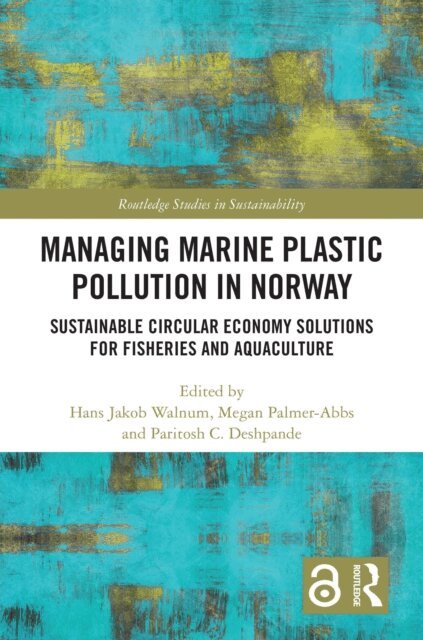
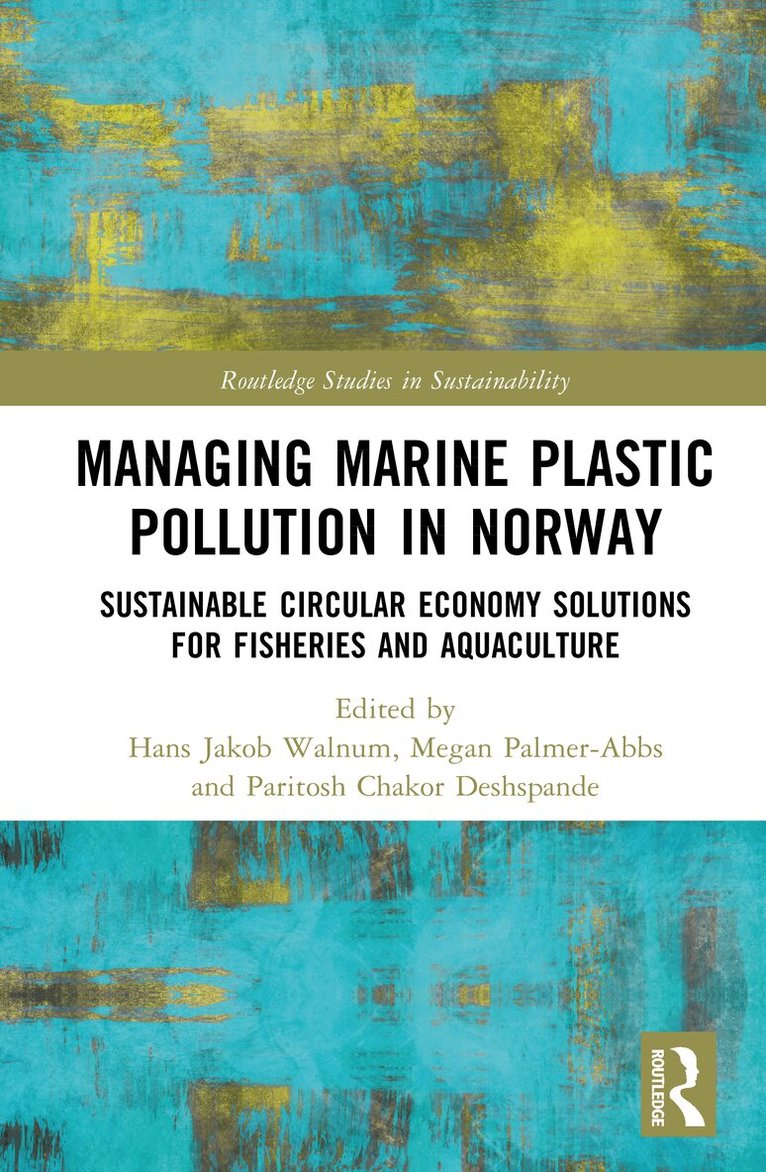
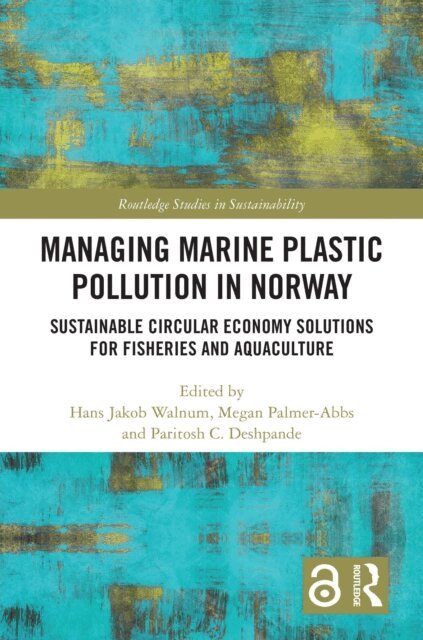
Managing Marine Plastic Pollution in Norway
Sustainable Circular Economy Solutions for Fisheries and Aquaculture
Inbunden, Engelska, 2026
2 098 kr
Skickas inom 10-15 vardagar
Based on the collaborative, interdisciplinary research project Shift-Plastics this book establish sustainable circular value chains for managing plastics in the fisheries and aquaculture industries, which are significant causes of ocean plastic pollution.Focused on reducing plastic production and consumption by examining the entire life cycle and taking upstream measures, the Norwegian case presented in this book highlights globally relevant insights into how to manage the complexity of plastic pollution and the systemic changes needed for a sustainable circular economy (SCE).This book takes a transdisciplinary approach, incorporating academic perspectives and collaborating with industry and public bodies to improve plastic handling in the fisheries and aquaculture industries. It integrates multiple scientific disciplines, including technological science, policy science, economics, environmental science, design thinking, and systems thinking. It also investigates the value chain of plastic use in the fisheries and aquaculture industries to map their management practices and pinpoint issues that can be improved throughout the process. In doing so, it provides practical advice on how to create effective policies in line with a SCE for both businesses and policymakers. Further, it highlights how plastic production can be reduced through extended usability, ways to apply eco-design principles to create products that can easily be disassembled, repaired, and recycled, and options for using bioplastics and recycled materials. Finally, it presents a roadmap that connects changes in industrial practices, infrastructure needs and policy design in the short, medium, and long term to achieve reduced plastic use and plastic pollution in the fisheries and aquaculture industries.Managing Marine Plastic Pollution in Norway will be an important research reference and tool for academics, students, policymakers, industry and business professionals in pollution and waste management, sustainability, circular economy, and marine, fishery, and environmental management.The Open Access version of this book, available at www.taylorfrancis.com, has been made available under a Creative Commons Attribution-Non Commercial-No Derivatives (CC BY-NC-ND) 4.0 International license.
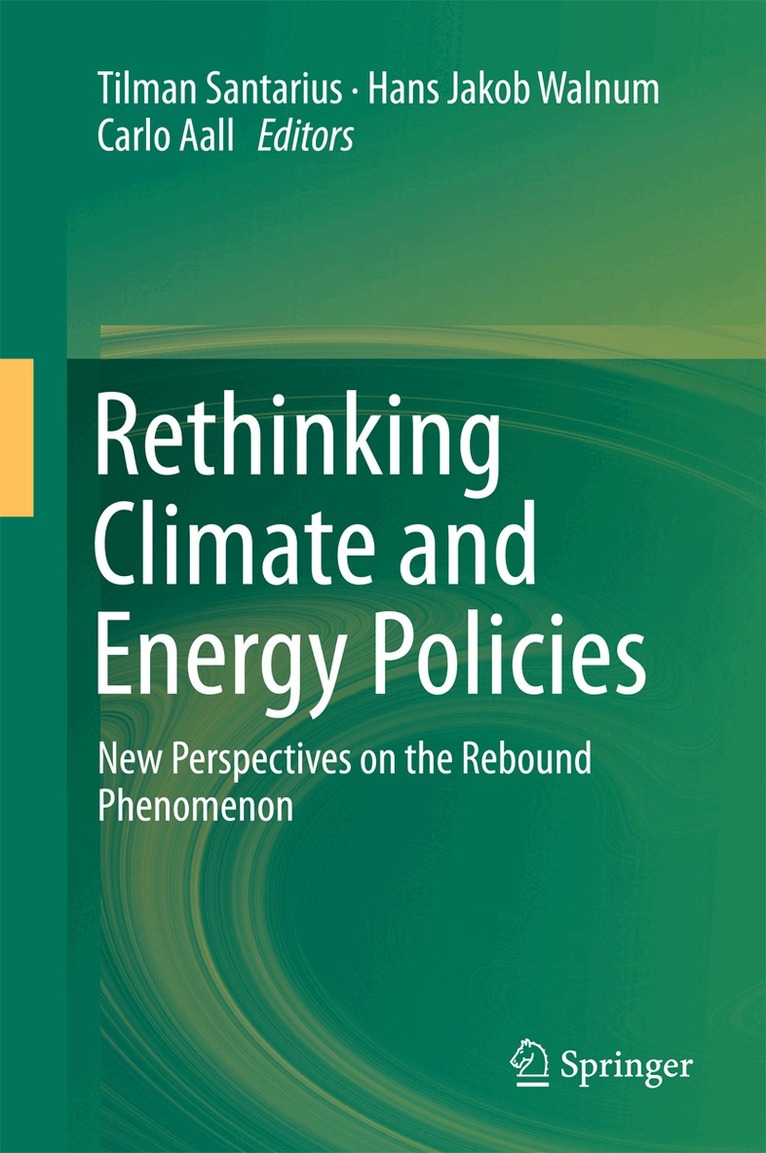
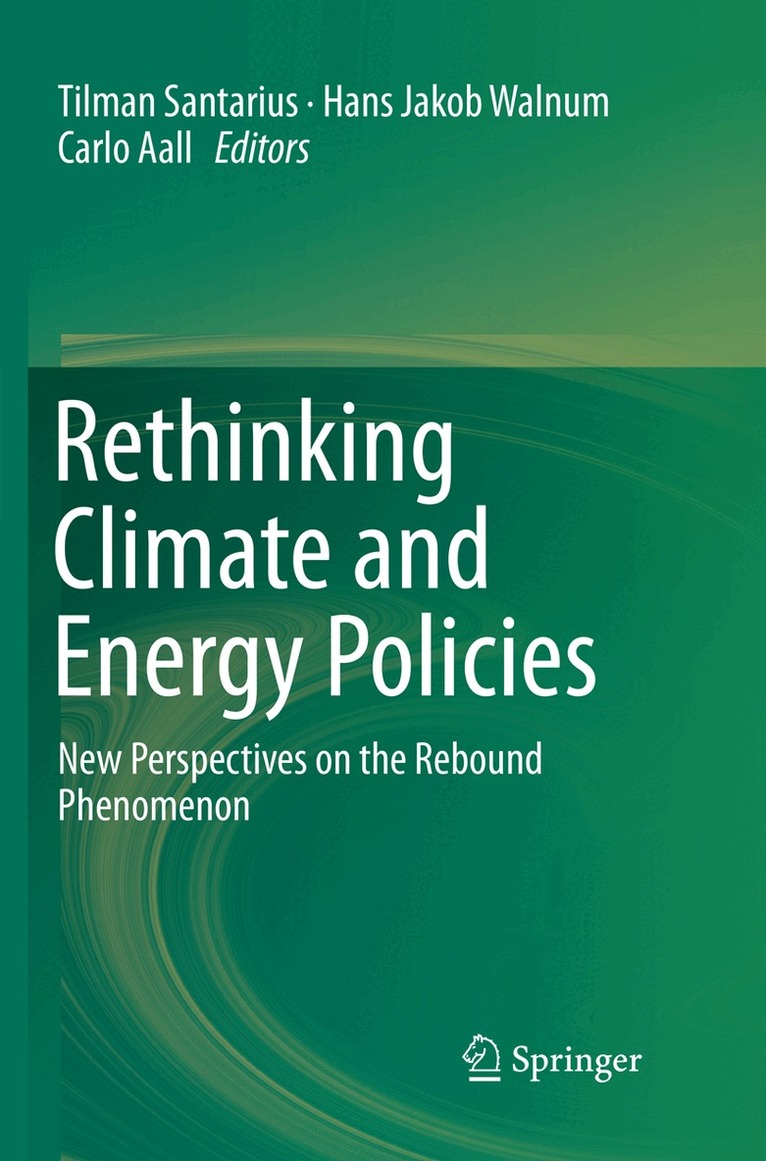
Rethinking Climate and Energy Policies
New Perspectives on the Rebound Phenomenon
Inbunden, Engelska, 2016
1 069 kr
Skickas inom 10-15 vardagar
This book calls for rethinking current climate, energy and sustainability policy-making by presenting new insights into the rebound phenomenon; i.e., the driving forces, mechanisms and extent of rebound effects and potential means of mitigating them. It pursues an innovative and novel approach to the political and scientific rebound discourse and hence, supplements the current state-of-knowledge discussed in the field of energy economics and recent reports by the Intergovernmental Panel on Climate Change.Building on central rebound publications from the past four decades, this book is divided into three main sections: Part I highlights new aspects of rebound economics by presenting insights into issues that have so far not been satisfactorily researched, such as rebounds in countries of the Global South, rebounds on the producer-side, and rebounds from sufficiency behaviour (as opposed to rebounds from technical efficiency improvements). In turn, Part II goes beyond conventional economic rebound research, exploring multidisciplinary perspectives on the phenomenon, in particular from the fields of psychology and sociology. Advancing such multidisciplinary perspectives delivers a more comprehensive understanding of rebound’s driving forces, mechanisms, and policy options. Part III puts rebounds into practice and presents several policy cases and sector-specific approaches, including the contexts of labour markets, urban planning, tourism, information and communication technologies, and transport. Lastly, the book embeds the issue into the larger debate on decoupling, green growth and degrowth, and identifies key lessons learned for sustainable development strategies and policies at large. By employing such varied and in-depth analyses, the book makes an essential contribution to the discussion of the overall question: Can resource-, energy-use and greenhouse gas emissions be substantially reduced without hindering economic growth?
Rethinking Climate and Energy Policies
New Perspectives on the Rebound Phenomenon
Häftad, Engelska, 2018
1 069 kr
Skickas inom 10-15 vardagar
This book calls for rethinking current climate, energy and sustainability policy-making by presenting new insights into the rebound phenomenon; i.e., the driving forces, mechanisms and extent of rebound effects and potential means of mitigating them. It pursues an innovative and novel approach to the political and scientific rebound discourse and hence, supplements the current state-of-knowledge discussed in the field of energy economics and recent reports by the Intergovernmental Panel on Climate Change.Building on central rebound publications from the past four decades, this book is divided into three main sections: Part I highlights new aspects of rebound economics by presenting insights into issues that have so far not been satisfactorily researched, such as rebounds in countries of the Global South, rebounds on the producer-side, and rebounds from sufficiency behaviour (as opposed to rebounds from technical efficiency improvements). In turn, Part II goes beyond conventional economic rebound research, exploring multidisciplinary perspectives on the phenomenon, in particular from the fields of psychology and sociology. Advancing such multidisciplinary perspectives delivers a more comprehensive understanding of rebound’s driving forces, mechanisms, and policy options. Part III puts rebounds into practice and presents several policy cases and sector-specific approaches, including the contexts of labour markets, urban planning, tourism, information and communication technologies, and transport. Lastly, the book embeds the issue into the larger debate on decoupling, green growth and degrowth, and identifies key lessons learned for sustainable development strategies and policies at large. By employing such varied and in-depth analyses, the book makes an essential contribution to the discussion of the overall question: Can resource-, energy-use and greenhouse gas emissions be substantially reduced without hindering economic growth?