Hans Lindahl – författare
Visar alla böcker från författaren Hans Lindahl. Handla med fri frakt och snabb leverans.
10 produkter
10 produkter
E-bok
PDF, Engelska, 2013799 kr
Läs direkt efter köp
The question whether and how boundaries might individuate and thereby be constitutive features of any imaginable legal order has yet to be addressed in a systematic and comprehensive manner by legal and political theory. This book seeks to address this important omission, providing an original contribution to the debate about law in a global setting. Against the widely endorsed assumption that we are now moving towards law without boundaries, it argues that everyimaginable legal order, global or otherwise, is bounded in space, time, membership, and content.The book is built up around three main insights. Firstly, that legal orders can best be understood as a form of joint action in which authorities mediate and uphold who ought to do what, where, and when with a view to realising the normative point of acting together. Secondly, that behaviour can call into question the boundaries that determine who ought to do what, where and when: a-legality. Thirdly, that this a-legality reveals boundaries as marking a limit and, to a lesser or greaterextent, a fault line of the respective legal order. Legal boundaries reveal ways of ordering the who, what, where, and when of behaviour which have been excluded, yet which remain within the range of practical possibilities accessible to the collective: limits. However legal boundaries also intimate anorder which exceeds the range of possibilities accessible to that collective - the fault line of the respective legal order.Careful analysis of a wide range of legal orders, including nomadism, Roman law, classical international law, ius gentium, multinationals, cyberlaw, lex mercatoria, the EU, global regimes of human rights, and space law validates this thesis. What sense, then, can we make of the normativity of the law, if there can be no inclusion without exclusion? Arguing that legal and political theories misunderstand how legal boundaries do their work of including and excluding, the book develops anormative theory of legal order which is alternative to both communitarianism and cosmopolitanism.
E-bok
Engelska, 20131 106 kr
Läs direkt efter köp
The question whether and how boundaries might individuate and thereby be constitutive features of any imaginable legal order has yet to be addressed in a systematic and comprehensive manner by legal and political theory. This book seeks to address this important omission, providing an original contribution to the debate about law in a global setting. Against the widely endorsed assumption that we are now moving towards law without boundaries, it argues that everyimaginable legal order, global or otherwise, is bounded in space, time, membership, and content.The book is built up around three main insights. Firstly, that legal orders can best be understood as a form of joint action in which authorities mediate and uphold who ought to do what, where, and when with a view to realising the normative point of acting together. Secondly, that behaviour can call into question the boundaries that determine who ought to do what, where and when: a-legality. Thirdly, that this a-legality reveals boundaries as marking a limit and, to a lesser or greaterextent, a fault line of the respective legal order. Legal boundaries reveal ways of ordering the who, what, where, and when of behaviour which have been excluded, yet which remain within the range of practical possibilities accessible to the collective: limits. However legal boundaries also intimate anorder which exceeds the range of possibilities accessible to that collective - the fault line of the respective legal order.Careful analysis of a wide range of legal orders, including nomadism, Roman law, classical international law, ius gentium, multinationals, cyberlaw, lex mercatoria, the EU, global regimes of human rights, and space law validates this thesis. What sense, then, can we make of the normativity of the law, if there can be no inclusion without exclusion? Arguing that legal and political theories misunderstand how legal boundaries do their work of including and excluding, the book develops anormative theory of legal order which is alternative to both communitarianism and cosmopolitanism.
Inbunden, Engelska, 2013
1 594 kr
Skickas inom 5-8 vardagar
The question whether and how boundaries might individuate and thereby be constitutive features of any imaginable legal order has yet to be addressed in a systematic and comprehensive manner by legal and political theory. This book seeks to address this important omission, providing an original contribution to the debate about law in a global setting. Against the widely endorsed assumption that we are now moving towards law without boundaries, it argues that every imaginable legal order, global or otherwise, is bounded in space, time, membership, and content.The book is built up around three main insights. Firstly, that legal orders can best be understood as a form of joint action in which authorities mediate and uphold who ought to do what, where, and when with a view to realising the normative point of acting together. Secondly, that behaviour can call into question the boundaries that determine who ought to do what, where and when: a-legality. Thirdly, that this a-legality reveals boundaries as marking a limit and, to a lesser or greater extent, a fault line of the respective legal order. Legal boundaries reveal ways of ordering the who, what, where, and when of behaviour which have been excluded, yet which remain within the range of practical possibilities accessible to the collective: limits. However legal boundaries also intimate an order which exceeds the range of possibilities accessible to that collective - the fault line of the respective legal order.Careful analysis of a wide range of legal orders, including nomadism, Roman law, classical international law, ius gentium, multinationals, cyberlaw, lex mercatoria, the EU, global regimes of human rights, and space law validates this thesis. What sense, then, can we make of the normativity of the law, if there can be no inclusion without exclusion? Arguing that legal and political theories misunderstand how legal boundaries do their work of including and excluding, the book develops a normative theory of legal order which is alternative to both communitarianism and cosmopolitanism.
Häftad, Engelska, 2018
463 kr
Skickas inom 7-10 vardagar
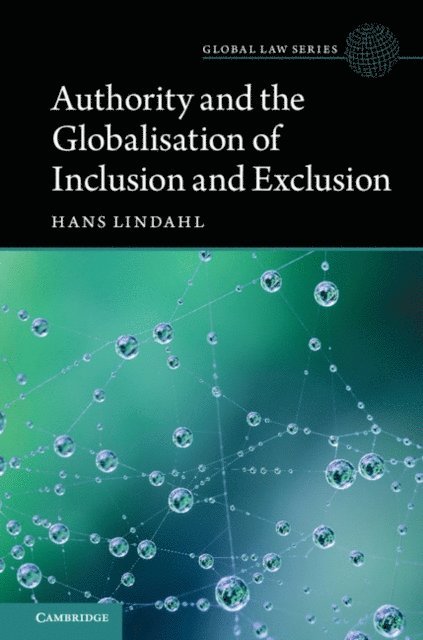
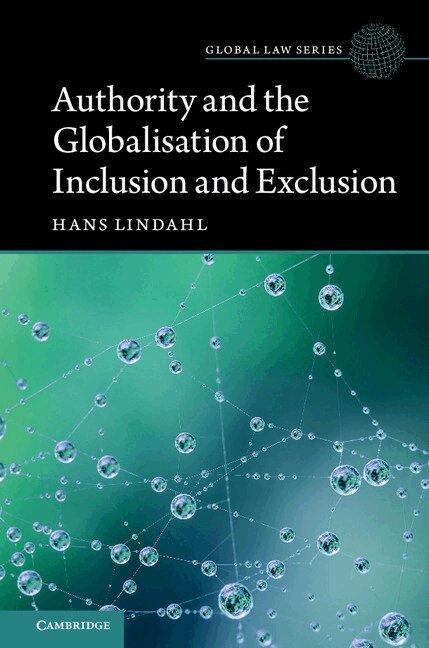
Protracted and bitter resistance by alter- and anti-globalisation movements shows that the globalisation of law transpires as the globalisation of inclusion and exclusion. Humanity is inside and outside global law in all its possible manifestations. But how is this possible? How must legal orders be structured, such that, even if we can now speak of law beyond state borders, no emergent global legal order is possible that does not include without excluding? Is an authoritative politics of boundaries possible that neither postulates the possibility of realising an all-inclusive global legal order nor accepts resignation or political paralysis in the face of the globalisation of inclusion and exclusion? These pressing questions guide this book, opening up a vast field of enquiry that demands integrating sociological, doctrinal and philosophical perspectives and insights.
E-bok
Engelska, 2018562 kr
Läs direkt efter köp
Protracted and bitter resistance by alter- and anti-globalisation movements shows that the globalisation of law transpires as the globalisation of inclusion and exclusion. Humanity is inside and outside global law in all its possible manifestations. But how is this possible? How must legal orders be structured, such that, even if we can now speak of law beyond state borders, no emergent global legal order is possible that does not include without excluding? Is an authoritative politics of boundaries possible that neither postulates the possibility of realising an all-inclusive global legal order nor accepts resignation or political paralysis in the face of the globalisation of inclusion and exclusion? These pressing questions guide this book, opening up a vast field of enquiry that demands integrating sociological, doctrinal and philosophical perspectives and insights.
E-bok
PDF, Engelska, 2018562 kr
Läs direkt efter köp
Protracted and bitter resistance by alter- and anti-globalisation movements shows that the globalisation of law transpires as the globalisation of inclusion and exclusion. Humanity is inside and outside global law in all its possible manifestations. But how is this possible? How must legal orders be structured, such that, even if we can now speak of law beyond state borders, no emergent global legal order is possible that does not include without excluding? Is an authoritative politics of boundaries possible that neither postulates the possibility of realising an all-inclusive global legal order nor accepts resignation or political paralysis in the face of the globalisation of inclusion and exclusion? These pressing questions guide this book, opening up a vast field of enquiry that demands integrating sociological, doctrinal and philosophical perspectives and insights.
Inbunden, Engelska, 2009
1 275 kr
Skickas inom 10-15 vardagar
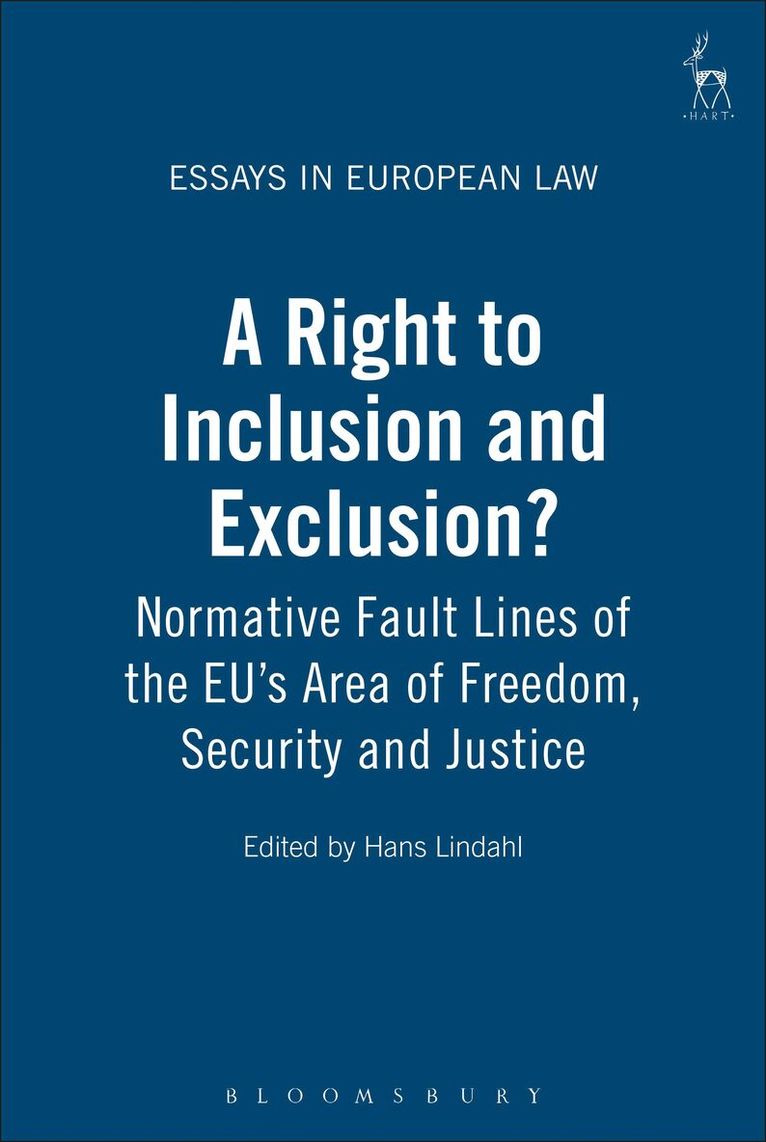
This volume of essays, situated at the interface between legal doctrine and legal and political philosophy, discusses the conceptual and normative issues posed by the right to inclusion and exclusion the EU claims for itself when enacting and enforcing immigration and asylum policy under the Area of Freedom, Security and Justice. In particular, the essays probe how this alleged right acquires institutional form; how the enactment and enforcement of the EU's external borders render possible and undermine the claim to such a right; and how the fundamental distinctions that underpin this alleged right, such as inside/outside and citizen/alien, are being disrupted and reconfigured in ways that might render the EU's civic and territorial boundaries more porous. The volume is divided into three parts. A first set of essays delves into the empirical aspects that define the institutional context of the EU's alleged jus includendi et excludendi. A second set of essays is theoretical in character, and critically scrutinizes the basic distinctions that govern this alleged right.The third set of essays discusses politico-legal alternatives, exploring how the conceptual and normative problems to which this alleged right gives rise might be dealt with, both legally and politically. The contributors to the volume are Peter Fitzpatrick, Bonnie Honig, Dora Kostakopoulou, Hans Lindahl, Valsamis Mitsilegas, Helen Oosterom-Staples, Bert van Roermund, Jo Shaw, Bernhard Waldenfels, Neil Walker and Ricard Zapata Barrero. The volume also includes a comprehensive introduction by the editor, highlighting systematic connections between the three parts and individual essays which comprise it.
E-bok
PDF, Engelska, 20091 343 kr
Läs direkt efter köp
This volume of essays, situated at the interface between legal doctrine and legal and political philosophy, discusses the conceptual and normative issues posed by the right to inclusion and exclusion the EU claims for itself when enacting and enforcing immigration and asylum policy under the Area of Freedom, Security and Justice. In particular, the essays probe how this alleged right acquires institutional form; how the enactment and enforcement of the EU''s external borders render possible and undermine the claim to such a right; and how the fundamental distinctions that underpin this alleged right, such as inside/outside and citizen/alien, are being disrupted and reconfigured in ways that might render the EU''s civic and territorial boundaries more porous. The volume is divided into three parts. A first set of essays delves into the empirical aspects that define the institutional context of the EU''s alleged jus includendi et excludendi. A second set of essays is theoretical in character, and critically scrutinizes the basic distinctions that govern this alleged right. The third set of essays discusses politico-legal alternatives, exploring how the conceptual and normative problems to which this alleged right gives rise might be dealt with, both legally and politically. The contributors to the volume are Peter Fitzpatrick, Bonnie Honig, Dora Kostakopoulou, Hans Lindahl, Valsamis Mitsilegas, Helen Oosterom-Staples, Bert van Roermund, Jo Shaw, Bernhard Waldenfels, Neil Walker and Ricard Zapata Barrero. The volume also includes a comprehensive introduction by the editor, highlighting systematic connections between the three parts and individual essays which comprise it.
E-bok
Spanska, 2024453 kr
Läs direkt efter köp
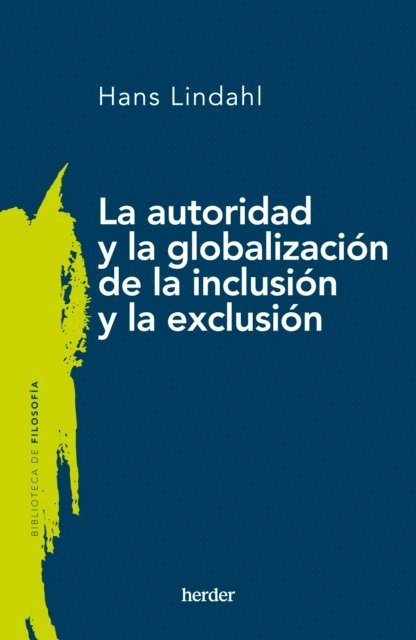
El ordenamiento jurídico tradicional, así como las teorías del derecho realistas y analíticas, no dan cuenta de lo que de verdad determina la inclusión o la exclusión jurídica de un ciudadano. Tanto los movimientos anti como alterglobalización advierten este fenómeno.Hoy más que nunca los ordenamientos jurídicos transnacionales y globalizadores —que no están limitados espacialmente y tienen además la pretensión universalizante de comprender en su jurisdicción a todo ser humano— desafían las fronteras de los Estados. Sin embargo, ¿es posible un orden jurídico que pueda incluir a todos, sin exclusión alguna?Hans Lindahl lo tiene claro: no es posible incluir sin excluir. Entonces, ¿cómo podemos evitar caer en el relativismo? ¿Es posible una política que no postule un orden jurídico omninclusivo, pero que a la vez tampoco acepte resignadamente la parálisis política que se da frente a la marginación generada por los procesos de globalización?A partir de estos interrogantes, y desde perspectivas tanto conceptuales como empíricas y normativas del derecho, Lindahl abre un amplio campo de indagación y reflexión, tan necesarios en tiempos actuales.
E-bok
Spanska, 2018121 kr
Läs direkt efter köp
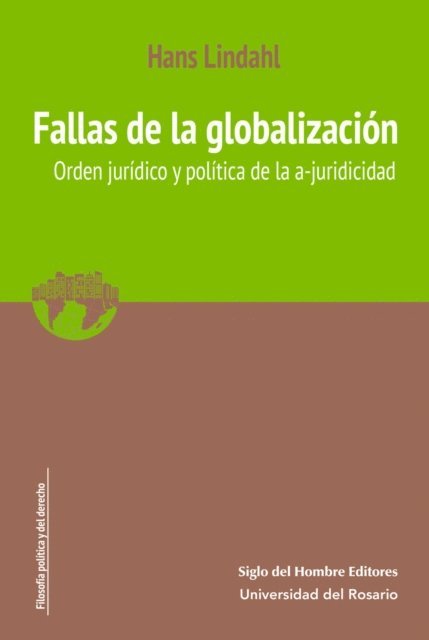
Juridicidad, antijuridicidad. A-juridicidad: un análisis preliminar. / Una topografía de órdenes jurídicos en un escenario global. / La identidad de los colectivos jurídicos. / Una genealogía de la ordenación jurídica. / A-juridicidad. / El establecimiento de confines jurídicos. / Una política de la a-juridicidad.