Hans Meinhardt – författare
Visar alla böcker från författaren Hans Meinhardt. Handla med fri frakt och snabb leverans.
6 produkter
6 produkter
794 kr
Skickas inom 10-15 vardagar
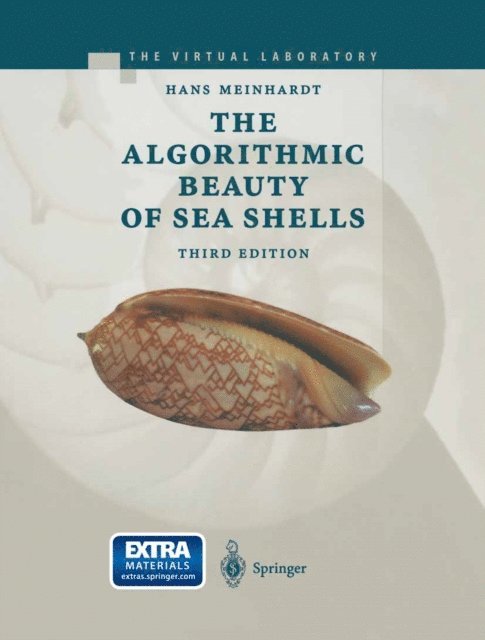
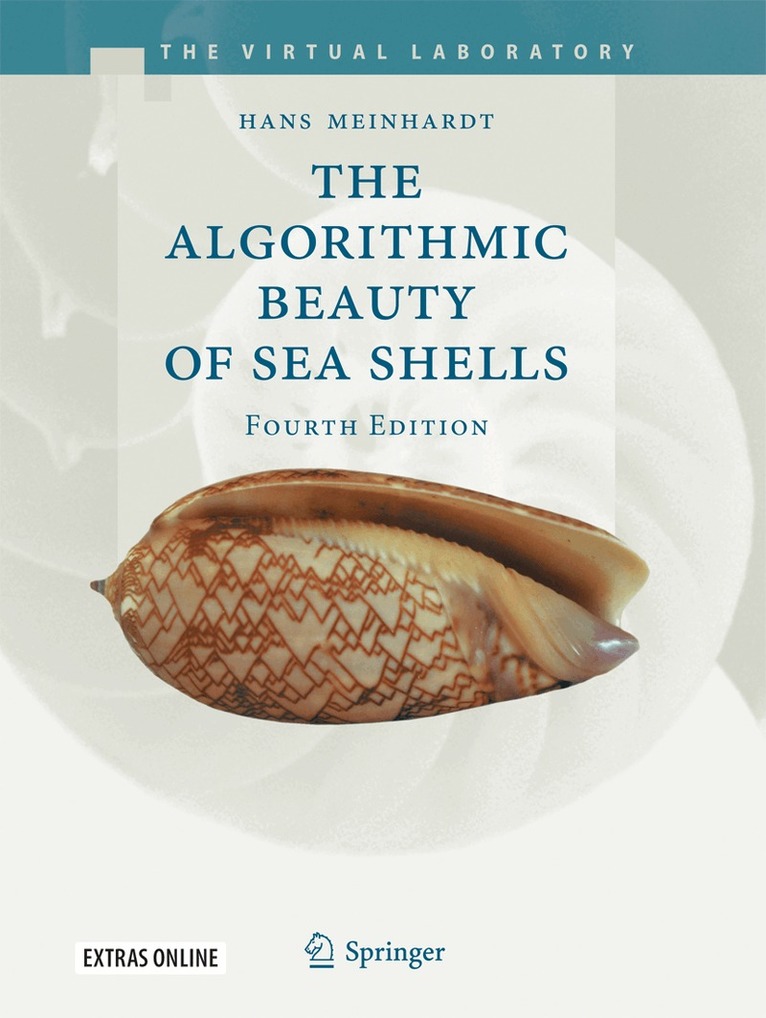
The pigment patterns on tropical shells are of great beauty and diversity. Their mixture of regularity and irregularity is fascinating. A particular pattern seems to follow particular rules but these rules allow variations. No two shells are identical. The motionless patterns appear to be static, and, indeed, they consist of calci?ed material. However, as will be shown in this book, the underlying mechanism that generates this beauty is eminently dynamic. It has much in common with other dynamic systems that generate patterns, such as a wind-sand system that forms large dunes, or rain and erosion that form complex rami?ed river systems. On other shells the underlying mechanism has much in common with waves such as those commonly observed in the spread of an epidemic. A mollusk can only enlarge its shell at the shell margin. In most cases, only at this margin are new elements of the pigmentation pattern added. Therefore, the shell pattern preserves the record of a process that took place over time in a narrow zone at the growing edge. A certain point on the shell represents a certain moment in its history. Like a time machine one can go into the past or the future just by turning the shell back and forth. Having this complete historical record opens the possibility of decoding the generic principles behind this beauty.
E-bok
PDF, Engelska, 2009896 kr
Läs direkt efter köp
The pigment patterns on tropical shells are of great beauty and diversity. Their mixture of regularity and irregularity is fascinating. A particular pattern seems to follow particular rules but these rules allow variations. No two shells are identical. The motionless patterns appear to be static, and, indeed, they consist of calci?ed material. However, as will be shown in this book, the underlying mechanism that generates this beauty is eminently dynamic. It has much in common with other dynamic systems that generate patterns, such as a wind-sand system that forms large dunes, or rain and erosion that form complex rami?ed river systems. On other shells the underlying mechanism has much in common with waves such as those commonly observed in the spread of an epidemic. A mollusk can only enlarge its shell at the shell margin. In most cases, only at this margin are new elements of the pigmentation pattern added. Therefore, the shell pattern preserves the record of a process that took place over time in a narrow zone at the growing edge. A certain point on the shell represents a certain moment in its history. Like a time machine one can go into the past or the future just by turning the shell back and forth. Having this complete historical record opens the possibility of decoding the generic principles behind this beauty.
E-bok
PDF, Tyska, 2013449 kr
Läs direkt efter köp
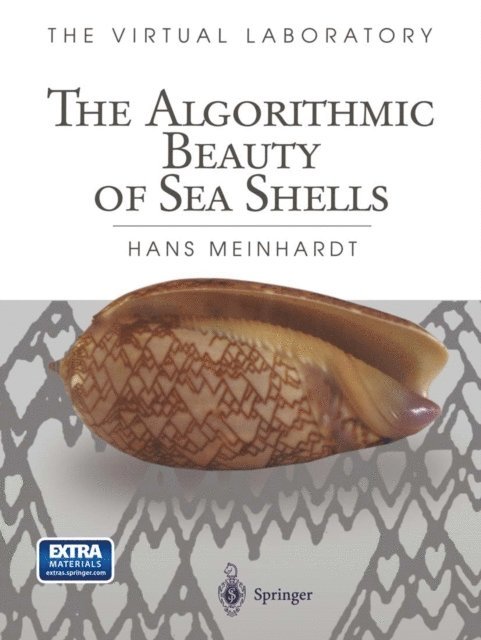
Die Dekors auf den Gehäusen tropischer Meeresschnecken sind nicht nur beeindruckend schön, sondern sie erzählen auch ein Stück biologischer Entwicklungsgeschichte. Die dekorativen Muster sind Protokolle ihrer eigenen Entstehung, die nach ähnlichen Gesetzmäßigkeiten abläuft wie die Dünenbildung oder die Ausbreitung einer Grippewelle. Hans Meinhardt hat die dynamischen Prozesse bei der Musterbildung analysiert und in Computersimulationen naturgetreu nachgezeichnet. Sein Buch begeistert gleichermaßen durch die erstaunlichen wissenschaftlichen Erkenntnisse wie durch die faszinierenden Abbildungen. Wer am PC selbst Simulationen durchführen und variieren möchte, dem bietet die beiliegende Diskette mit den entsprechenden Algorithmen ein weites Spielfeld.
E-bok
PDF, Engelska, 20131 100 kr
Läs direkt efter köp
The pigment patterns on tropieal shells are of great beauty and diversity. They fas cinate by their mixture of regularity and irregularity. A partieular pattern seems to follow partieular mIes but these mIes allow variations. No two shells are identical. The motionless patterns appear to be static, and, indeed, they consist of calcified material. However, as will be shown in this book, the underlying mechanism that gene rates this beauty is eminently dynamic. It has much in common with other dynamie systems that generate patterns, such as a wind-sand system that forms large dunes, or rain and erosion that form complex ramified river systems. On other shells the underlying mechanism has much in common with waves such as those commonly observed in the spread of an epidemie. A mollusc can enlarge its shell only at the shell margin. In most cases, only at this margin are new elements of the pigmentation pattern added. Therefore, the shell pattern preserves arecord in time of a process that took place in a narrow zone at the growing edge. A certain point on the shell represents a certain moment in its history. Like a time machine one can go into the past or the future just by turning the shell back and forth. Having this complete historieal record opens the possibility of decoding the generic principles behind this beauty. My interest in these patterns began with a dinner in an Italian restaurant.
E-bok
PDF, Engelska, 20131 100 kr
Läs direkt efter köp
As mentioned repetitively in the book, the models describing shell patterning are only special applications of a mechanism developed to account for biological pattern formation in general. To illustrate the dose connection) a new chapter originally written for the first German edition - has been added that provides a survey of these general models. Discussed is, for instance, how an embryo can obtain its primary axes, how gene activation can proceed under the influence of such signals in a position-dependent manner, how complex netlike structures such as the vein of leaves can be generated and how legs and wings are initiated during development at precise positions. Other sections of this chapter deal with phenomena at which the intimate connection to the mechanisms worked out for shell patterning are especially obvious. The utilization of travelling waves in blood coagulation, in the conduction of nerve pulses and in the chemotactic orientation of cells are examples. Closeparallels between a shell pattern and phyllotaxis suggest an alternative view of how the helical arrangement of leaves is achieved. Using the shell patterns as a natural exercise book, the computer program supplied with the first edition has been used in the meantime at several universities to teach students in basic properties of dynamic systems. I have been frequently asked to make the programs for general pattern formation available. The programs for the above mentioned models have been added to the accompanying diskette.
E-bok
PDF, Engelska, 2013902 kr
Läs direkt efter köp
For centuries scientists have tried to understand the growth and development of multicellular organisms. More recently, with the help of mathematical models and computerized simulations, they have discovered algorithmic patterns and models that seem to describe the dynamic processes in which organisms grow, reproduce, and respond to external factors. In this fascinating and beautifully illustrated book, Hans Meinhardt explains and illustrates these structural growth patterns in the case of sea shells. The book delightfully conveys the intuitive appeal and the "touch of magic" in this research. A diskette packaged with the book contains a program that allows the reader to run the simulations on a PC. New patterns can be generated interactively to provide an insight into the process of biological pattern formation.