Hans Sedlmayr – författare
Visar alla böcker från författaren Hans Sedlmayr. Handla med fri frakt och snabb leverans.
7 produkter
7 produkter
Inbunden, Engelska, 2017
2 389 kr
Skickas inom 10-15 vardagar
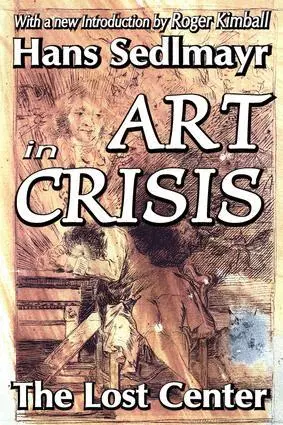
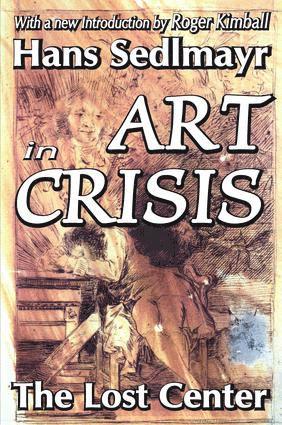
The history of art from the early nineteenth century on- ward is commonly viewed as a succession of conflicts between innovatory and established styles that culminated in the formalism and aesthetic autonomy of high modernism. In Art and Crisis, first published in 1948, Hans Sedlmayr argues that the aesthetic disjunctures of modern art signify more than matters of style and point to much deeper processes of cultural and religious disintegration. As Roger Kimball observes in his informative new introduction, Art in Crisis is as much an exercise in cultural or spiritual analysis as it is a work of art history. Sedlmayr's reads the art of the last two centuries as a fever chart of the modern age in its greatness and its decay. He discusses the advent of Romanticism with its freeing of the imagination as a conscious sundering of art from humanist and religious traditions with the aesthetic treated as a category independent of human need. Looking at the social purposes of architecture, Sedlmayr shows how the landscape garden, the architectural monument, and the industrial exhibition testified to a new relationship not only between man and his handiwork but also between man and the forces that transcend him. In these institutions man deifies his inventive powers with which he hopes to master and supersede nature. Likewise, the art museum denies transcendence through a cultural leveling in which "Heracles and Christ become brothers" as objects of aesthetic contemplation. At the center of Art in Crisis is the insight that, in art as in life, the pursuit of unqualified autonomy is in the end a prescription for disaster, aesthetic as well as existential. Sedlmayr writes as an Augustinian Catholic. For him, the underlying motive for the pursuit of autonomy is pride. The "lost center" of his subtitle is God. The dream of autonomy, Sedlmayr argues, is for finite, mortal creatures, a dangerous illusion. The book invites serious analysis from art critics and theological thinkers alike.
E-bok
Engelska, 2017844 kr
Läs direkt efter köp
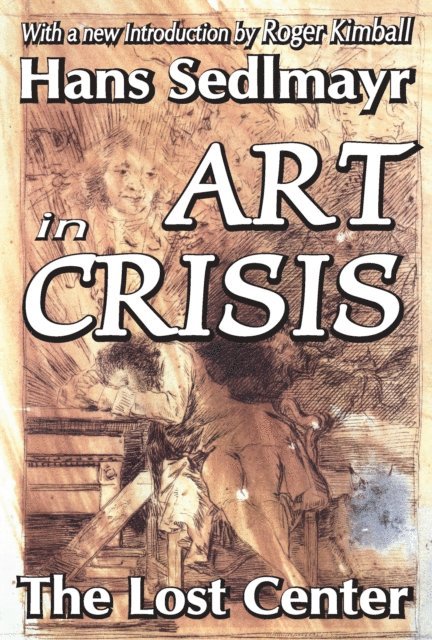
The history of art from the early nineteenth century on- ward is commonly viewed as a succession of conflicts between innovatory and established styles that culminated in the formalism and aesthetic autonomy of high modernism. In Art and Crisis, first published in 1948, Hans Sedlmayr argues that the aesthetic disjunctures of modern art signify more than matters of style and point to much deeper processes of cultural and religious disintegration. As Roger Kimball observes in his informative new introduction, Art in Crisis is as much an exercise in cultural or spiritual analysis as it is a work of art history. Sedlmayr''s reads the art of the last two centuries as a fever chart of the modern age in its greatness and its decay. He discusses the advent of Romanticism with its freeing of the imagination as a conscious sundering of art from humanist and religious traditions with the aesthetic treated as a category independent of human need. Looking at the social purposes of architecture, Sedlmayr shows how the landscape garden, the architectural monument, and the industrial exhibition testified to a new relationship not only between man and his handiwork but also between man and the forces that transcend him. In these institutions man deifies his inventive powers with which he hopes to master and supersede nature. Likewise, the art museum denies transcendence through a cultural leveling in which Heracles and Christ become brothers as objects of aesthetic contemplation. At the center of Art in Crisis is the insight that, in art as in life, the pursuit of unqualified autonomy is in the end a prescription for disaster, aesthetic as well as existential. Sedlmayr writes as an Augustinian Catholic. For him, the underlying motive for the pursuit of autonomy is pride. The lost center of his subtitle is God. The dream of autonomy, Sedlmayr argues, is for finite, mortal creatures, a dangerous illusion. The book invites serious analysis from art cri
E-bok
PDF, Engelska, 2017844 kr
Läs direkt efter köp
The history of art from the early nineteenth century on- ward is commonly viewed as a succession of conflicts between innovatory and established styles that culminated in the formalism and aesthetic autonomy of high modernism. In Art and Crisis, first published in 1948, Hans Sedlmayr argues that the aesthetic disjunctures of modern art signify more than matters of style and point to much deeper processes of cultural and religious disintegration. As Roger Kimball observes in his informative new introduction, Art in Crisis is as much an exercise in cultural or spiritual analysis as it is a work of art history. Sedlmayr''s reads the art of the last two centuries as a fever chart of the modern age in its greatness and its decay. He discusses the advent of Romanticism with its freeing of the imagination as a conscious sundering of art from humanist and religious traditions with the aesthetic treated as a category independent of human need. Looking at the social purposes of architecture, Sedlmayr shows how the landscape garden, the architectural monument, and the industrial exhibition testified to a new relationship not only between man and his handiwork but also between man and the forces that transcend him. In these institutions man deifies his inventive powers with which he hopes to master and supersede nature. Likewise, the art museum denies transcendence through a cultural leveling in which Heracles and Christ become brothers as objects of aesthetic contemplation. At the center of Art in Crisis is the insight that, in art as in life, the pursuit of unqualified autonomy is in the end a prescription for disaster, aesthetic as well as existential. Sedlmayr writes as an Augustinian Catholic. For him, the underlying motive for the pursuit of autonomy is pride. The lost center of his subtitle is God. The dream of autonomy, Sedlmayr argues, is for finite, mortal creatures, a dangerous illusion. The book invites serious analysis from art cri
Häftad, Engelska, 2006
757 kr
Skickas inom 10-15 vardagar
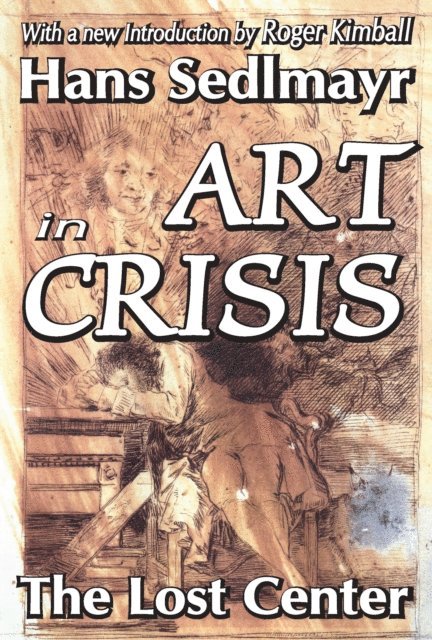
The history of art from the early nineteenth century on- ward is commonly viewed as a succession of conflicts between innovatory and established styles that culminated in the formalism and aesthetic autonomy of high modernism. In Art and Crisis, first published in 1948, Hans Sedlmayr argues that the aesthetic disjunctures of modern art signify more than matters of style and point to much deeper processes of cultural and religious disintegration. As Roger Kimball observes in his informative new introduction, Art in Crisis is as much an exercise in cultural or spiritual analysis as it is a work of art history. Sedlmayr's reads the art of the last two centuries as a fever chart of the modern age in its greatness and its decay. He discusses the advent of Romanticism with its freeing of the imagination as a conscious sundering of art from humanist and religious traditions with the aesthetic treated as a category independent of human need. Looking at the social purposes of architecture, Sedlmayr shows how the landscape garden, the architectural monument, and the industrial exhibition testified to a new relationship not only between man and his handiwork but also between man and the forces that transcend him. In these institutions man deifies his inventive powers with which he hopes to master and supersede nature. Likewise, the art museum denies transcendence through a cultural leveling in which "Heracles and Christ become brothers" as objects of aesthetic contemplation. At the center of Art in Crisis is the insight that, in art as in life, the pursuit of unqualified autonomy is in the end a prescription for disaster, aesthetic as well as existential. Sedlmayr writes as an Augustinian Catholic. For him, the underlying motive for the pursuit of autonomy is pride. The "lost center" of his subtitle is God. The dream of autonomy, Sedlmayr argues, is for finite, mortal creatures, a dangerous illusion. The book invites serious analysis from art critics and theological thinkers alike.
Inbunden, Engelska, 2023
412 kr
Skickas inom 5-8 vardagar
E-bok
Tyska, 2013258 kr
Läs direkt efter köp
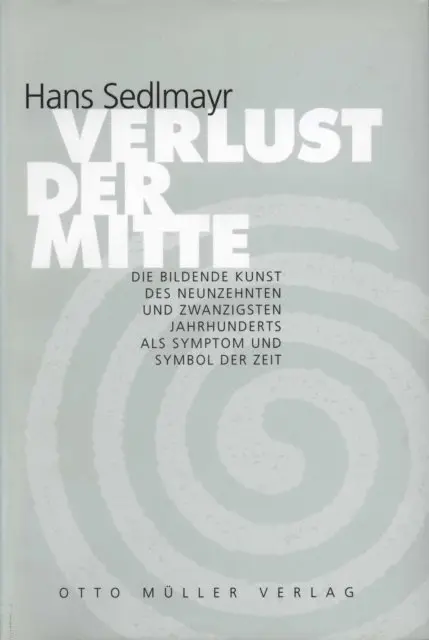
Im ersten Teil behandelt Sedlmayr die >>Symptome<<, wie z. B. den Wandel der vorrangigen Aufgaben der Architektur vom Landschaftsgarten zur Fabrik. Den Hintergrund solcher Entwicklungsreihen bilden die vier durch >>Gesamtaufgaben<< gekennzeichneten Stilepochen Romanik, Gotik, Renaissance und Barock, sodass im anschliessenden Teil Diagnose und Verlauf die um 1760 wurzelnde Moderne als Ende der Stilgeschichte erscheint. Die Diagnose mündet in den Übergang von >>der ''Befreiung'' zum Ende der Kunst<<. Der abschliessende Teil Zur Prognose und Entscheidung enthält die Erwartung, dass die Moderne >>als Ganzes gesehen, gerade auch im Chaotischen, den Charakter eines >geschlossenen< Zeitalters<< gewinnen kann. Vorläufig erweist sich als ihr einigendes Kriterium das Leiden an der Gottferne, die nirgends in gleicher Weise zum Ausdruck kommt wie in der Kunst.
Häftad, Engelska, 2025
335 kr
Skickas inom 3-6 vardagar