Hans Van Eyghen – författare
2 438 kr
Skickas inom 10-15 vardagar
629 kr
Skickas inom 10-15 vardagar
1 537 kr
Skickas inom 10-15 vardagar
484 kr
Läs direkt efter köp
484 kr
Läs direkt efter köp
452 kr
Skickas inom 10-15 vardagar
1 407 kr
Skickas inom 10-15 vardagar
546 kr
Skickas inom 10-15 vardagar
712 kr
Läs direkt efter köp
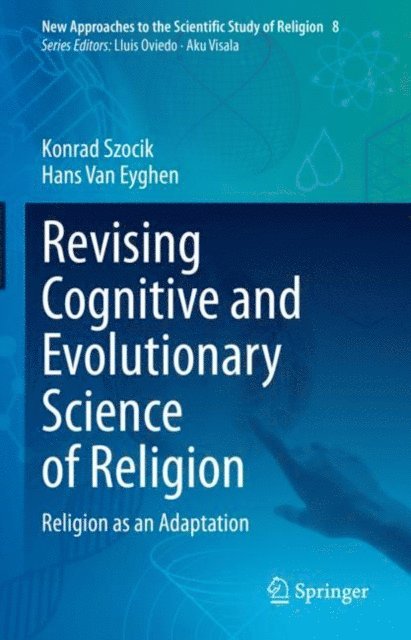
This unique and pioneering book critically appraises current work from both the cognitive science of religion and the evolutionary study of religion. It addresses the question: Why does the believer possess supernatural or religious beliefs in the combined context of his cognitive biases, their adaptive usefulness measured in terms of survival and reproduction, and the impact of social learning and cultural traits? The authors outlines a pluralistic approach to the study of religion that does not treat religion as an accidental by-product but an adaptation selected by natural selection. Chapters discuss the role of religious components for the evolution of cooperation and altruism, and explore the development of atheism and secular ideas, in cognitive and evolutionary terms. Topics such as the usefulness of religion, the transmission of religious beliefs, and a Darwinian approach to religion are among those addressed. Contrary to standard views, religious biases are regarded as shaped by cultural influences and not merely by natural dispositions. This monograph will particularly appeal to researchers who are looking for a scientific explanation of religion and religious beliefs but who do not stop at the level of narrow cognitive and evolutionary accounts. The work will also be of interest to students of philosophy, sociology, religious studies, theology, or anthropology who seek to explain such fascinating, complex, and unequivocal phenomena as religion and religious components.
Revising Cognitive and Evolutionary Science of Religion
Religion as an Adaptation
546 kr
Skickas inom 10-15 vardagar
1 407 kr
Skickas inom 10-15 vardagar
1 733 kr
Läs direkt efter köp
It is widely thought that the cognitive science of religion (CSR) may have a bearing on the epistemic status of religious beliefs and on other topics in philosophy of religion. Epistemologists have used theories from CSR to argue both for and against the rationality of religious beliefs, or they have claimed that CSR is neutral vis-à-vis the epistemic status of religious belief. However, since CSR is a rapidly evolving discipline, a great deal of earlier research on the topic has become dated. Furthermore, most of the debate on the epistemic consequences of CSR has not taken into account insights from the philosophy of science, such as explanatory pluralism and explanatory levels. This volume overcomes these deficiencies.
This volume brings together new philosophical reflection on CSR. It examines the influence of CSR theories on the epistemic status of religious beliefs; it discusses its impact on philosophy of religion; and it offers new insights for CSR. The book addresses the question of whether or not the plurality of theories in CSR makes epistemic conclusions about religious belief unwarranted. It also explores the impact of CSR on other topics in philosophy of religion like the cognitive consequences of sin and naturalism. Finally, the book investigates what the main theories in CSR aim to explain, and addresses the strengths and weaknesses of CSR.