Hans W. Paerl - Böcker
Visar alla böcker från författaren Hans W. Paerl. Handla med fri frakt och snabb leverans.
4 produkter
4 produkter
3 264 kr
Skickas inom 10-15 vardagar
Climate change is having an increasing impact on coastal, estuarine, and marine environments worldwide. This book provides state-of-the-art coverage of climate change effects on estuarine ecosystems from local, regional, and global perspectives. With editors among the most noted international scholars in coastal ecology and estuarine science and contributors who are world-class in their fields, the chapters in this volume consist of comprehensive studies in coastal, estuarine and marine sciences, climate change, and coastal management and provide an extensive international collection of data in tabular, illustrated, and narrative formats useful for coastal scientists, planners, and managers. Comprised of three sections: (1) physical-chemical aspects; (2) biological aspects; and (3) management aspects, the book not only examines climatic and non-climatic drivers of change affecting coastal, estuarine, and marine environments but also their interactions and effects on populations of organisms, communities, habitats, and ecosystem structure and function.Pulling together today’s most salient issues and key literature advances for those concerned with coastal management, it allows the reader to see across direct and indirect interactions among disciplinary and ecosystem boundaries. Climate Change and Estuaries meets the research needs of climate scientists, estuarine and marine biologists, marine chemists, marine geologists, hydrologists, and coastal engineers, while students, professors, administrators, and other professionals will also find it an exhaustive reference.
Del 57 - Coastal and Estuarine Studies
Nitrogen Loading in Coastal Water Bodies
An Atmospheric Perspective
Inbunden, Engelska, 2001
578 kr
Tillfälligt slut
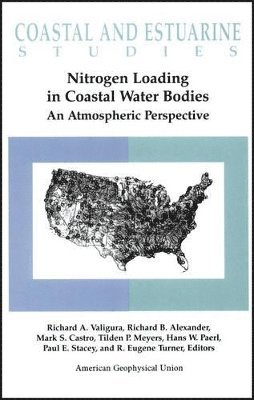
Published by the American Geophysical Union as part of the Coastal and Estuarine Studies, Volume 57.Every time it rains, biologically active nitrogen compounds are transferred from the air to whatever surface lies underneath; what a farmer once called "the poor man's fertilizer." In fact, nitrogen containing compounds are transferred between surface and atmosphere even when it is not raining. That this atmospheric nitrogen deposition impacts on the environment is a scientifically accepted fact, established during the acid rain debates led by the National Acid Precipitation Assessment Program. The extent to which this deposition contributes to the decline of coastal waters around the United States due to over fertilization, however, is still under debate. In response to and as a continuation of this debate is the current work before you: the first attempt to consistently and comprehensively estimate the relative contribution of atmospherically delivered nitrogen to the total amount of nitrogen entering coastal estuaries around the United States.
1 078 kr
Skickas inom 10-15 vardagar
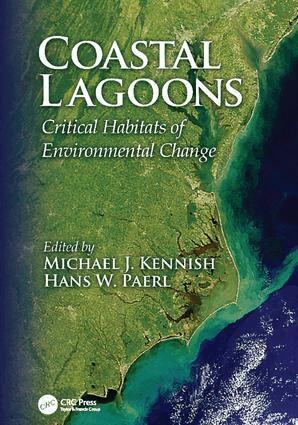
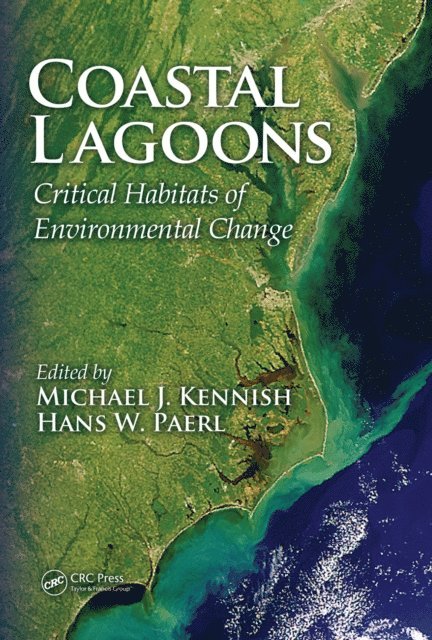
Dynamic and productive ecosystems, coastal lagoons play an important role in local economies and often bear the brunt of coastal development, agricultural, and urban waste, overuse from fisheries, aquaculture, transportation, energy production, and other human activities. The features that make coastal lagoons vital ecosystems underline the importance of sound management strategies for long-term environmental and resource sustainability. Written by an internationally renowned group of contributors, Coastal Lagoons: Critical Habitats of Environmental Change examines the function and structure of coastal lagoonal ecosystems and the natural and anthropogenic drivers of change that affect them.The contributors examine the susceptibility of coastal lagoons to eutrophication, the indicators of eutrophic conditions, the influences of natural factors such as major storms, droughts and other climate effects, and the resulting biotic and ecosystem impairments that have developed worldwide. They provide detailed descriptions of the physical-chemical and biotic characteristics of diverse coastal lagoonal ecosystems, and address the environmental factors, forcing features, and stressors affecting hydrologic, biogeochemical, and trophic properties of these important water bodies. They also discuss the innovative tools and approaches used for assessing ecological change in the context of anthropogenically- and climatically-mediated factors. The book investigates the biogeochemical and ecological responses to nutrient enrichment and other pollutants in lagoonal estuaries and compares them to those in other estuarine types. With editors among the most noted international scholars in coastal ecology and contributors who are world-class in their fields, the chapters in this volume represent a wide array of studies on natural and anthropogenic drivers of change in coastal lagoons located in different regions of the world. Although a significant number of journal articles on the subject can be found in the literature, this book provides a single-source reference for coastal lagoons within the arena of the global environment.
3 703 kr
Skickas inom 5-8 vardagar
Dynamic and productive ecosystems, coastal lagoons play an important role in local economies and often bear the brunt of coastal development, agricultural, and urban waste, overuse from fisheries, aquaculture, transportation, energy production, and other human activities. The features that make coastal lagoons vital ecosystems underline the importance of sound management strategies for long-term environmental and resource sustainability. Written by an internationally renowned group of contributors, Coastal Lagoons: Critical Habitats of Environmental Change examines the function and structure of coastal lagoonal ecosystems and the natural and anthropogenic drivers of change that affect them.The contributors examine the susceptibility of coastal lagoons to eutrophication, the indicators of eutrophic conditions, the influences of natural factors such as major storms, droughts and other climate effects, and the resulting biotic and ecosystem impairments that have developed worldwide. They provide detailed descriptions of the physical-chemical and biotic characteristics of diverse coastal lagoonal ecosystems, and address the environmental factors, forcing features, and stressors affecting hydrologic, biogeochemical, and trophic properties of these important water bodies. They also discuss the innovative tools and approaches used for assessing ecological change in the context of anthropogenically- and climatically-mediated factors. The book investigates the biogeochemical and ecological responses to nutrient enrichment and other pollutants in lagoonal estuaries and compares them to those in other estuarine types. With editors among the most noted international scholars in coastal ecology and contributors who are world-class in their fields, the chapters in this volume represent a wide array of studies on natural and anthropogenic drivers of change in coastal lagoons located in different regions of the world. Although a significant number of journal articles on the subject can be found in the literature, this book provides a single-source reference for coastal lagoons within the arena of the global environment.