Hans Zinsser – författare
Visar alla böcker från författaren Hans Zinsser. Handla med fri frakt och snabb leverans.
17 produkter
17 produkter
Inbunden, Engelska, 2022
469 kr
Skickas inom 5-8 vardagar
Häftad, Engelska, 2022
359 kr
Skickas inom 5-8 vardagar
Inbunden, Engelska, 2026
496 kr
Skickas inom 5-8 vardagar
Häftad, Engelska, 2026
386 kr
Skickas inom 5-8 vardagar
Inbunden, Engelska, 2026
565 kr
Skickas inom 5-8 vardagar
Häftad, Engelska, 2026
496 kr
Skickas inom 5-8 vardagar
Inbunden, Engelska, 2017
2 464 kr
Skickas inom 10-15 vardagar
When Rats, Lice and History appeared in 1935, Hans Zinsser was a highly regarded Harvard biologist who had never written about historical events. Although he had published under a pseudonym, virtually all of his previous writings had dealt with infections and immunity and had appeared either in medical and scientific journals or in book format. Today he is best remembered as the author of Rats, Lice, and History, which gone through multiple editions and remains a masterpiece of science writing for a general readership.To Zinsser, scientific research was high adventure and the investigation of infectious disease, a field of battle. Yet at the same time he maintained a love of literature and philosophy. His goal in Rats, Lice and History was to bring science, philosophy, and literature together to establish the importance of disease, and especially epidemic infectious disease, as a major force in human affairs. Zinsser cast his work as the "biography" of a disease. In his view, infectious disease simply represented an attempt of a living organism to survive. From a human perspective, an invading pathogen was abnormal; from the perspective of the pathogen it was perfectly normal.This book is devoted to a discussion of the biology of typhus and history of typhus fever in human affairs. Zinsser begins by pointing out that the louse was the constant companion of human beings. Under certain conditions to wash or to change clothing lice proliferated. The typhus pathogen was transmitted by rat fleas to human beings, who then transmitted it to other humans and in some strains from human to human.Rats, Lice and History is a tour de force. It combines Zinsser's expertise in biology with his broad knowledge of the humanities
Inbunden, Engelska
798 kr
Skickas inom 3-6 vardagar
Inbunden, Engelska, 2015
574 kr
Skickas inom 3-6 vardagar
E-bok
Engelska, 2017836 kr
Läs direkt efter köp
When Rats, Lice and History appeared in 1935, Hans Zinsser was a highly regarded Harvard biologist who had never written about historical events. Although he had published under a pseudonym, virtually all of his previous writings had dealt with infections and immunity and had appeared either in medical and scientific journals or in book format. Today he is best remembered as the author of Rats, Lice, and History, which gone through multiple editions and remains a masterpiece of science writing for a general readership.To Zinsser, scientific research was high adventure and the investigation of infectious disease, a field of battle. Yet at the same time he maintained a love of literature and philosophy. His goal in Rats, Lice and History was to bring science, philosophy, and literature together to establish the importance of disease, and especially epidemic infectious disease, as a major force in human affairs. Zinsser cast his work as the biography of a disease. In his view, infectious disease simply represented an attempt of a living organism to survive. From a human perspective, an invading pathogen was abnormal; from the perspective of the pathogen it was perfectly normal.This book is devoted to a discussion of the biology of typhus and history of typhus fever in human affairs. Zinsser begins by pointing out that the louse was the constant companion of human beings. Under certain conditions–to wash or to change clothing–lice proliferated. The typhus pathogen was transmitted by rat fleas to human beings, who then transmitted it to other humans and in some strains from human to human.Rats, Lice and History is a tour de force. It combines Zinsser''s expertise in biology with his broad knowledge of the humanities
E-bok
PDF, Engelska, 2017836 kr
Läs direkt efter köp
When Rats, Lice and History appeared in 1935, Hans Zinsser was a highly regarded Harvard biologist who had never written about historical events. Although he had published under a pseudonym, virtually all of his previous writings had dealt with infections and immunity and had appeared either in medical and scientific journals or in book format. Today he is best remembered as the author of Rats, Lice, and History, which gone through multiple editions and remains a masterpiece of science writing for a general readership.To Zinsser, scientific research was high adventure and the investigation of infectious disease, a field of battle. Yet at the same time he maintained a love of literature and philosophy. His goal in Rats, Lice and History was to bring science, philosophy, and literature together to establish the importance of disease, and especially epidemic infectious disease, as a major force in human affairs. Zinsser cast his work as the biography of a disease. In his view, infectious disease simply represented an attempt of a living organism to survive. From a human perspective, an invading pathogen was abnormal; from the perspective of the pathogen it was perfectly normal.This book is devoted to a discussion of the biology of typhus and history of typhus fever in human affairs. Zinsser begins by pointing out that the louse was the constant companion of human beings. Under certain conditions–to wash or to change clothing–lice proliferated. The typhus pathogen was transmitted by rat fleas to human beings, who then transmitted it to other humans and in some strains from human to human.Rats, Lice and History is a tour de force. It combines Zinsser''s expertise in biology with his broad knowledge of the humanities
Häftad, Engelska, 2007
730 kr
Skickas inom 10-15 vardagar
When Rats, Lice and History appeared in 1935, Hans Zinsser was a highly regarded Harvard biologist who had never written about historical events. Although he had published under a pseudonym, virtually all of his previous writings had dealt with infections and immunity and had appeared either in medical and scientific journals or in book format. Today he is best remembered as the author of Rats, Lice, and History, which gone through multiple editions and remains a masterpiece of science writing for a general readership.To Zinsser, scientific research was high adventure and the investigation of infectious disease, a field of battle. Yet at the same time he maintained a love of literature and philosophy. His goal in Rats, Lice and History was to bring science, philosophy, and literature together to establish the importance of disease, and especially epidemic infectious disease, as a major force in human affairs. Zinsser cast his work as the "biography" of a disease. In his view, infectious disease simply represented an attempt of a living organism to survive. From a human perspective, an invading pathogen was abnormal; from the perspective of the pathogen it was perfectly normal.This book is devoted to a discussion of the biology of typhus and history of typhus fever in human affairs. Zinsser begins by pointing out that the louse was the constant companion of human beings. Under certain conditions–to wash or to change clothing–lice proliferated. The typhus pathogen was transmitted by rat fleas to human beings, who then transmitted it to other humans and in some strains from human to human.Rats, Lice and History is a tour de force. It combines Zinsser's expertise in biology with his broad knowledge of the humanities
E-bok
Engelska, 2012134 kr
Läs direkt efter köp
This popular and unusual book by Hans Zinsser, a brilliant physician and researcher, takes an unusual look at history by examining the influence of diseases on society, and will prove a fascinating read for anyone with an interest in biology or medical history.
Häftad, Engelska
604 kr
Skickas inom 3-6 vardagar
Häftad, Engelska, 2017
119 kr
Skickas inom 7-10 vardagar
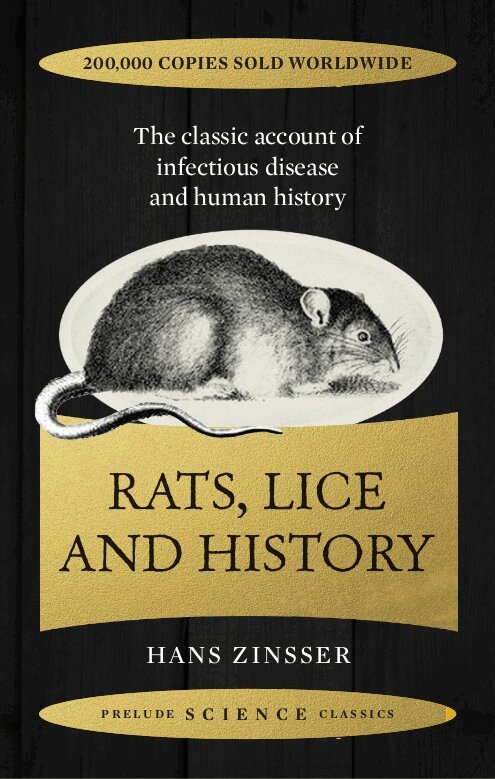
"Swords and lances, arrows, machine guns and even high explosives have had far less power over the fate of nations than the typhus louse, the plague flea and the yellow-fever mosquito."Both shocking and entertaining, this masterpiece of popular science writing tells the tragic story of the struggle between humanity and its humble but deadly enemies, the organisms of disease.Zinsser shows how infectious disease simply represented an attempt of a living organism to survive. While from the human perspective an invading pathogen was abnormal, from the perspective of the pathogen it was perfectly normal.From the pestilence which contributed to the downfall of Rome to the dancing manias of medieval Europe, the aristocracy’s fashion for wearing wigs and the role of typhus in the First World War, Zinsser reveals just how disease and epidemics have shaped human history.
Inbunden, Engelska, 2023
535 kr
Tillfälligt slut
Häftad, Engelska, 2023
427 kr
Tillfälligt slut