Hansjoerg Klausinger – författare
Visar alla böcker från författaren Hansjoerg Klausinger. Handla med fri frakt och snabb leverans.
11 produkter
Hayek
A Life, 1899-1950
Av Bruce Caldwell, Hansjoerg Klausinger
Inbunden, 2022
525 kr
Lägg i varukorg
The definitive account of the distinguished economist's formative years.Few twentieth-century figures have been lionized and vilified in such equal measure as Friedrich Hayek-economist, social theorist, leader of the Austrian school of economics, and champion of classical liberalism. Hayek's …
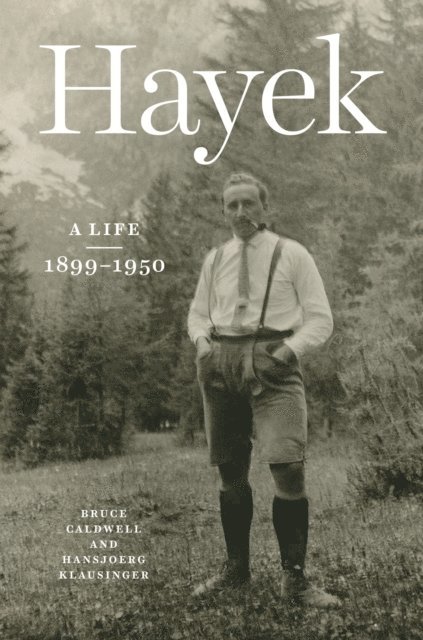
Hayek
A Life, 1899–1950
Av Hansjoerg Klausinger, Bruce Caldwell
E-bok, 2022
1146 kr
Lägg i varukorg
A 2022 Economist Best Book of the Year. The definitive account of the distinguished economist’s formative years. Few twentieth-century figures have been lionized and vilified in such equal measure as Friedrich Hayek—economist, social theorist, leader of the Austrian school of economics, and …
Business Cycles
Part I
Av F.A. Hayek, Hansjoerg Klausinger
Inbunden, 2012
2588 kr
Lägg i varukorg
In the years following its publication, F. A. Hayek's pioneering work on business cycles was regarded as an important challenge to what was later known as Keynesian macroeconomics. Today, as debates rage on over the monetary origins of the current economic and financial crisis, economists are once …
Business Cycles
Part II
Av F.A. Hayek, Hansjoerg Klausinger
Inbunden, 2012
2588 kr
Lägg i varukorg
In the years following its publication, F. A. Hayek's pioneering work on business cycles was regarded as an important challenge to what was later known as Keynesian macroeconomics. Today, as debates rage on over the monetary origins of the current economic and financial crisis, economists are once …
Business Cycles
Part II
Av F.A. Hayek, Hansjoerg Klausinger
E-bok, 2020
831 kr
Lägg i varukorg
In the years following its publication, F. A. Hayek's pioneering work on business cycles was regarded as an important challenge to what was later known as Keynesian macroeconomics. Today, as debates rage on over the monetary origins of the current economic and financial crisis, economists are once …
Business Cycles
Part I
Av F.A. Hayek, Hansjoerg Klausinger
E-bok, 2020
838 kr
Lägg i varukorg
In the years following its publication, F. A. Hayek's pioneering work on business cycles was regarded as an important challenge to what was later known as Keynesian macroeconomics. Today, as debates rage on over the monetary origins of the current economic and financial crisis, economists are once …
Business Cycles
Part II
Av F.A. Hayek, Hansjoerg Klausinger
E-bok, 2020
838 kr
Lägg i varukorg
In the years following its publication, F. A. Hayek's pioneering work on business cycles was regarded as an important challenge to what was later known as Keynesian macroeconomics. Today, as debates rage on over the monetary origins of the current economic and financial crisis, economists are once …
Business Cycles
Part I
Av F.A. Hayek, Hansjoerg Klausinger
E-bok, 2020
856 kr
Lägg i varukorg
In the years following its publication, F. A. Hayek's pioneering work on business cycles was regarded as an important challenge to what was later known as Keynesian macroeconomics. Today, as debates rage on over the monetary origins of the current economic and financial crisis, economists are once …
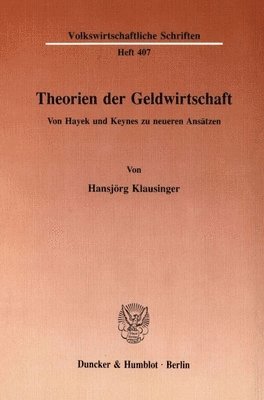
Theorien Der Geldwirtschaft.: Von Hayek Und Keynes Zu Neueren Ansätzen.
Häftad, 1991
747 kr
Lägg i varukorg
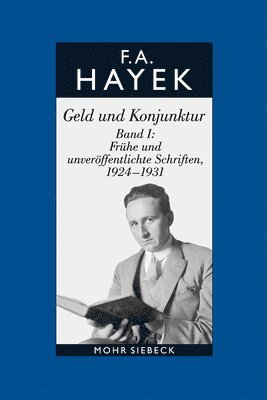
Geld und Konjunktur. Band I: Frühe und unveröffentlichte Schriften, 1924-1931
Gesammelte Schriften in deutscher Sprache. Abt. A. Band 8
Av Friedrich A. von Hayek, Hansjörg Klausinger
Inbunden, 2015
2722 kr
Tillfälligt slut
Der 1974 mit dem Nobelpreis ausgezeichnete Ökonom und Sozialphilosoph Friedrich August von Hayek (1899-1992) gilt weithin als einer der bedeutendsten Denker des Liberalismus im 20. Jahrhundert. Von Beiträgen zur ökonomischen Theorie ausgehend wandte er sich später den Fragen nach der "Verfassung …
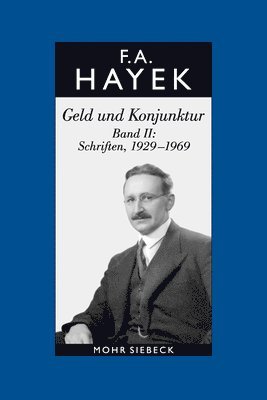
Geld und Konjunktur. Band II: Schriften, 1929-1969
Gesammelte Schriften in deutscher Sprache. Abt. A. Band 9
Av Friedrich A. von Hayek, Hansjörg Klausinger
Inbunden, 2016
1826 kr
Tillfälligt slut
Der 1974 mit dem Nobelpreis ausgezeichnete Ökonom und Sozialphilosoph Friedrich August von Hayek (1899-1992) gilt weithin als einer der bedeutendsten Denker des Liberalismus im 20. Jahrhundert. Von Beiträgen zur ökonomischen Theorie ausgehend wandte er sich später den Fragen nach der "Verfassung …