Hanxin (Alice) Hu – författare
Visar alla böcker från författaren Hanxin (Alice) Hu. Handla med fri frakt och snabb leverans.
3 produkter
3 produkter
E-bok
PDF, Engelska, 20251 106 kr
Läs direkt efter köp
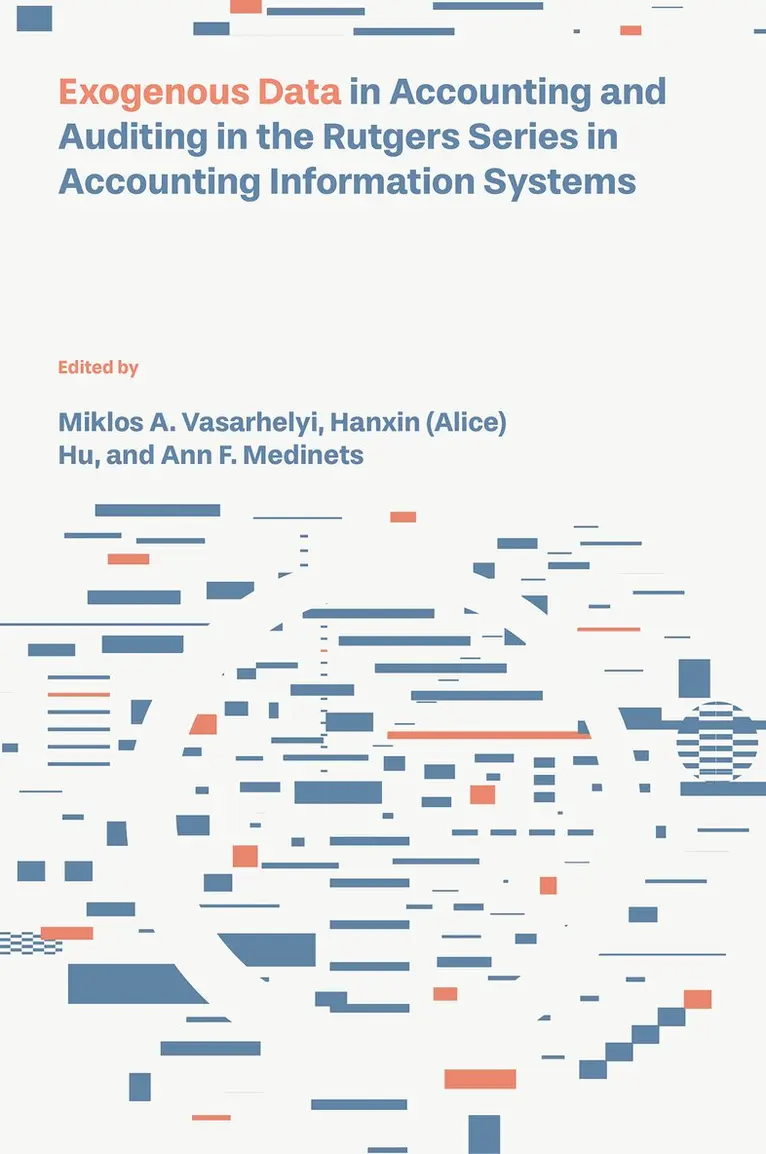
Unlike traditional financial data that originates from firms' internal information systems, exogenous data is generated outside business organizations, including a broad spectrum of sources that include social media posts, website cookies, Google search index, GPS traffic data, and satellite images. Exogenous data is distinguished from periodic and structured financial data by its timeliness, enormous variety, massive volume, tremendous velocity, and reduced likelihood of management manipulation.However, the present financial reporting framework and accounting and auditing textbooks do not typically discuss the proper use of exogenous data in practice. In response to the gap between industry demand and academia, Exogenous Data in Accounting and Auditing in the Rutgers Series in Accounting Information Systems seeks to provide practice-oriented guidance on which types of exogenous data sources might be used under varying audit contingencies; how to integrate exogenous data into the business reporting cycle to give stakeholders more value-relevant and timely information; and how exogenous data could contribute to the measurement and assurance of various ESG-related issues.With contributions from leaders in the field, this timely work outlines how emerging exogenous data sources can be used in both the accounting and auditing fields. It will be of interest to academics, researchers, business students, and accounting professionals.
Inbunden, Engelska, 2025
1 039 kr
Skickas
Unlike traditional financial data that originates from firms’ internal information systems, exogenous data is generated outside business organizations, including a broad spectrum of sources that include social media posts, website cookies, Google search index, GPS traffic data, and satellite images. Exogenous data is distinguished from periodic and structured financial data by its timeliness, enormous variety, massive volume, tremendous velocity, and reduced likelihood of management manipulation.However, the present financial reporting framework and accounting and auditing textbooks do not typically discuss the proper use of exogenous data in practice. In response to the gap between industry demand and academia, Exogenous Data in Accounting and Auditing in the Rutgers Series in Accounting Information Systems seeks to provide practice-oriented guidance on which types of exogenous data sources might be used under varying audit contingencies; how to integrate exogenous data into the business reporting cycle to give stakeholders more value-relevant and timely information; and how exogenous data could contribute to the measurement and assurance of various ESG-related issues.With contributions from leaders in the field, this timely work outlines how emerging exogenous data sources can be used in both the accounting and auditing fields. It will be of interest to academics, researchers, business students, and accounting professionals.
E-bok
Engelska, 20251 106 kr
Läs direkt efter köp
Unlike traditional financial data that originates from firms' internal information systems, exogenous data is generated outside business organizations, including a broad spectrum of sources that include social media posts, website cookies, Google search index, GPS traffic data, and satellite images. Exogenous data is distinguished from periodic and structured financial data by its timeliness, enormous variety, massive volume, tremendous velocity, and reduced likelihood of management manipulation.However, the present financial reporting framework and accounting and auditing textbooks do not typically discuss the proper use of exogenous data in practice. In response to the gap between industry demand and academia, Exogenous Data in Accounting and Auditing in the Rutgers Series in Accounting Information Systems seeks to provide practice-oriented guidance on which types of exogenous data sources might be used under varying audit contingencies; how to integrate exogenous data into the business reporting cycle to give stakeholders more value-relevant and timely information; and how exogenous data could contribute to the measurement and assurance of various ESG-related issues.With contributions from leaders in the field, this timely work outlines how emerging exogenous data sources can be used in both the accounting and auditing fields. It will be of interest to academics, researchers, business students, and accounting professionals.