Harald Luschgy – författare
Visar alla böcker från författaren Harald Luschgy. Handla med fri frakt och snabb leverans.
10 produkter
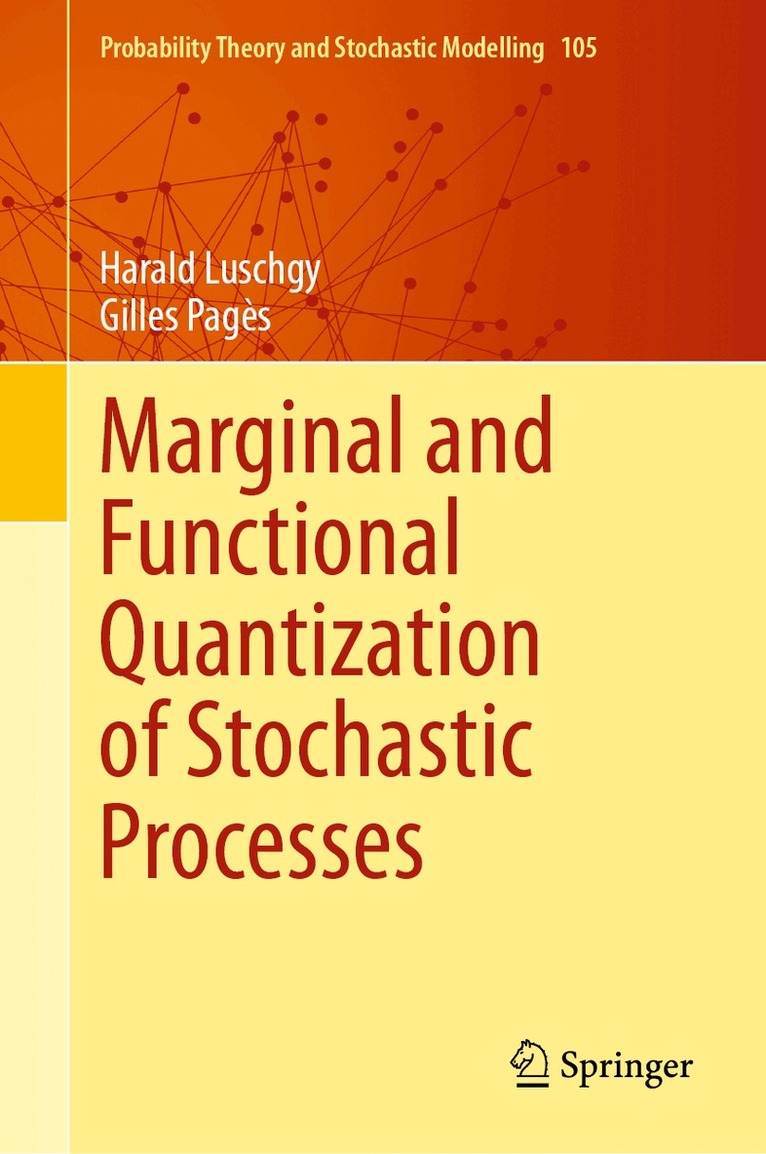
Marginal and Functional Quantization of Stochastic Processes
Av Harald Luschgy, Gilles Pagès
Inbunden, 2023
2200 kr
Lägg i varukorg
Vector Quantization, a pioneering discretization method based on nearest neighbor search, emerged in the 1950s primarily in signal processing, electrical engineering, and information theory. Later in the 1960s, it evolved into an automatic classification technique for generating prototypes of …
Marginal and Functional Quantization of Stochastic Processes
Av Gilles Pages, Harald Luschgy
E-bok, 2023
2870 kr
Lägg i varukorg
Vector Quantization, a pioneering discretization method based on nearest neighbor search, emerged in the 1950s primarily in signal processing, electrical engineering, and information theory. Later in the 1960s, it evolved into an automatic classification technique for generating prototypes of …
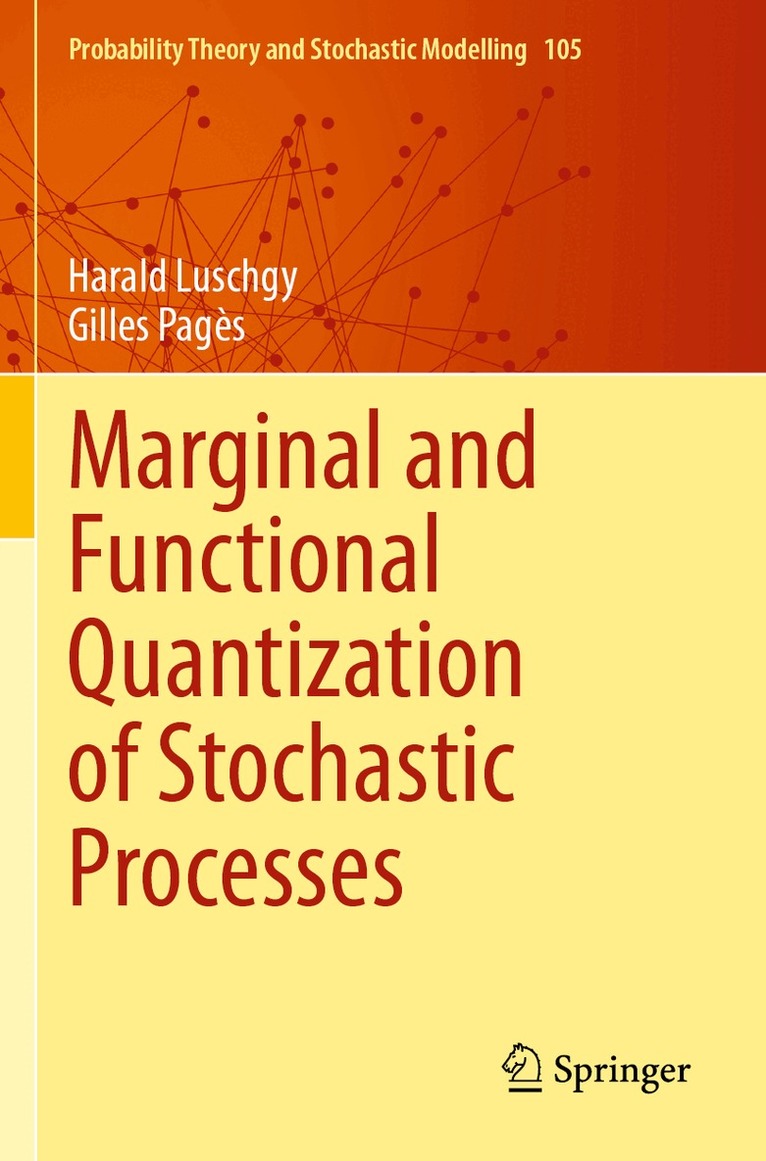
Marginal and Functional Quantization of Stochastic Processes
Av Harald Luschgy, Gilles Pagès
Häftad, 2024
2200 kr
Lägg i varukorg
Vector Quantization, a pioneering discretization method based on nearest neighbor search, emerged in the 1950s primarily in signal processing, electrical engineering, and information theory. Later in the 1960s, it evolved into an automatic classification technique for generating prototypes of …
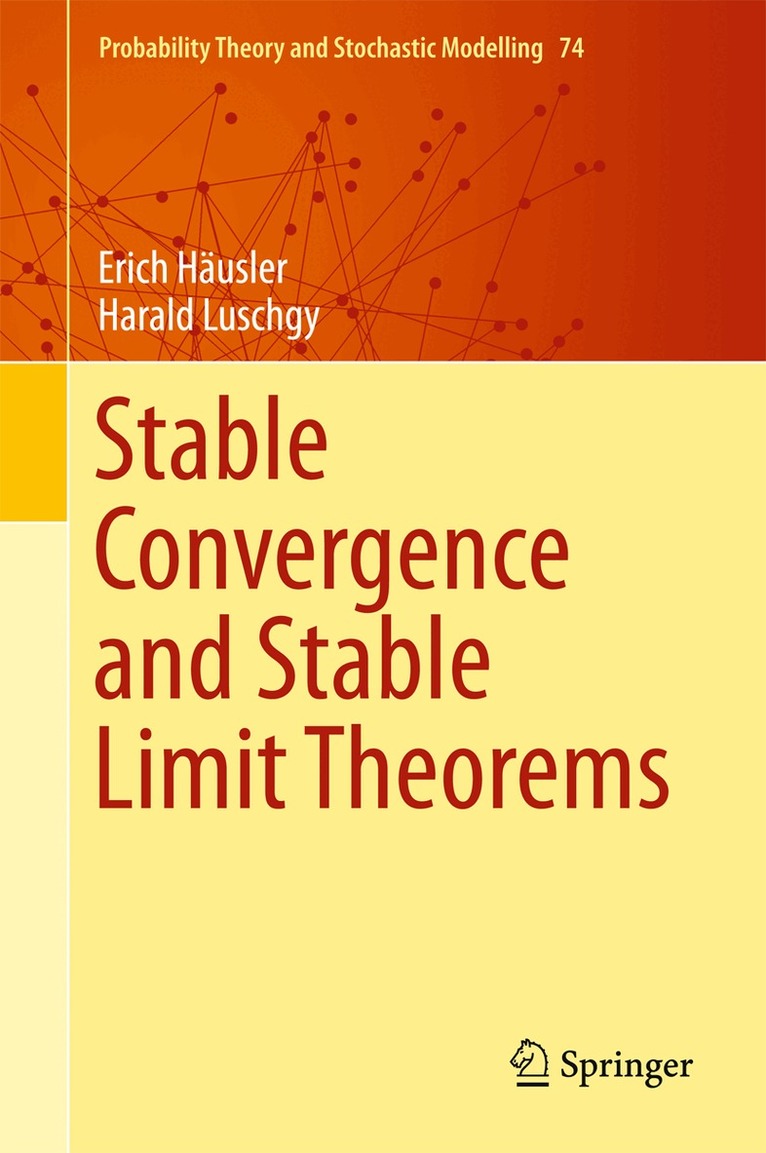
Stable Convergence and Stable Limit Theorems
Av Erich Häusler, Harald Luschgy
Inbunden, 2015
989 kr
Lägg i varukorg
The authors present a concise but complete exposition of the mathematical theory of stable convergence and give various applications in different areas of probability theory and mathematical statistics to illustrate the usefulness of this concept. Stable convergence holds in many limit theorems of …
Stable Convergence and Stable Limit Theorems
Av Harald Luschgy, Erich Hausler
E-bok, 2015
1296 kr
Lägg i varukorg
The authors present a concise but complete exposition of the mathematical theory of stable convergence and give various applications in different areas of probability theory and mathematical statistics to illustrate the usefulness of this concept. Stable convergence holds in many limit theorems of …
Stable Convergence and Stable Limit Theorems
Av Erich Häusler, Harald Luschgy
Häftad, 2016
989 kr
Lägg i varukorg
The authors present a concise but complete exposition of the mathematical theory of stable convergence and give various applications in different areas of probability theory and mathematical statistics to illustrate the usefulness of this concept. Stable convergence holds in many limit theorems of …
Foundations of Quantization for Probability Distributions
Av Harald Luschgy, Siegfried Graf
E-bok, 2007
870 kr
Lägg i varukorg
Due to the rapidly increasing need for methods of data compression, quantization has become a flourishing field in signal and image processing and information theory. The same techniques are also used in statistics (cluster analysis), pattern recognition, and operations research (optimal location …
Foundations of Quantization for Probability Distributions
Av Siegfried Graf, Harald Luschgy
Häftad, 2000
661 kr
Lägg i varukorg
Due to the rapidly increasing need for methods of data compression, quantization has become a flourishing field in signal and image processing and information theory. The same techniques are also used in statistics (cluster analysis), pattern recognition, and operations research (optimal location …
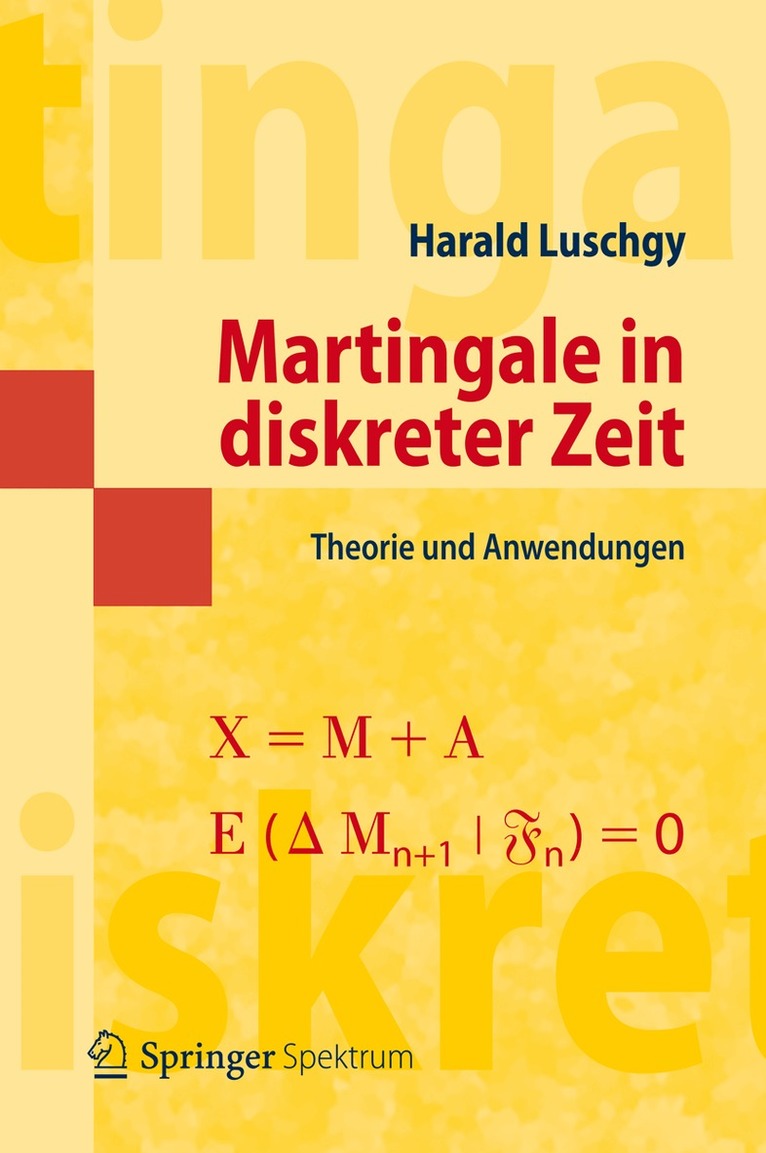
Martingale in diskreter Zeit
Theorie und Anwendungen
Häftad, 2012
466 kr
Lägg i varukorg
Dieses Lehrbuch bietet neben einer umfassenden Darstellung der Theorie der Martingale in diskreter Zeit auch ausführliche Anwendungen. Die behandelten Themen reichen von klassischem Material über Zerlegungen von stochastischen Prozessen und Submartingalen, quadratische Variation und quadratische …
Martingale in diskreter Zeit
Theorie und Anwendungen
E-bok, 2012
319 kr
Lägg i varukorg
Dieses Lehrbuch bietet neben einer umfassenden Darstellung der Theorie der Martingale in diskreter Zeit auch ausführliche Anwendungen. Die behandelten Themen reichen von klassischem Material über Zerlegungen von stochastischen Prozessen und Submartingalen, quadratische Variation und quadratische …