
Harold L. Wilcke – författare
Visar alla böcker från författaren Harold L. Wilcke. Handla med fri frakt och snabb leverans.
2 produkter
2 produkter
E-bok
PDF, Engelska, 2013756 kr
Läs direkt efter köp
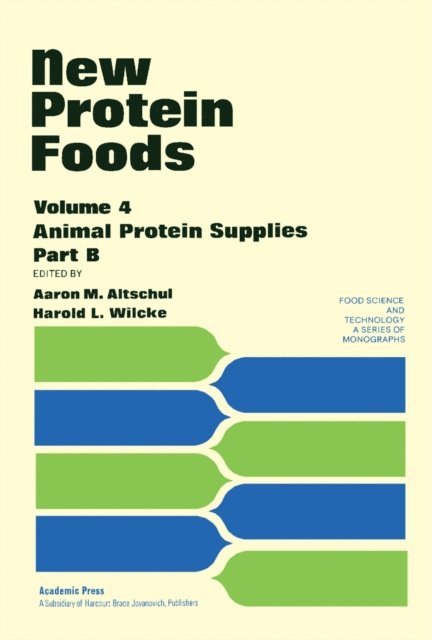
New Protein Foods, Volume 4: Animal Protein Supplies, Part B covers the realities of the world food problems, with special emphasis on protein supply. The book discusses the upper limits of livestock production; the government policy and the production of animal protein; and the nutritional and metabolic impact of variable protein intake in human. The text also describes the developments in pork production; issues in poultry production; as well as the use of small ruminants as food producers. The role of lysine and methionine fortification in animal and human nutrition is also considered. The book further tackles the use of microorganisms as feed and food protein; noncompetitive sources of carbohydrates for animal feeding; and recycling of animal wastes by feeding. The text concludes by discussing issues of affluent society malnutrition as the counterpart to the problems of scarcity. Nutritionists, agriculturists, economists, and people involved in public health and animal research will find the book invaluable.
E-bok
PDF, Engelska, 2013756 kr
Läs direkt efter köp
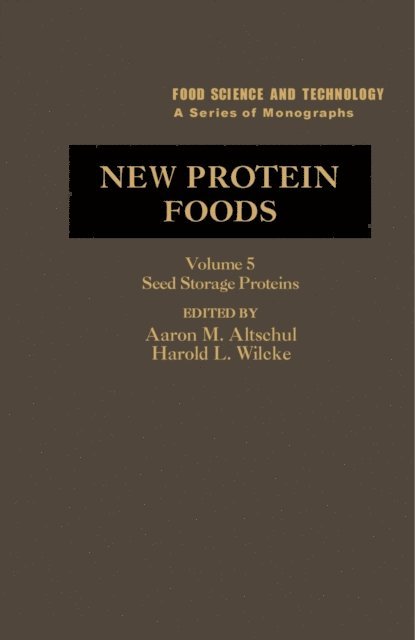
New Protein Foods, Volume 5: Seed Storage Proteins covers papers on the role of new science and technology in providing greater flexibility for producing and utilizing protein food resources, with emphasis on seed storage proteins, primarily oilseed proteins. The book presents articles on the chemistry and biology of seed storage proteins as well as the structure of soy proteins. The text also includes articles on the relationships of genetic engineering to conventional genetic technology and plant breeding, and the potentials for applications of genetic engineering technology to soybeans. The physicochemical and functional properties of oilseed proteins, with emphasis on soy proteins; the chemical and enzymatic modification of plant proteins; and the nutritional characteristics of oilseed proteins are also considered. The book further demonstrates articles on the processes of manufacturing isolated soy protein; the characteristics of isolates; nutritional, the physical, and functional properties; and the major applications of isolated soy proteins. The text concludes by including articles on the production, physicochemical properties, and nutritional aspects of rapeseed, ground nuts, sunflower seeds, and sesame proteins. Nutritionists, horticulturists, agriculturists, agronomists, food technologists, and people involved in related manufacturing companies will find the book invaluable.