Harold Timmis – författare
708 kr
Läs direkt efter köp
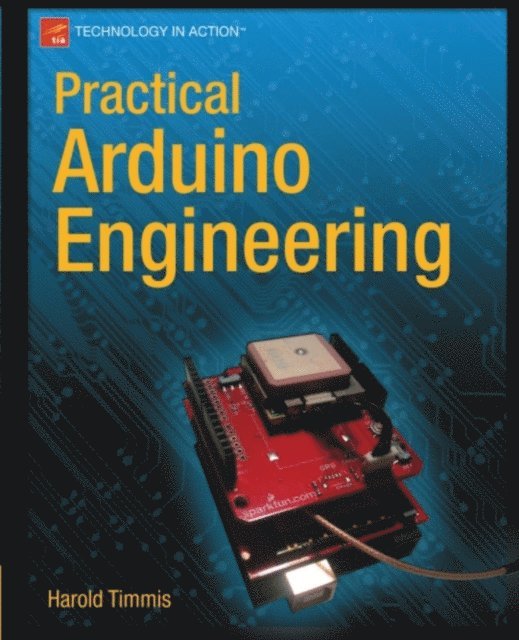
Arduino boards have impressed both hackers and professional engineers. Whether you''re a hobbyist or a professional, it isn''t just a breadboard and a hazy idea that keeps you going. It''s essential to institute a proper design, device instrumentation and, indeed, test your project thoroughly before committing to a particular prototype.
Practical Arduino Engineering begins by outlining the engineering process, from the basic requirements and preliminary design to prototyping and testing. Each and every chapter exemplifies this process and demonstrates how you can profit from the implementation solid engineering principles—regardless of whether you just play in your basement or you want to publicize and sell your devices.
Arduino is a brilliant prototyping platform that allows users to test and iterate design ideas. Imitation by other Arduino makers, hackers and engineers often proves your design''s popularity. Practical Arduino Engineering will teach you to follow the engineering process carefully; over time, you will be able to review and improve this process, and even extend its scope.
Practical Arduino Engineering is not purely theoretical. In addition, you''ll learn the process of hardware engineering as applicable to Arduino projects, and the importance of the process in each and every project presented in this book.
To set the stage, Practical Arduino Engineering begins by reviewing the Arduino software landscape, then shows how to set up an Arduino project for testing. Even if you already know your compiler toolchain and the basics of Arduino programming, this refresher course can help fill in the gaps and explain why your compiler may spit out certain error messages.
Practical Arduino Engineering then gradually builds up the engineering process, from single devices like LCDs, potentiometers and GPS modules, to the integration of several modules intolarger projects, such as a wireless temperature measurement system, and ultimately an entire robot.
The engineering projects become progressively more challenging throughout the first 4 engineering chapters. Next, you''ll proceed with simple steps towards the first intelligent part of a robot: the object detector. You''ll find yourself teaching your robot how to avoid very hot objects or insurmountable obstacles. The basic design requirements for a complete robot and, indeed, the detailed design and prototyping for robots can be extremely tricky, which is why engineering discipline is invaluable.
Practical Arduino Engineering then enters the world of domestic engineering by introducing home alarm systems—not quite as simple as they seem. A solid, robust system can only be built by following the engineering process detailed in previous chapters, and this section reinforces that process.
You''ll then take a step further in your Arduino engineering process: instrumentation and control, and some error messaging using GSM. Control is introduced via the Xbox controller, a very powerful piece of technology able to play a considerable role in robotics projects. Having already learned to control motion and to sense and avoid objects, you''ll learn how to debug your Arduino projects of varying complexities via the hardware instrumentation software LabVIEW.
To complete the journey into Practical Arduino Engineering, you''ll discover how to use a special Arduino board to rely on Bluetooth Mate Silver for control of domestic and mobile Arduino projects. Using Bluetooth Mate Silver, you''ll learn to implement basic engineering design with almost any Arduino project, and be able to justify, build, debug, and extend Arduino-based designs using a solid engineering approach.
Please note: the print version of this title is black & white; the eBook is full color.
451 kr
Skickas inom 3-6 vardagar
629 kr
Läs direkt efter köp
Trouble ensues. The station is evacuated, including Cade and Elle''s class that was visiting the station on a field trip. Cade and Elle don’t make it aboard their shuttle and are trapped on the station along with a friendly artificial intelligence named Andrew who wants to help them get off the damaged station. Using some old hardware, a laptop, and some toolboxes full of electronics parts, you will follow along and build eight gizmos with Cade and Elle that will help them escape from Gemini Station.
The hardware is Arduino. Each new challenge opens a new area of Arduino and basic electronics knowledge. You’ll be taken incrementally from a simple task such as turning on a light through to a complex combination of microcontroller, electronic components, and software programming. By the end of the book you’ll be well on your way towards being able to create and implement any sort of electronically controlled device you can imagine, using the stunningly popular Arduino microcontroller.
Provides eight challenges, each challenge increasing in complexity Builds around a fictional storyline that keeps the learning fun Leaves you on a solid foundation of electronic skills and knowledge845 kr
Skickas inom 10-15 vardagar
1 031 kr
Läs direkt efter köp
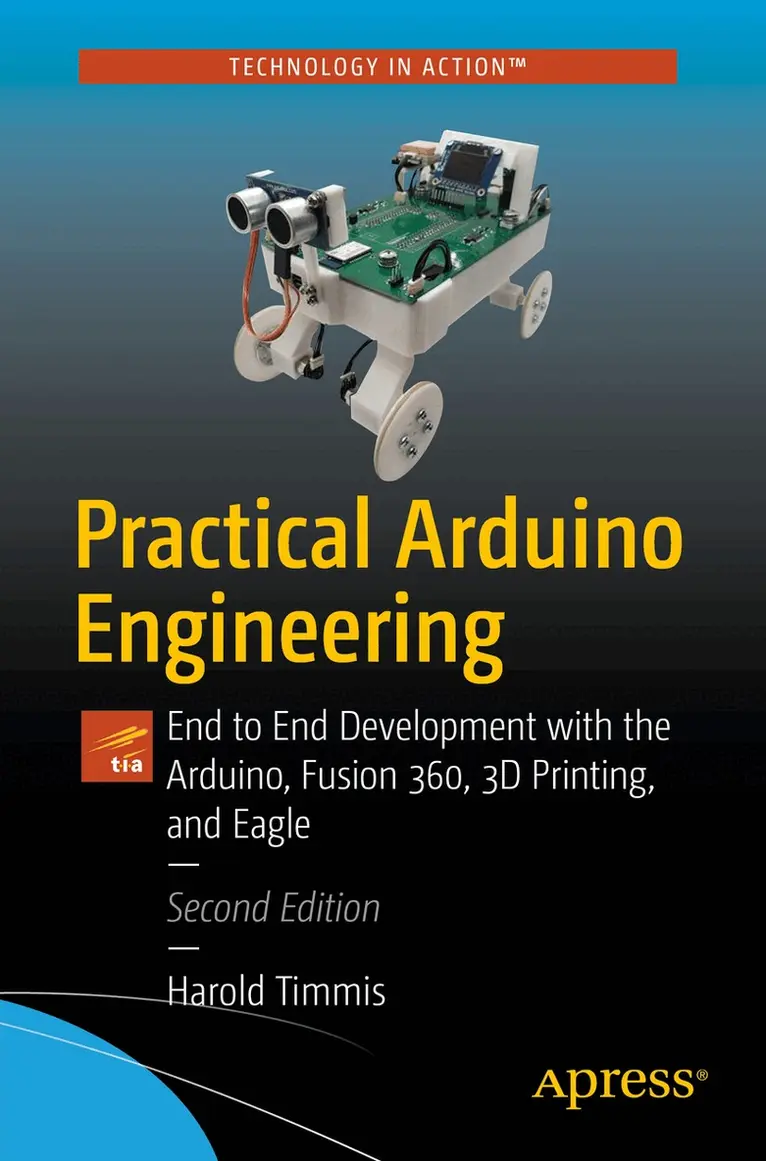
Implement Arduino-based designs in your project, and build, debug, and extend it using a solid engineering approach. This second edition is expanded to provide a better understanding of the engineering process and what it means to be an end-to-end developer.
You’ll start out by reviewing basic engineering procedures, from the fundamental requirements and preliminary design to prototyping and testing. You’ll then apply those principles to single devices like LCDs, potentiometers and GPS modules, and move on to the integration of several modules into a larger project, a sub-autonomous robot. This robot will include devices such as GPS, Bluetooth, an OLED screen, an accelerometer, humidity and temp sensor, motor drivers, and ultrasonic sensor.
This version goes on to cover how to create 3D models with Fusion360, make your own PCBs using Eagle, and use and maintain a 3D printer. Each and every chapter exemplifies this process and demonstrates how you can profit from the implementation of solid engineering principles—regardless of whether you just play in your basement or you want to publicize and sell your devices. With Practical Adruino Engineering you’ll be able to review and improve this process, and even extend its scope.
What You’ll Learn
● Set up the Arduino software landscape and project for testing
● Review the process of hardware engineering as applicable to Arduino projects
● Create 3D models for 3D printing using Fusion360 in a robot chassis project● Make PCBs using Eagle and incorporate it into a sensor station shield project
● Use and maintain a 3D printer with your own project
● Create Arduino shields in Eagle
● Debug Arduino projects of varying complexities via LabVIEW
● Use a special Arduino board for Bluetooth to control domestic and mobile Arduino projects
Who This Book Is For
Primarily aimed at intermediate engineers or engineering students. However, this book is also great for beginners and any maker who wants to expand their abilities in a single book.
340 kr
Läs direkt efter köp