Harout Akdedian – författare
Visar alla böcker från författaren Harout Akdedian. Handla med fri frakt och snabb leverans.
8 produkter
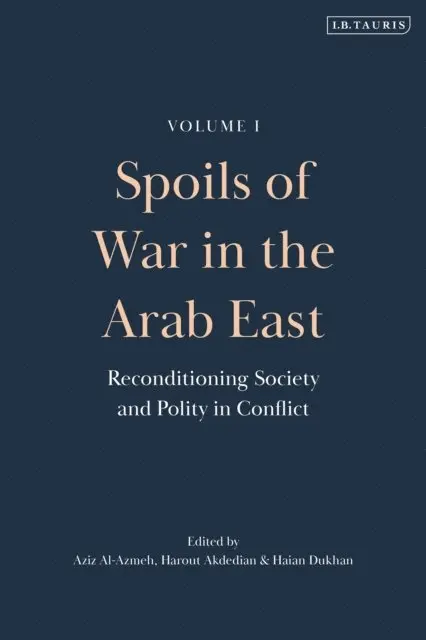
Spoils of War in the Arab East
Reconditioning Society and Polity in Conflict
Av Aziz Al-Azmeh, Harout Akdedian m. fl.
Häftad, 2025
431 kr
Lägg i varukorg
Post-conflict scenarios are often proposed for Arab countries that have witnessed significant changes and civil wars. Yet the plans for reconciliation, transitional justice, and the return of the displaced often overlook the real conditions that make these recommendations impossible.This book …
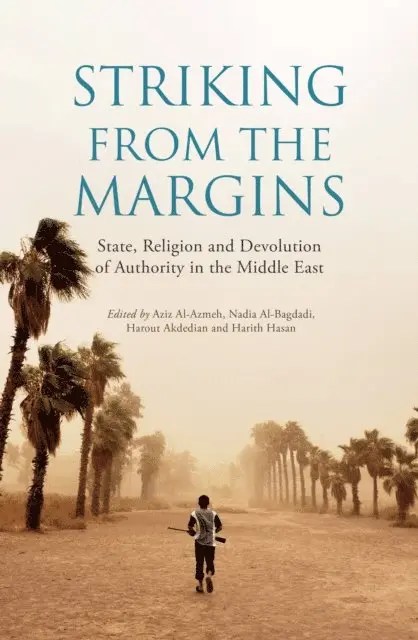
Striking From The Margins
State, Religion and Devolution of Authority in the Middle East
Av Aziz Al-Azmeh, Nadia Al-Bagdadi m. fl.
Häftad, 2021
356 kr
Lägg i varukorg
Since the collapse of the Soviet Union, the Arab world has undergone a series of radical transformations. One of the most significant is the resurgence of activist and puritanical forms of religion presenting as viable alternatives to existing social, cultural and political practices. The rise in …
Spoils of War in the Arab East
Reconditioning Society and Polity in Conflict
Av Aziz Al-Azmeh, Harout Akdedian m. fl.
Inbunden, 2024
1422 kr
Lägg i varukorg
Post-conflict scenarios are often proposed for Arab countries that have witnessed significant changes and civil wars. Yet the plans for reconciliation, transitional justice, and the return of the displaced often overlook the real conditions that make these recommendations impossible.This book …
Spoils of War in the Arab East
Reconditioning Society and Polity in Conflict
Av Aziz Al-Azmeh, Harout Akdedian m. fl.
E-bok, 2024
385 kr
Lägg i varukorg
Post-conflict scenarios are often proposed for Arab countries that have witnessed significant changes and civil wars. Yet the plans for reconciliation, transitional justice, and the return of the displaced often overlook the real conditions that make these recommendations impossible. This book …
Spoils of War in the Arab East
Reconditioning Society and Polity in Conflict
Av Aziz Al-Azmeh, Harout Akdedian m. fl.
E-bok, 2024
385 kr
Lägg i varukorg
Post-conflict scenarios are often proposed for Arab countries that have witnessed significant changes and civil wars. Yet the plans for reconciliation, transitional justice, and the return of the displaced often overlook the real conditions that make these recommendations impossible. This book …
Striking From The Margins
State, Religion and Devolution of Authority in the Middle East
Av Harout Akdedian, Harith Hasan m. fl.
E-bok, 2021
346 kr
Lägg i varukorg
Since the collapse of the Soviet Union, the Arab world has undergone a series of radical transformations. One of the most significant is the resurgence of activist and puritanical forms of religion presenting as viable alternatives to existing social, cultural and political practices. The rise in …
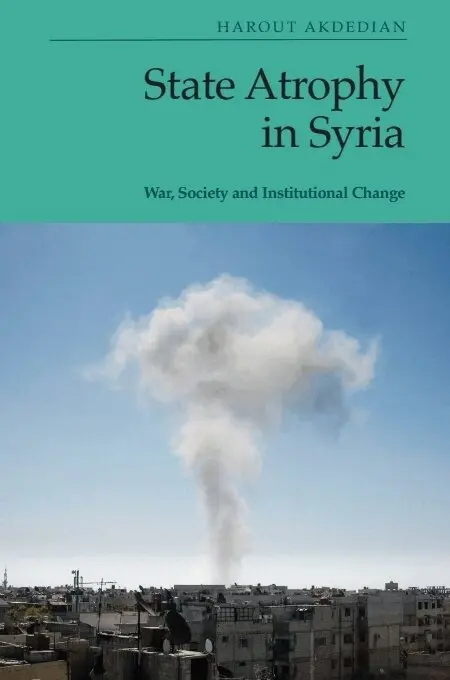
State Atrophy in Syria
War, Society and Institutional Change
Inbunden, 2023
1303 kr
Lägg i varukorg
Examines institutional and socio-cultural transformations throughout the Syrian conflictFills substantial gaps in the literature on Syria regarding state atrophy, covering both institutional and social-cultural formulationsFocuses on the five distinct and most consequential aspects of state atrophy …
State Atrophy in Syria
War, Society and Institutional Change
Häftad, 2025
315 kr
Lägg i varukorg
How do governments contribute to galvanizing public hostility against state institutions? And what are the consequences of undermining the state as a strategy for political change? State Atrophy in Syria highlights how the appropriation of state institutions by public officials limits public …