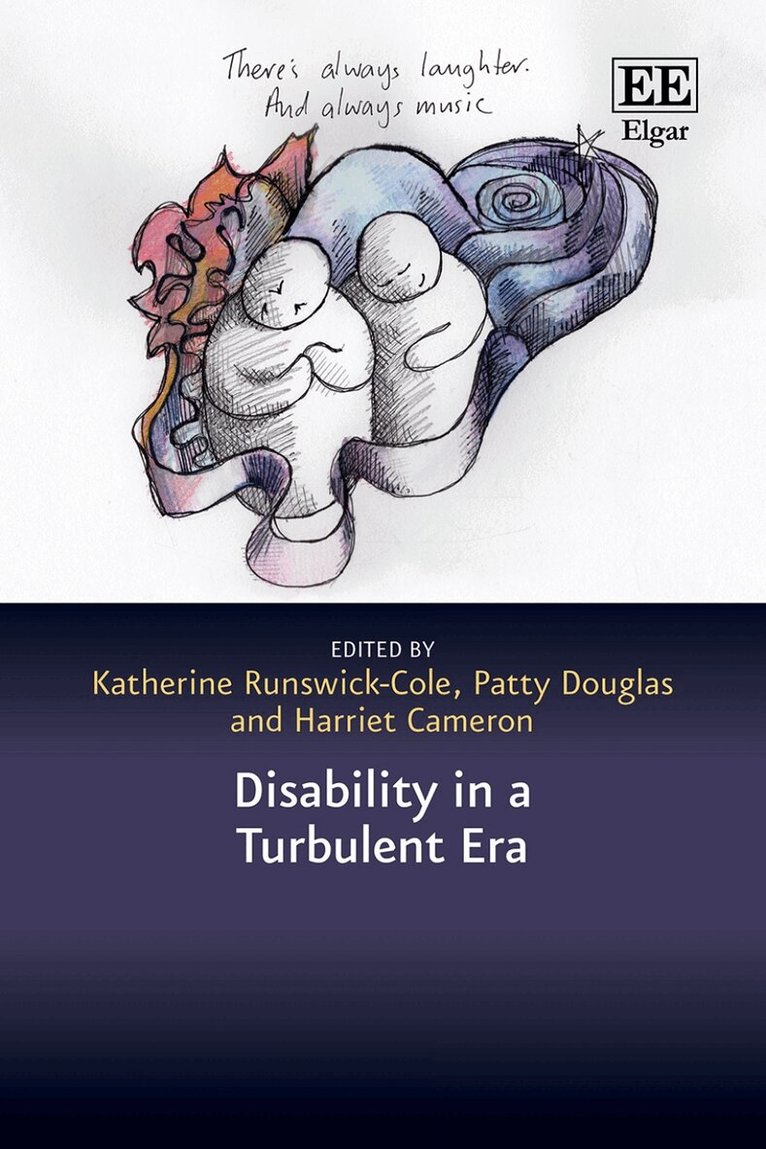
This book highlights the generative tension arising when disability is approached from a range of critical perspectives. It explores the persistent and tightening grasp of ableism driven by growing uncertainty, instability and inequality.Contributors propose novel approaches for affirming disability, challenging ableism and advancing justice against the increasing normalisation of fascist rhetoric. Drawing from a variety of under-valued epistemologies and ontologies, they outline methodologies from the Global South, decolonial lenses and original intersections. The book highlights a broad spectrum of contexts, including workplace discrimination, housing, the othering of those with energy limiting conditions and the precarity imposed on people who rely on medical technologies. Disability in a Turbulent Era also makes space for hope, advocating for the active disruption of assumptions about who can do what, and who cannot.Presenting powerful critique and practical solutions, this book is an essential resource for scholars and students of disability studies, sociology, psychology and development. Disability educators, activists and care workers will also benefit from its actionable recommendations.
This book is one that all parents need to read. The teaching and learning of morals is so very important today. Reading this book will help you as parents talk to your children and let them know that no matter what the circumstances, you really do and always will love them. The beautiful pictures make the children enjoy the book, while learning these wonderful traits.
This book highlights the generative tension arising when disability is approached from a range of critical perspectives. It explores the persistent and tightening grasp of ableism driven by growing uncertainty, instability and inequality.Contributors propose novel approaches for affirming disability, challenging ableism and advancing justice against the increasing normalisation of fascist rhetoric. Drawing from a variety of under-valued epistemologies and ontologies, they outline methodologies from the Global South, decolonial lenses and original intersections. The book highlights a broad spectrum of contexts, including workplace discrimination, housing, the othering of those with energy limiting conditions and the precarity imposed on people who rely on medical technologies. Disability in a Turbulent Era also makes space for hope, advocating for the active disruption of assumptions about who can do what, and who cannot.Presenting powerful critique and practical solutions, this book is an essential resource for scholars and students of disability studies, sociology, psychology and development. Disability educators, activists and care workers will also benefit from its actionable recommendations.
This book is one that all parents need to read. The teaching and learning of morals is so very important today. Reading this book will help you as parents talk to your children and let them know that no matter what the circumstances, you really do and always will love them. The beautiful pictures make the children enjoy the book, while learning these wonderful traits.