Harry J. Gensler – författare
793 kr
Skickas inom 10-15 vardagar
2 422 kr
Skickas inom 10-15 vardagar
709 kr
Skickas inom 10-15 vardagar
Historical Dictionary of Logic
1 394 kr
Skickas inom 10-15 vardagar
Historical Dictionary of Ethics
1 949 kr
Skickas inom 10-15 vardagar
2 118 kr
Läs direkt efter köp
A to Z of Ethics
700 kr
Skickas inom 10-15 vardagar
A to Z of Logic
700 kr
Skickas inom 10-15 vardagar
2 182 kr
Skickas inom 10-15 vardagar
652 kr
Skickas inom 10-15 vardagar
632 kr
Skickas inom 10-15 vardagar
706 kr
Läs direkt efter köp
Reasoning about God is an introduction to philosophy of religion, meeting college students where they are with their own doubts and questions. Each chapter begins with a passage from a fictional student, who raises intellectual problems against God, which is followed by the author’s informed and easy-to-understand analysis. This debate structure allows student readers to clearly see the clash of ideas, gets them involved in the issues, and encourages their critical thinking (since students are pushed to find flaws in the ideas). It emulates the structure the author followed successfully in his Ethics: A Contemporary Introduction, which is now in its third edition and has been translated five times into other languages. This structure works well in philosophy of religion, even better than in does in ethics.
Key Features of Reasoning about God:
Written clearly and concisely, making difficult issues easy to understand. Makes a strong case for belief in God, based on various factors – including arguments about fine-tuning, Kalam, and near-death experiences – as well as approaches that are more instinctual or emotional. A major theme of the book is "There are many paths to God." Includes material on both traditional topics of philosophy of religion (like the problem of evil) and other related topics of interest (like whether religion is harmful, life after death, the variety of world religions, and the meaning of life). Explores how science connects to God’s existence, arguing that recent science is friendlier toward religion than older science. Written by a Christian author, whose defense of belief in God works with other theistic traditions as well (like Islam and Judaism).706 kr
Läs direkt efter köp
Reasoning about God is an introduction to philosophy of religion, meeting college students where they are with their own doubts and questions. Each chapter begins with a passage from a fictional student, who raises intellectual problems against God, which is followed by the author’s informed and easy-to-understand analysis. This debate structure allows student readers to clearly see the clash of ideas, gets them involved in the issues, and encourages their critical thinking (since students are pushed to find flaws in the ideas). It emulates the structure the author followed successfully in his Ethics: A Contemporary Introduction, which is now in its third edition and has been translated five times into other languages. This structure works well in philosophy of religion, even better than in does in ethics.
Key Features of Reasoning about God:
Written clearly and concisely, making difficult issues easy to understand. Makes a strong case for belief in God, based on various factors – including arguments about fine-tuning, Kalam, and near-death experiences – as well as approaches that are more instinctual or emotional. A major theme of the book is "There are many paths to God." Includes material on both traditional topics of philosophy of religion (like the problem of evil) and other related topics of interest (like whether religion is harmful, life after death, the variety of world religions, and the meaning of life). Explores how science connects to God’s existence, arguing that recent science is friendlier toward religion than older science. Written by a Christian author, whose defense of belief in God works with other theistic traditions as well (like Islam and Judaism).597 kr
Skickas inom 10-15 vardagar
2 422 kr
Skickas inom 10-15 vardagar
1 110 kr
Skickas inom 7-10 vardagar
329 kr
Skickas inom 7-10 vardagar
942 kr
Läs direkt efter köp
Formal Ethics is the study of formal ethical principles. The most important of these, perhaps even the most important principle of life, is the golden rule: "Treat others as you want to be treated". Although the golden rule enjoys support amongst different cultures and religions in the world, philosophers tend to neglect it. Formal Ethics gives the rule the attention it deserves. Modelled on formal logic, Formal Ethics was inspired by the ethical theories of Kant and Hare. It shows that the basic formal principles of ethics, like the golden rule, are very similar to principles of logic, and gives a firm basis for our ethical thinking. As an introduction to moral rationality, Formal Ethics also considers non-formal elements, and is applied to areas of practical concern such as racism and moral education
942 kr
Läs direkt efter köp
Formal Ethics is the study of formal ethical principles. The most important of these, perhaps even the most important principle of life, is the golden rule: "Treat others as you want to be treated". Although the golden rule enjoys support amongst different cultures and religions in the world, philosophers tend to neglect it. Formal Ethics gives the rule the attention it deserves. Modelled on formal logic, Formal Ethics was inspired by the ethical theories of Kant and Hare. It shows that the basic formal principles of ethics, like the golden rule, are very similar to principles of logic, and gives a firm basis for our ethical thinking. As an introduction to moral rationality, Formal Ethics also considers non-formal elements, and is applied to areas of practical concern such as racism and moral education
807 kr
Läs direkt efter köp
It is commonly accepted that the golden rule—most often formulated as "do unto others as you would have them do unto you"—is a unifying element between many diverse religious traditions, both Eastern and Western. Its influence also extends beyond such traditions, since many non-religious individuals hold up the golden rule as central to their lives.
Yet, while it is extraordinarily important and widespread, the golden rule is often dismissed by scholars as a vague proverb that quickly leads to absurdities when one attempts to formulate it in clear terms. In this book, Harry J. Gensler defends the golden rule and addresses all of the major philosophic objections, pointing out several common misunderstanding and misapplications. Gensler first discusses golden-rule reasoning and how to avoid the main pitfalls. He then relates the golden rule to world religions and history, and to areas like moral education, egoism, evolution, society, racism, business, and medicine. The book ends with a discussion of theoretical issues (like whether all morality reduces to the golden rule, which the author argues against).
Ethics and the Golden Rule offers two introductory chapters, the first is simpler and the second more technical; a reader may start with either or both. One can then read any combination of further chapters, in any order, depending on one’s interests; but Chapters 13 and 14 are technical and assume one has read Chapter 2. This is "a golden-rule book for everyone," accessible to a wide readership.
807 kr
Läs direkt efter köp
It is commonly accepted that the golden rule—most often formulated as "do unto others as you would have them do unto you"—is a unifying element between many diverse religious traditions, both Eastern and Western. Its influence also extends beyond such traditions, since many non-religious individuals hold up the golden rule as central to their lives.
Yet, while it is extraordinarily important and widespread, the golden rule is often dismissed by scholars as a vague proverb that quickly leads to absurdities when one attempts to formulate it in clear terms. In this book, Harry J. Gensler defends the golden rule and addresses all of the major philosophic objections, pointing out several common misunderstanding and misapplications. Gensler first discusses golden-rule reasoning and how to avoid the main pitfalls. He then relates the golden rule to world religions and history, and to areas like moral education, egoism, evolution, society, racism, business, and medicine. The book ends with a discussion of theoretical issues (like whether all morality reduces to the golden rule, which the author argues against).
Ethics and the Golden Rule offers two introductory chapters, the first is simpler and the second more technical; a reader may start with either or both. One can then read any combination of further chapters, in any order, depending on one’s interests; but Chapters 13 and 14 are technical and assume one has read Chapter 2. This is "a golden-rule book for everyone," accessible to a wide readership.
2 605 kr
Skickas inom 10-15 vardagar
849 kr
Skickas inom 10-15 vardagar
396 kr
Läs direkt efter köp
396 kr
Läs direkt efter köp
1 009 kr
Läs direkt efter köp
Introduction to Logic is clear and concise, uses interesting examples (many philosophical in nature), and has easy-to-use proof methods. Its key features, retained in this Third Edition, include:
simpler ways to test arguments, including an innovative proof method and the star test for syllogisms;
a wide scope of materials, suiting it for introductory or intermediate courses;
engaging examples, from philosophy and everyday life;
useful for self-study and preparation for standardized tests, like the LSAT;
a reasonable price (a third the cost of some competitors); and
exercises that correspond to the free LogiCola instructional program.
This Third Edition:
improves explanations, especially on areas that students find difficult;
has a fuller explanation of traditional Copi proofs and of truth trees; and
updates the companion LogiCola software, which now is touch friendly (for use on Windows tablets and touch monitors), installs more easily on Windows and Macintosh, and adds exercises on Copi proofs and on truth trees. You can still install LogiCola for free (from http://www.harryhiker.com/lc or http://www.routledge.com/cw/gensler).
1 009 kr
Läs direkt efter köp
Introduction to Logic is clear and concise, uses interesting examples (many philosophical in nature), and has easy-to-use proof methods. Its key features, retained in this Third Edition, include:
simpler ways to test arguments, including an innovative proof method and the star test for syllogisms;
a wide scope of materials, suiting it for introductory or intermediate courses;
engaging examples, from philosophy and everyday life;
useful for self-study and preparation for standardized tests, like the LSAT;
a reasonable price (a third the cost of some competitors); and
exercises that correspond to the free LogiCola instructional program.
This Third Edition:
improves explanations, especially on areas that students find difficult;
has a fuller explanation of traditional Copi proofs and of truth trees; and
updates the companion LogiCola software, which now is touch friendly (for use on Windows tablets and touch monitors), installs more easily on Windows and Macintosh, and adds exercises on Copi proofs and on truth trees. You can still install LogiCola for free (from http://www.harryhiker.com/lc or http://www.routledge.com/cw/gensler).
746 kr
Läs direkt efter köp
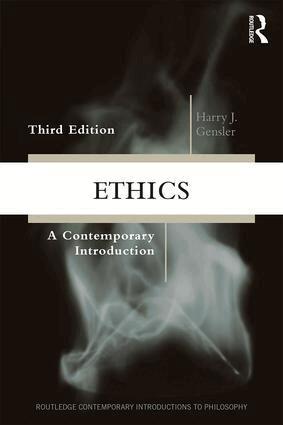
Ethics: A Contemporary Introduction introduces the issues and controversies of contemporary moral philosophy. It gets students to struggle with the big questions of morality while it also relates these questions to practical issues, especially racism, global warming, moral education, and abortion. Providing a practical method for thinking about moral issues—a method based largely on the golden rule—it is written simply and clearly throughout. College students who are new to philosophy or who have already taken an introductory-level course will benefit from its use.
Key Features:
Serves as either the sole textbook for a lower-level introduction to ethics/moral philosophy course or a supplementary text for a more advanced undergraduate ethics course. Provides clear, direct writing throughout, making each chapter easily accessible for an engaged undergraduate student. Offers a philosophically rigorous presentation of the golden rule. Includes helpful study aids, including: bolded technical terms; boxes for key ideas; summaries, study questions, and suggested readings for each chapter; and a comprehensive glossary/index at the back of the book.Key Additions to the Third Edition:
Each chapter now offers additional, optional sections on more advanced topics for students wishing to dig deeper into the material (advanced topics include: Kohlberg’s moral psychology, whether morality is gendered, types of relativism, early Greek ethics, Hume, and the prisoner’s dilemma). Other improvements include: better chapter organization, clearer explanations, improved examples, new names for key arguments, and a better Kindle version. An updated and improved EthiCola instructional program (with a score-processing program, teacher’s manual, and class slides), which can be downloaded from the web for free (from www.harrycola.com/ec or www.harryhiker.com/ec).774 kr
Läs direkt efter köp
Ethics: A Contemporary Introduction introduces the issues and controversies of contemporary moral philosophy. It gets students to struggle with the big questions of morality while it also relates these questions to practical issues, especially racism, global warming, moral education, and abortion. Providing a practical method for thinking about moral issues—a method based largely on the golden rule—it is written simply and clearly throughout. College students who are new to philosophy or who have already taken an introductory-level course will benefit from its use.
Key Features:
Serves as either the sole textbook for a lower-level introduction to ethics/moral philosophy course or a supplementary text for a more advanced undergraduate ethics course. Provides clear, direct writing throughout, making each chapter easily accessible for an engaged undergraduate student. Offers a philosophically rigorous presentation of the golden rule. Includes helpful study aids, including: bolded technical terms; boxes for key ideas; summaries, study questions, and suggested readings for each chapter; and a comprehensive glossary/index at the back of the book.Key Additions to the Third Edition:
Each chapter now offers additional, optional sections on more advanced topics for students wishing to dig deeper into the material (advanced topics include: Kohlberg’s moral psychology, whether morality is gendered, types of relativism, early Greek ethics, Hume, and the prisoner’s dilemma). Other improvements include: better chapter organization, clearer explanations, improved examples, new names for key arguments, and a better Kindle version. An updated and improved EthiCola instructional program (with a score-processing program, teacher’s manual, and class slides), which can be downloaded from the web for free (from www.harrycola.com/ec or www.harryhiker.com/ec).757 kr
Läs direkt efter köp