Harsh K. Gupta - Böcker
Visar alla böcker från författaren Harsh K. Gupta. Handla med fri frakt och snabb leverans.
8 produkter
8 produkter
1 879 kr
Skickas inom 5-8 vardagar
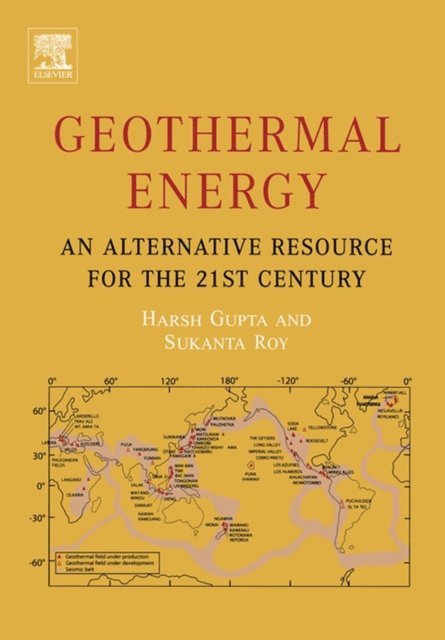
More than 20 countries generate electricity from geothermal resources and about 60 countries make direct use of geothermal energy. A ten-fold increase in geothermal energy use is foreseeable at the current technology level. Geothermal Energy: An Alternative Resource for the 21st Century provides a readable and coherent account of all facets of geothermal energy development and summarizes the present day knowledge on geothermal resources, their exploration and exploitation. Accounts of geothermal resource models, various exploration techniques, drilling and production technology are discussed within 9 chapters, as well as important concepts and current technological developments. Interdisciplinary approach, combining traditional disciplines such as geology, geophysics, and engineering Provides a readable and coherent account of all facets of geothermal energy development Describes the importance of bringing potable water to high-demand areas such as the tropical regions
5 606 kr
Skickas inom 10-15 vardagar
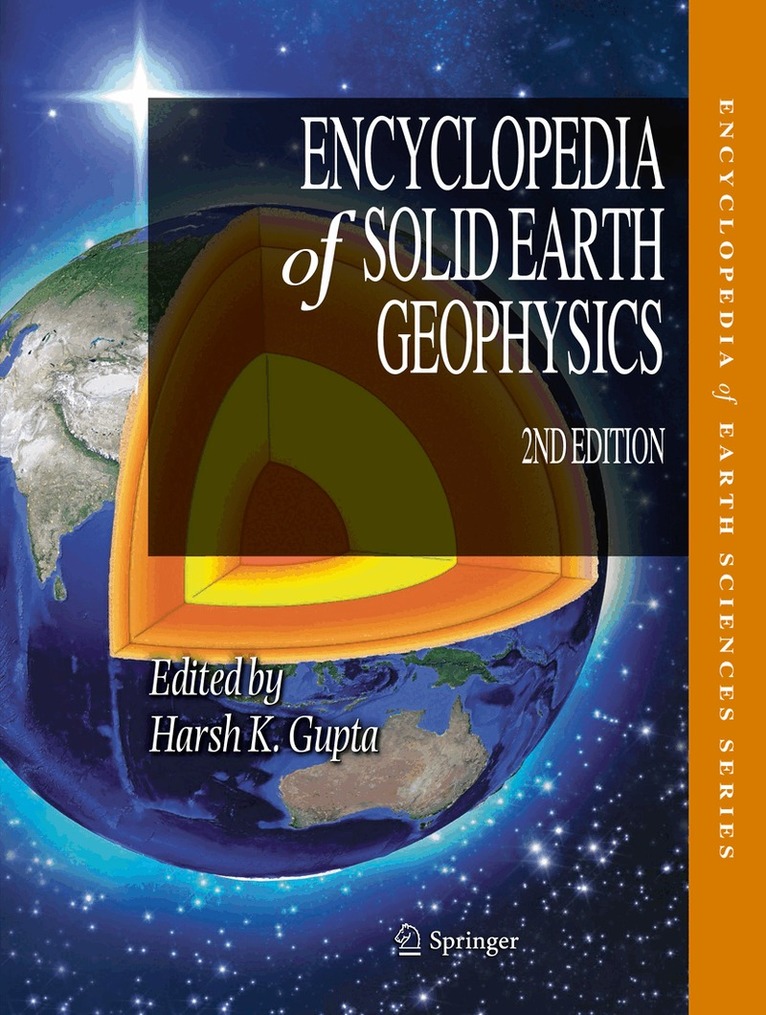
In the 21st century the importance of earth sciences in the pursuit of knowledge and understanding of the planet on which we live, has increased tremendously. Above all, they address the challenge of enriching human lives with the bounties of nature, while preserving the planet for future generations. The chief goals of Solid Earth Geophysics are to define and quantify the internal structure and processes of the Earth in terms of physical principles, and to provide an essential framework that allied disciplines can employ for more focused investigations.The earliest version of The Encyclopedia of Solid Earth Geophysics was released by Van Nostrand Reinhold publishing company in 1989. More than two decades later, a completely revised and updated version, edited by Prof. Harsh K. Gupta, was published in 2011. Including over 200 articles authored by specialists from all over the world, it was very well received.Reflecting the rapid advances in Solid Earth Geophysics over the past decade and the global need for an authentic update, this new edition of the Encyclopedia presents over 250 articles covering established and new concepts in Geophysics across various sub-disciplines such as Gravity, Geodesy, Geomagnetism, Seismology, Seismics, Deep Earth Processes, Plate Tectonics, Thermal Domains, Computational Methods, etc. in a systematic and consistent format. Offering an authoritative and current up-to-date reference source with extraordinary scope and gathering expert contributions by more than 300 authors around the globe, the new edition will serve as a valuable and cherished source of information for current and future generations of professionals.Review from the first edition:“The Encyclopedia of Solid Earth Geophysics … nicely brings together numerous geophysical topics and presents this sometimes dry, mathematical and abstract field in a languagecomprehensible to researchers, teachers, students, and professional geophysicists. … the new encyclopedia should be of great interest to petroleum explorers, researchers and educators as well. … A list of references at the end of each article directs the interested reader for further research.” (Rasoul Sorkhabi, GEO ExPro, September, 2013)
1 176 kr
Skickas inom 5-8 vardagar
This book captures the essence of one of the most remarkable journeys of a professional who prevailed over numerous challenges and adverse situations that appeared before him from nowhere and how he emerged victorious to be hailed at a global forum of the American Geophysical Union in 2008. The author reflects upon the circumstances and times in post-independent India that threw him out of the comforts of a well-to-do family into the real world. He traces back his entry into the field of earthquake science and dwells at length upon the scope and freedom it offered for innovative thinking in the field with limitless opportunities.Mishaps and accidents paved the way to remarkable discoveries and achievements including the creation of the world record for establishing and populating India’s first permanent base station in Antarctica in a record time of one Antarctic summer despite having a near-fatal helicopter crash on 4th day after reaching Antarctica. Stressing the need to live safely with earthquakes as their short-term prediction is not a possibility yet, the author advocates a two-prong strategy of directly looking into the earthquake source region deep inside the earth and developing an earthquake-resilient society, simultaneously. He cites the success story of the Indian Tsunami Early Warning System that is operational in the Indian Ocean, today. The book inspires young professionals with a flair for challenges and a burning desire to achieve results at any cost.This book provides important information in a nutshell about artificial water reservoir triggered earthquakes, India’s building of the Dakshin Gangotri all-weather station in Antarctica, Indian Ocean Tsunami warning set-up, Low-Temperature Thermal Desalination, etc. The main objective of the book is to inspire a generation of young minds through a narration of scientific achievements that did not come easily to him. The aim is to tell them the difference between a reaction and a response to a given situation, the former being impulsive and irrational and the latter responsible and rational.
1 800 kr
Skickas inom 10-15 vardagar
This book captures the essence of one of the most remarkable journeys of a professional who prevailed over numerous challenges and adverse situations that appeared before him from nowhere and how he emerged victorious to be hailed at a global forum of the American Geophysical Union in 2008. The author reflects upon the circumstances and times in post-independent India that threw him out of the comforts of a well-to-do family into the real world. He traces back his entry into the field of earthquake science and dwells at length upon the scope and freedom it offered for innovative thinking in the field with limitless opportunities.Mishaps and accidents paved the way to remarkable discoveries and achievements including the creation of the world record for establishing and populating India’s first permanent base station in Antarctica in a record time of one Antarctic summer despite having a near-fatal helicopter crash on 4th day after reaching Antarctica. Stressing the need to live safely with earthquakes as their short-term prediction is not a possibility yet, the author advocates a two-prong strategy of directly looking into the earthquake source region deep inside the earth and developing an earthquake-resilient society, simultaneously. He cites the success story of the Indian Tsunami Early Warning System that is operational in the Indian Ocean, today. The book inspires young professionals with a flair for challenges and a burning desire to achieve results at any cost.This book provides important information in a nutshell about artificial water reservoir triggered earthquakes, India’s building of the Dakshin Gangotri all-weather station in Antarctica, Indian Ocean Tsunami warning set-up, Low-Temperature Thermal Desalination, etc. The main objective of the book is to inspire a generation of young minds through a narration of scientific achievements that did not come easily to him. The aim is to tell them the difference between a reaction and a response to a given situation, the former being impulsive and irrational and the latter responsible and rational.
1 589 kr
Skickas inom 10-15 vardagar
The fact that filling of an artificial water reservoir could alter the earthquake occurrence in the vicinity of a reservoir was scientifically established way back in 1939 when enhanced earthquake occurrence in the vicinity of Lake Mead, Colorado, USA was related with the filling of the Hoover Dam. Over the years artificial water reservoir triggered earthquakes have been reported from all over the world. At least at 5 sites earthquakes exceeding magnitude 6 have occurred, causing loss of human lives and substantial damage to properties and infrastructure. Globally, certain anthropogenic activities lead to inducing/triggering of earthquakes. Among these, the reservoir triggered seismicity (RTS) is most prominent. At several locations, construction of artificial water reservoirs, enhanced oil recovery through fluid injection, geothermal power production etc. had to be given up due to realization of the possibility of triggering/inducing earthquakes. The book provides an overview of all RTS sites and earthquake occurrence. RTS is found to have characteristics different from the normal earthquake sequences occurring in the nearby region of RTS sites. The book deals with the RTS mechanism, how to find safer sites for construction of artificial water reservoir and related issues. Among all the RTS sites, Koyna, India is most prominent where the largest RTS event of magnitude 6.3 occurred in 1967 and RTS has continued till now. A detailed description of the studies conducted at Koyna, India including setting up a bore-hole observatory for near-field study of earthquakes is provided. It is shown that the important question as to how earthquakes nucleate could be found from studies at Koyna, India and RTS sites elsewhere in the world. The book also provides an overview of the injection induced earthquakes occurring in Oklahoma, USA.
482 kr
Skickas inom 10-15 vardagar
With the increase in the number of cases of induced seismicity, there is a growing concern among planners, engineers, geophysicists and geologists to understand the environment conducive to this phenomenon. A workshop on Induced Seismicity was organized during the 27th General Assembly of the International Association of Seismology and Physics of Earth's Interior (IASPEI) in Wellington, New Zealand, during January 10-21, 1994. This volume present a collection of 16 papers accepted for publication which accrued from this workshop. The papers cover such topics as mining activity related to induced seismicity, water-induced seismic activity, and aspects of water resevoir-induced earthquakes.
6 850 kr
Skickas inom 10-15 vardagar
The past few decades have witnessed the growth of the Earth Sciences in the pursuit of knowledge and understanding of the planet that we live on. This development addresses the challenging endeavor to enrich human lives with the bounties of Nature as well as to preserve the planet for the generations to come. Solid Earth Geophysics aspires to define and quantify the internal structure and processes of the Earth in terms of the principles of physics and forms the intrinsic framework, which other allied disciplines utilize for more specific investigations. The first edition of the Encyclopedia of Solid Earth Geophysics was published in 1989 by Van Nostrand Reinhold publishing company. More than two decades later, this new volume, edited by Prof. Harsh K. Gupta, represents a thoroughly revised and expanded reference work. It brings together more than 200 articles covering established and new concepts of Geophysics across the various sub-disciplines such as Gravity, Geodesy, Geomagnetism, Seismology, Seismics, Deep Earth Processes, Plate Tectonics, Thermal Domains, Computational Methods, etc. in a systematic and consistent format and standard. It is an authoritative and current reference source with extraordinary width of scope. It draws its unique strength from the expert contributions of editors and authors across the globe. It is designed to serve as a valuable and cherished source of information for current and future generations of professionals.
534 kr
Skickas inom 10-15 vardagar
Tsunamis are primarily caused by earthquakes. Under favourable geological conditions, when a large earthquake occurs below the sea bed and the resultant rupture causes a vertical displacement of the ocean bed, the entire column of water above it is displaced, causing a tsunami. In the ocean, tsunamis do not reach great heights but can travel at velocities of up to 1000 km/hour. As a tsunami reaches shallow sea depths, there is a decrease in its velocity and an increase in its height. Tsunamis are known to have reached heights of several tens of meters and inundate several kilometres inland from the shore. Tsunamis can also be caused by displacement of substantial amounts of water by landslides, volcanic eruptions, glacier calving and rarely by meteorite impacts and nuclear tests in the ocean.In this SpringerBrief, the causes of tsunamis, their intensity and magnitude scales, global distribution and a list of major tsunamis are provided. The three great tsunamis of 1755, 2004 and2011are presented in detail. The 1755 tsunami caused by the Lisbon earthquake, now estimated to range from Mw 8.5 to 9.0, was the most damaging tsunami ever in the Atlantic ocean. It claimed an estimated 100,000 human lives and caused wide-spread damage. The 2004 Sumatra Andaman Mw 9.1 earthquake and the resultant tsunami were the deadliest ever to hit the globe, claiming over 230,000 human lives and causing wide-spread financial losses in several south and south-east Asian countries. The 2011 Mw 9.0 Tohoku-Oki earthquake and the resultant tsunami were a surprise to the seismologists in Japan and around the globe. The height of the tsunami far exceeded the estimated heights. It claimed about 20,000 human lives. The tsunami also caused nuclear accidents. This earthquake has given rise to a global debate on how to estimate the maximum size of an earthquake in a given region and the safety of nuclear power plants in coastal regions. This Brief also includes a description of key components of tsunami warning centres, progress in deploying tsunami watch and warning facilities globally, tsunami advisories and their communication, and the way forward.