Haruhito Takeda – författare
Visar alla böcker från författaren Haruhito Takeda. Handla med fri frakt och snabb leverans.
6 produkter
Micro-Performance During Postwar Japan’s High-Growth Era
Inbunden, 2016
1131 kr
Lägg i varukorg
The aim of this book is to analyze Japan's high-growth economy, in particular to clarify the kinds of changes in people’s lives that were generated by high growth. The present volume focuses not on the macro-economic mechanisms that expanded the scale of the economy, but on the micro-economic …
Micro-Performance During Postwar Japan's High-Growth Era
E-bok, 2016
1502 kr
Lägg i varukorg
The aim of this book is to analyze Japan''s high-growth economy, in particular to clarify the kinds of changes in people’s lives that were generated by high growth. The present volume focuses not on the macro-economic mechanisms that expanded the scale of the economy, but on the micro-economic …
Micro-Performance During Postwar Japan’s High-Growth Era
Häftad, 2018
1131 kr
Lägg i varukorg
The aim of this book is to analyze Japan's high-growth economy, in particular to clarify the kinds of changes in people’s lives that were generated by high growth. The present volume focuses not on the macro-economic mechanisms that expanded the scale of the economy, but on the micro-economic …
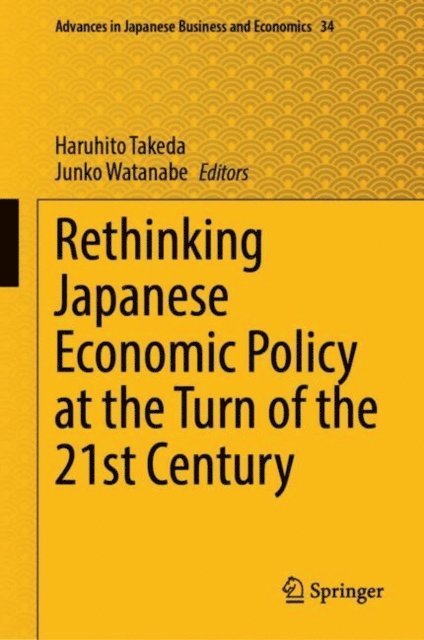
Rethinking Japanese Economic Policy at the Turn of the 21st Century
Av Junko Watanabe, Haruhito Takeda
Inbunden, 2024
2030 kr
Lägg i varukorg
This book, focusing on the Japanese economy mainly from the 1990s to the 2010s, examines the Japanese industrial and fiscal-monetary policies and evaluates its achievements and limits from a historical perspective. Although the period that was also referred to as the "lost decade (or two, three …
Rethinking Japanese Economic Policy at the Turn of the 21st Century
Av Junko Watanabe, Haruhito Takeda
E-bok, 2024
2592 kr
Lägg i varukorg
This book, focusing on the Japanese economy mainly from the 1990s to the 2010s, examines the Japanese industrial and fiscal-monetary policies and evaluates its achievements and limits from a historical perspective. Although the period that was also referred to as the "lost decade (or two, three …
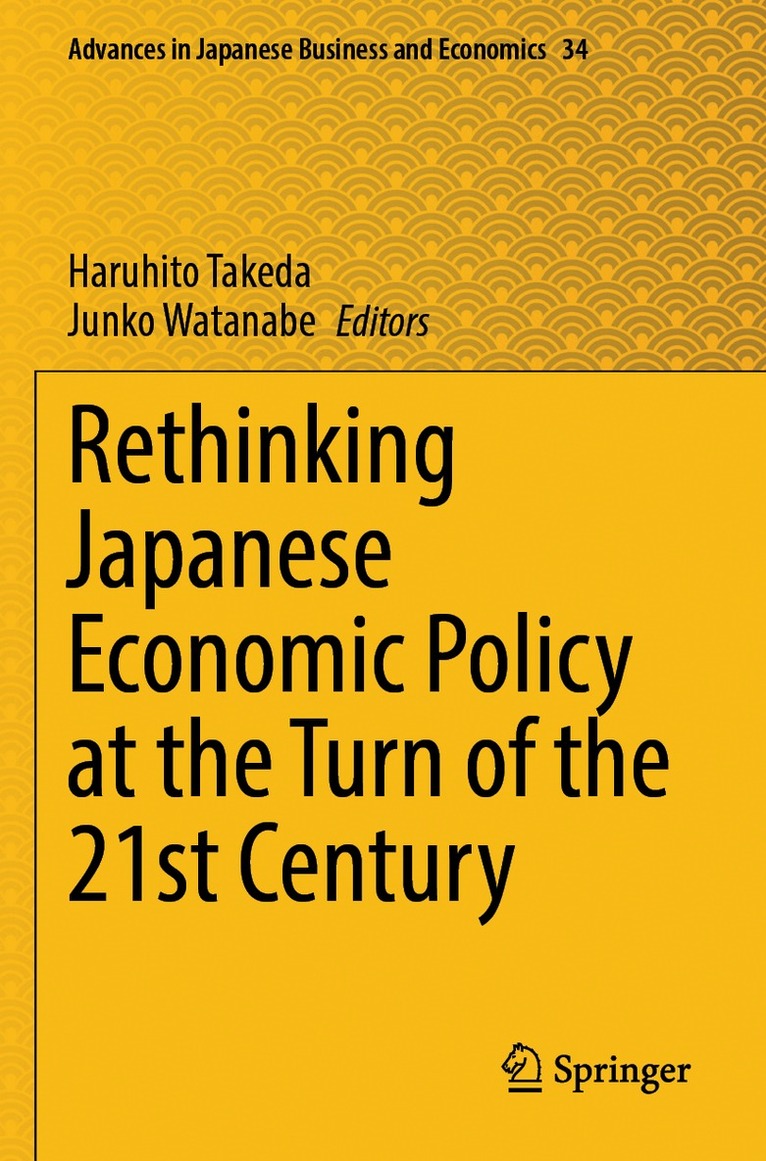
Rethinking Japanese Economic Policy at the Turn of the 21st Century
Av Junko Watanabe, Haruhito Takeda
Häftad, 2025
2030 kr
Lägg i varukorg
This book, focusing on the Japanese economy mainly from the 1990s to the 2010s, examines the Japanese industrial and fiscal-monetary policies and evaluates its achievements and limits from a historical perspective. Although the period that was also referred to as the "lost decade (or two, three …