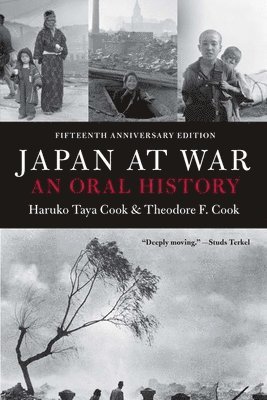
A “deeply moving book” (Studs Terkel) and the first ever oral history to document the experience of ordinary Japanese people during World War II“Hereafter no one will be able to think, write, or teach about the Pacific War without reference to [the Cooks’] work.” —Marius B. Jansen, Emeritus Professor of Japanese History, Princeton UniversityThis pathbreaking work of oral history by Haruko Taya Cook and Theodore F. Cook was the first book ever to capture the experience of ordinary Japanese people during the war and remains the classic work on the subject.In a sweeping panorama, Japan at War takes us from the Japanese attacks on China in the 1930s to the Japanese home front during the inhuman raids on Tokyo, Hiroshima, and Nagasaki, offering glimpses of how the twentieth century’s most deadly conflict affected the lives of the Japanese population. The book “seeks out the true feelings of the wartime generation [and] illuminates the contradictions between the official views of the war and living testimony” (Yomiuri Shimbun, Japan).For decades, American and Japanese readers have turned to Japan at War for a candid portrait of the Japanese experience during World War II in all its complexity. Featuring essays that contextualize the oral histories of each tumultuous period covered, Japan at War is appropriate both as an introduction to those war-ravaged decades and as a riveting reference for those studying the war in the Pacific.
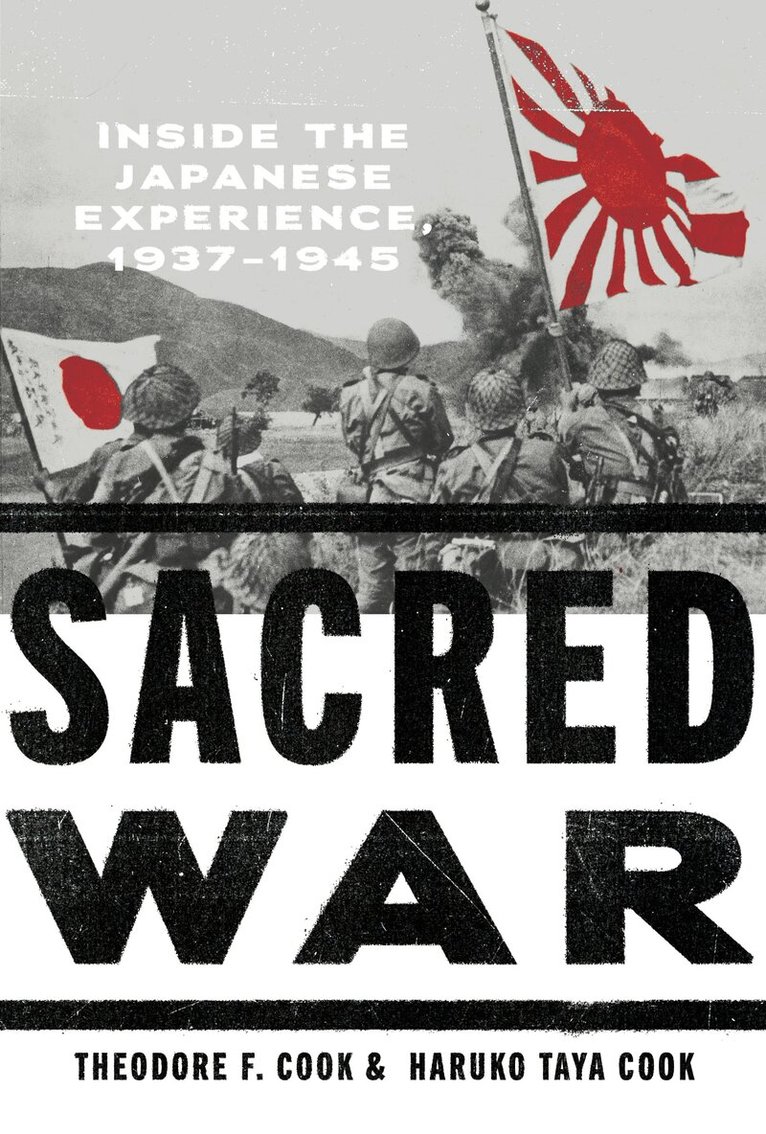
The first effort to reconstruct the history of the Pacific War exclusively from internal Japanese sources, from the renowned historiansA magisterial work of political, social, and military history, Sacred War sets a new standard for understanding the events that forever transformed America, Japan, and the world.Celebrated historians Theodore F. and Haruko Taya Cook, whose oral history of the Pacific war was called “one of the essential books about World War II” (Philadelphia Inquirer), now offer a shattering new history of Japan’s long war in the Pacific, told exclusively from the perspective of the Japanese. Sacred War draws on a rich trove of documents, much of it first-person and almost all of it previously inaccessible to Western scholars. Based on painstaking research, here is World War II through the eyes of the Japanese themselves: ordinary people on the home front, soldiers on the front lines, and the military and political leadership who drove Japan to near annihilation by 1945.Sacred War reveals both the internal logic of an authoritarian society bent on victory at all costs—including, in the final twelve months of the war, over one million civilian deaths—as well as heartrending accounts of the unfolding conflict, from the disease-ridden beaches on Guadalcanal to the burnt-out streets of Hiroshima, following the nuclear attacks by the United States that brought the war to its devastating end.
A “deeply moving book” (Studs Terkel) and the first ever oral history to document the experience of ordinary Japanese people during World War II“Hereafter no one will be able to think, write, or teach about the Pacific War without reference to [the Cooks’] work.” —Marius B. Jansen, Emeritus Professor of Japanese History, Princeton UniversityThis pathbreaking work of oral history by Haruko Taya Cook and Theodore F. Cook was the first book ever to capture the experience of ordinary Japanese people during the war and remains the classic work on the subject.In a sweeping panorama, Japan at War takes us from the Japanese attacks on China in the 1930s to the Japanese home front during the inhuman raids on Tokyo, Hiroshima, and Nagasaki, offering glimpses of how the twentieth century’s most deadly conflict affected the lives of the Japanese population. The book “seeks out the true feelings of the wartime generation [and] illuminates the contradictions between the official views of the war and living testimony” (Yomiuri Shimbun, Japan).For decades, American and Japanese readers have turned to Japan at War for a candid portrait of the Japanese experience during World War II in all its complexity. Featuring essays that contextualize the oral histories of each tumultuous period covered, Japan at War is appropriate both as an introduction to those war-ravaged decades and as a riveting reference for those studying the war in the Pacific.
The first effort to reconstruct the history of the Pacific War exclusively from internal Japanese sources, from the renowned historiansA magisterial work of political, social, and military history, Sacred War sets a new standard for understanding the events that forever transformed America, Japan, and the world.Celebrated historians Theodore F. and Haruko Taya Cook, whose oral history of the Pacific war was called “one of the essential books about World War II” (Philadelphia Inquirer), now offer a shattering new history of Japan’s long war in the Pacific, told exclusively from the perspective of the Japanese. Sacred War draws on a rich trove of documents, much of it first-person and almost all of it previously inaccessible to Western scholars. Based on painstaking research, here is World War II through the eyes of the Japanese themselves: ordinary people on the home front, soldiers on the front lines, and the military and political leadership who drove Japan to near annihilation by 1945.Sacred War reveals both the internal logic of an authoritarian society bent on victory at all costs—including, in the final twelve months of the war, over one million civilian deaths—as well as heartrending accounts of the unfolding conflict, from the disease-ridden beaches on Guadalcanal to the burnt-out streets of Hiroshima, following the nuclear attacks by the United States that brought the war to its devastating end.