Hasana Sharp – författare
Visar alla böcker från författaren Hasana Sharp. Handla med fri frakt och snabb leverans.
14 produkter
14 produkter
Häftad, Engelska, 2025
506 kr
Skickas inom 3-6 vardagar
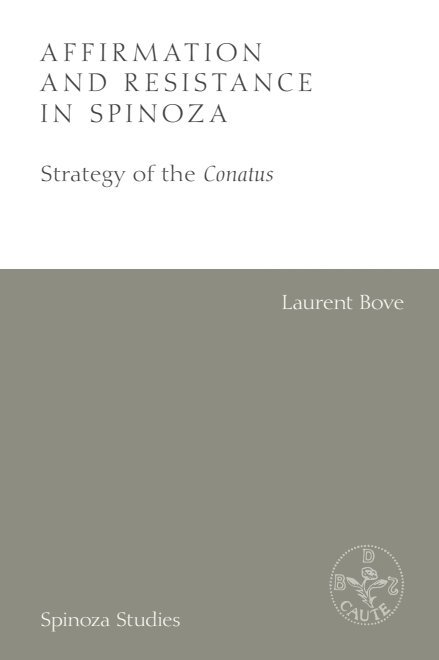
Offers a powerful and influential interpretation of Spinoza's conatus the essential striving that defines each of us as fundamentally strategic. Spinozism must be understood as a dynamic ontology that necessarily unfolds on practical terrain. Laurent Bove analyses Spinoza's theory of affects as rooted in Habit, generating the constituent power of human beings, commonwealths, nations and multitudes. By interpreting sovereignty as a power that emerges through the active resistance of the always singular body of the multitude, Bove discovers in Spinoza a radically new approach to the State, to citizenship and to history.
Häftad, Engelska, 2021
330 kr
Skickas inom 5-8 vardagar
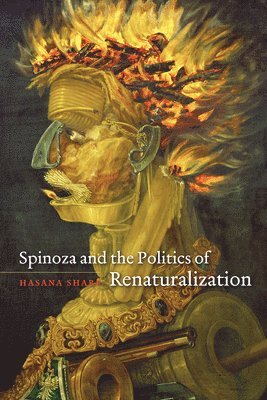
There have been many Spinozas over the centuries: atheist, romantic pantheist, great thinker of the multitude, advocate of the liberated individual, and rigorous rationalist. The common thread connecting all of these clashing perspectives is Spinoza’s naturalism, the idea that humanity is part of nature, not above it.In this sophisticated new interpretation of Spinoza’s iconoclastic philosophy, Hasana Sharp draws on his uncompromising naturalism to rethink human agency, ethics, and political practice. Sharp uses Spinoza to outline a practical wisdom of “renaturalization,” showing how ideas, actions, and institutions are never merely products of human intention or design, but outcomes of the complex relationships among natural forces beyond our control. This lack of a metaphysical or moral division between humanity and the rest of nature, Sharp contends, can provide the basis for an ethical and political practice free from the tendency to view ourselves as either gods or beasts.Sharp’s groundbreaking argument critically engages with important contemporary thinkers—including deep ecologists, feminists, and race and critical theorists—making Spinoza and the Politics of Renaturalization vital for a wide range of scholars.
E-bok
Engelska, 2011640 kr
Läs direkt efter köp
There have been many Spinozas over the centuries: atheist, romantic pantheist, great thinker of the multitude, advocate of the liberated individual, and rigorous rationalist. The common thread connecting all of these clashing perspectives is Spinoza’s naturalism, the idea that humanity is part of nature, not above it. In this sophisticated new interpretation of Spinoza’s iconoclastic philosophy, Hasana Sharp draws on his uncompromising naturalism to rethink human agency, ethics, and political practice. Sharp uses Spinoza to outline a practical wisdom of “renaturalization,” showing how ideas, actions, and institutions are never merely products of human intention or design, but outcomes of the complex relationships among natural forces beyond our control. This lack of a metaphysical or moral division between humanity and the rest of nature, Sharp contends, can provide the basis for an ethical and political practice free from the tendency to view ourselves as either gods or beasts. Sharp’s groundbreaking argument critically engages with important contemporary thinkers—including deep ecologists, feminists, and race and critical theorists—making Spinoza and the Politics of Renaturalization vital for a wide range of scholars.
E-bok
PDF, Engelska, 2016319 kr
Läs direkt efter köp
Much of the history of Western ethical thought has revolved around debates about what constitutes a good life, and claims that a good life is achievable only by certain human beings. In Feminist Philosophies of Life, feminist, new materialist, posthumanist, and ecofeminist philosophers challenge this tendency, approaching the question of life from alternative perspectives. Signalling the importance of distinctively feminist reflections on matters of shared concern, Feminist Philosophies of Life not only exposes the propensity of discourses to normalize and exclude differently abled, racialized, feminized, and gender nonconforming people, it also asks questions about how life is constituted and understood without limiting itself to the human. A collection of articles that focuses on life as an organizing principle for ontology, ethics, and politics, chapters of this study respond to feminist thinkers such as Gloria Anzaldúa, Judith Butler, Adriana Cavarero, Simone de Beauvoir, Luce Irigaray, and Søren Kierkegaard. Divided into three parts, the book debates the question of life in and against the emerging school of new feminist materialism, provides feminist phenomenological and existentialist accounts of life, and focuses on lives marked by a particular precarity such as disability or incarceration, as well as life in the face of a changing climate. Calling for a broader account of lived experience, Feminist Philosophies of Life contains persuasive, original, and diverse analyses that address some of the most crucial feminist issues. Contributors include Christine Daigle (Brock University), Shannon Dea (University of Waterloo), Lindsay Eales (University of Alberta), Elizabeth Grosz (Duke University), Lisa Guenther (Vanderbilt University), Lynne Huffer (Emory University), Ada Jaarsma (Mount Royal University), Stephanie Jenkins (Oregon State University), Ladelle McWhorter (University of Richmond), Jane Barter Moulaison (University of Winnipeg), Astrida Neimanis (University of Sydney), Danielle Peers (University of Alberta), Stephen Seely (Rutgers University), Hasana Sharp (McGill University), Chloë Taylor (University of Alberta), Florentien Verhage (Washington and Lee University), Rachel Loewen Walker (Out Saskatoon), and Cynthia Willett (Emory University).
E-bok
Engelska, 2016308 kr
Läs direkt efter köp
Much of the history of Western ethical thought has revolved around debates about what constitutes a good life, and claims that a good life is achievable only by certain human beings. In Feminist Philosophies of Life, feminist, new materialist, posthumanist, and ecofeminist philosophers challenge this tendency, approaching the question of life from alternative perspectives. Signalling the importance of distinctively feminist reflections on matters of shared concern, Feminist Philosophies of Life not only exposes the propensity of discourses to normalize and exclude differently abled, racialized, feminized, and gender nonconforming people, it also asks questions about how life is constituted and understood without limiting itself to the human. A collection of articles that focuses on life as an organizing principle for ontology, ethics, and politics, chapters of this study respond to feminist thinkers such as Gloria Anzaldúa, Judith Butler, Adriana Cavarero, Simone de Beauvoir, Luce Irigaray, and Søren Kierkegaard. Divided into three parts, the book debates the question of life in and against the emerging school of new feminist materialism, provides feminist phenomenological and existentialist accounts of life, and focuses on lives marked by a particular precarity such as disability or incarceration, as well as life in the face of a changing climate. Calling for a broader account of lived experience, Feminist Philosophies of Life contains persuasive, original, and diverse analyses that address some of the most crucial feminist issues. Contributors include Christine Daigle (Brock University), Shannon Dea (University of Waterloo), Lindsay Eales (University of Alberta), Elizabeth Grosz (Duke University), Lisa Guenther (Vanderbilt University), Lynne Huffer (Emory University), Ada Jaarsma (Mount Royal University), Stephanie Jenkins (Oregon State University), Ladelle McWhorter (University of Richmond), Jane Barter Moulaison (University of Winnipeg), Astrida Neimanis (University of Sydney), Danielle Peers (University of Alberta), Stephen Seely (Rutgers University), Hasana Sharp (McGill University), Chloë Taylor (University of Alberta), Florentien Verhage (Washington and Lee University), Rachel Loewen Walker (Out Saskatoon), and Cynthia Willett (Emory University).
Inbunden, Engelska, 2018
1 266 kr
Skickas inom 7-10 vardagar
Spinoza's Political Treatise constitutes the very last stage in the development of his thought, as he left the manuscript incomplete at the time of his death in 1677. On several crucial issues - for example, the new conception of the 'free multitude' - the work goes well beyond his Theological Political Treatise (1670), and arguably presents ideas that were not fully developed even in his Ethics. This volume of newly commissioned essays on the Political Treatise is the first collection in English to be dedicated specifically to the work, ranging over topics including political explanation, national religion, the civil state, vengeance, aristocratic government, and political luck. It will be a major resource for scholars who are interested in this important but still neglected work, and in Spinoza's political philosophy more generally.
Häftad, Engelska, 2020
395 kr
Skickas inom 7-10 vardagar
Spinoza's Political Treatise constitutes the very last stage in the development of his thought, as he left the manuscript incomplete at the time of his death in 1677. On several crucial issues - for example, the new conception of the 'free multitude' - the work goes well beyond his Theological Political Treatise (1670), and arguably presents ideas that were not fully developed even in his Ethics. This volume of newly commissioned essays on the Political Treatise is the first collection in English to be dedicated specifically to the work, ranging over topics including political explanation, national religion, the civil state, vengeance, aristocratic government, and political luck. It will be a major resource for scholars who are interested in this important but still neglected work, and in Spinoza's political philosophy more generally.
E-bok
Engelska, 2018443 kr
Läs direkt efter köp
Spinoza''s Political Treatise constitutes the very last stage in the development of his thought, as he left the manuscript incomplete at the time of his death in 1677. On several crucial issues - for example, the new conception of the ''free multitude'' - the work goes well beyond his Theological Political Treatise (1670), and arguably presents ideas that were not fully developed even in his Ethics. This volume of newly commissioned essays on the Political Treatise is the first collection in English to be dedicated specifically to the work, ranging over topics including political explanation, national religion, the civil state, vengeance, aristocratic government, and political luck. It will be a major resource for scholars who are interested in this important but still neglected work, and in Spinoza''s political philosophy more generally.
E-bok
PDF, Engelska, 2018428 kr
Läs direkt efter köp
Spinoza''s Political Treatise constitutes the very last stage in the development of his thought, as he left the manuscript incomplete at the time of his death in 1677. On several crucial issues - for example, the new conception of the ''free multitude'' - the work goes well beyond his Theological Political Treatise (1670), and arguably presents ideas that were not fully developed even in his Ethics. This volume of newly commissioned essays on the Political Treatise is the first collection in English to be dedicated specifically to the work, ranging over topics including political explanation, national religion, the civil state, vengeance, aristocratic government, and political luck. It will be a major resource for scholars who are interested in this important but still neglected work, and in Spinoza''s political philosophy more generally.
E-bok
PDF, Engelska, 2012570 kr
Läs direkt efter köp
Recentwork in political philosophy and the history of ideas presents Spinoza andHegel as the most powerful living alternatives to mainstream Enlightenmentthought. Yet, for many philosophers and political theorists today, one mustchoose between Hegel or Spinoza. As Deleuze's influential interpretationmaintains, Hegel exemplifies and promotes the modern "cults of death," whileSpinoza embodies an irrepressible "appetite for living." Hegel is the figure ofnegation, while Spinoza is the thinker of "pure affirmation". Yet, betweenHegel and Spinoza there is not only opposition. This collection of essays seeksto find the suppressed kinship between Hegel and Spinoza. Both philosophersoffer vigorous and profound alternatives to the methodological individualism ofclassical liberalism. Likewise, they sketch portraits of reason that arecontext-responsive and emotionally contoured, offering an especially rich appreciationof our embodied and historical existence. The authors of this collectioncarefully lay the groundwork for a complex and delicate alliance between thesetwo great iconoclasts, both within and against the Enlightenment tradition.
E-bok
Engelska, 2012570 kr
Läs direkt efter köp
Recentwork in political philosophy and the history of ideas presents Spinoza andHegel as the most powerful living alternatives to mainstream Enlightenmentthought. Yet, for many philosophers and political theorists today, one mustchoose between Hegel or Spinoza. As Deleuze's influential interpretationmaintains, Hegel exemplifies and promotes the modern "cults of death," whileSpinoza embodies an irrepressible "appetite for living." Hegel is the figure ofnegation, while Spinoza is the thinker of "pure affirmation". Yet, betweenHegel and Spinoza there is not only opposition. This collection of essays seeksto find the suppressed kinship between Hegel and Spinoza. Both philosophersoffer vigorous and profound alternatives to the methodological individualism ofclassical liberalism. Likewise, they sketch portraits of reason that arecontext-responsive and emotionally contoured, offering an especially rich appreciationof our embodied and historical existence. The authors of this collectioncarefully lay the groundwork for a complex and delicate alliance between thesetwo great iconoclasts, both within and against the Enlightenment tradition.
Inbunden, Engelska, 2012
2 080 kr
Skickas inom 10-15 vardagar
Recentwork in political philosophy and the history of ideas presents Spinoza andHegel as the most powerful living alternatives to mainstream Enlightenmentthought. Yet, for many philosophers and political theorists today, one mustchoose between Hegel or Spinoza. As Deleuze's influential interpretationmaintains, Hegel exemplifies and promotes the modern "cults of death," whileSpinoza embodies an irrepressible "appetite for living." Hegel is the figure ofnegation, while Spinoza is the thinker of "pure affirmation". Yet, betweenHegel and Spinoza there is not only opposition. This collection of essays seeksto find the suppressed kinship between Hegel and Spinoza. Both philosophersoffer vigorous and profound alternatives to the methodological individualism ofclassical liberalism. Likewise, they sketch portraits of reason that arecontext-responsive and emotionally contoured, offering an especially rich appreciationof our embodied and historical existence. The authors of this collectioncarefully lay the groundwork for a complex and delicate alliance between thesetwo great iconoclasts, both within and against the Enlightenment tradition.
Häftad, Engelska, 2014
546 kr
Skickas inom 10-15 vardagar
Recentwork in political philosophy and the history of ideas presents Spinoza andHegel as the most powerful living alternatives to mainstream Enlightenmentthought. Yet, for many philosophers and political theorists today, one mustchoose between Hegel or Spinoza. As Deleuze's influential interpretationmaintains, Hegel exemplifies and promotes the modern "cults of death," whileSpinoza embodies an irrepressible "appetite for living." Hegel is the figure ofnegation, while Spinoza is the thinker of "pure affirmation". Yet, betweenHegel and Spinoza there is not only opposition. This collection of essays seeksto find the suppressed kinship between Hegel and Spinoza. Both philosophersoffer vigorous and profound alternatives to the methodological individualism ofclassical liberalism. Likewise, they sketch portraits of reason that arecontext-responsive and emotionally contoured, offering an especially rich appreciationof our embodied and historical existence. The authors of this collectioncarefully lay the groundwork for a complex and delicate alliance between thesetwo great iconoclasts, both within and against the Enlightenment tradition.
Inbunden, Engelska, 2023
1 253 kr
Skickas
Offers a powerful and influential interpretation of Spinoza's conatusProvides a thorough overview of political theories, clarifying different philosophical traditions that are often obscured under the generic label of modernityDevelops an original analysis of Spinoza's philosophy, based on the concept of conatus, which has been largely neglected in Anglo-Saxon scholarshipBroadens access to the wealth of un-translated literature on SpinozaSpinozism must be understood as a dynamic ontology that necessarily unfolds on practical terrain. Laurent Bove analyses Spinoza's theory of affects as rooted in Habit, generating the constituent power of human beings, commonwealths, nations and multitudes. By interpreting sovereignty as a power that emerges through the active resistance of the always singular body of the multitude, Bove discovers in Spinoza a radically new approach to the State, to citizenship and to history.