Haseeb Yaqoob – författare
Visar alla böcker från författaren Haseeb Yaqoob. Handla med fri frakt och snabb leverans.
2 produkter
2 produkter
1 984 kr
Skickas inom 10-15 vardagar
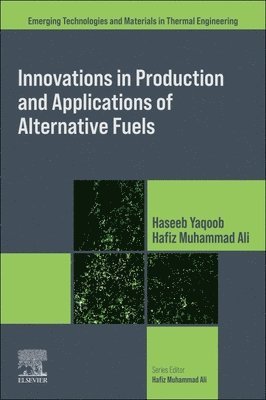
Innovations in Production and Applications of Alternative Fuels is a comprehensive reference book that covers the basics of alternative fuels, production techniques, physicochemical properties, and their various applications from a thermal engineering perspective. It focuses on alternative fuel production from diverse feedstocks, providing insights into feedstock selection, preparation techniques, combustion performance, emissions, and the use of additives and nanoparticles to enhance fuel performance in internal combustion engines. This book is essential for understanding the field of alternative fuels, and is invaluable for professionals and researchers in energy engineering, thermal engineering, environmental science, and sustainable development.It delves into different feedstocks, including edible-based, non-edible based, waste-based alternatives, algae-based feedstocks, and hydrogen carriers like ammonia fuel. It also explores the application of nanoparticles and additives to enhance fuel performance. Additionally, economic aspects, energy policies, and challenges associated with alternative fuels are discussed, offering practical insights and recommendations for future advancements.Explores different types of alternative fuels, focusing on waste-based productionProvides a comprehensive understanding of fundamental and advanced alternative fuel production techniques, including feedstock selection and mathematical models for parameter measurementAnalyzes physicochemical properties of alternative fuels and their impact on combustion and engine performanceDiscusses economics and energy policies related to alternative fuels, covering commercialization and future recommendationsExamines the use of additives and nanoparticles in alternative fuels to enhance internal combustion engine performance
1 729 kr
Kommande
Elements of Smog Monitoring and Mitigation provides an overview of the sources and processes of smog formation in industrial as well as agricultural areas, together with its monitoring and mitigation. The first section contains six chapters and mainly focus on introduction, monitoring and modelling of smog. The first chapter describes the past, present and future scenario of smog effects on human health and the economy. The book then goes on to describe the regulatory framework of smog prevention, mitigation and control. This is followed by an analysis of the physics and chemistry of smog, including precursor conditions and pollutants. Later chapters cover: big data and its utilization in the modelling of smog formation; locations and patterns for preventive and decision making measures; the various models and techniques for smog and air quality monitoring; the small scale devices for monitoring of smog precursors from agricultural and industrial sources. Section 2 of the book deals with the agricultural sources and mitigation practices of smog. Section 3 deals with the prevention techniques and technologies from industrial sources. It describes the recent advances in smog and its precursor mitigation including nano technology, chemical and physical means of smog abatementDiscusses smog formation and hazards in the context of the world's changing climateReviews recent advances in the monitoring of air qualityDiscusses advances in material synthesis, nano sensors, and nano reactions for smog monitoring and mitigationProvides a comprehensive overview of of smog generation and its mitigation strategies