Hassan Bashir - Böcker
Visar alla böcker från författaren Hassan Bashir. Handla med fri frakt och snabb leverans.
9 produkter
9 produkter
Europe and the Eastern Other
Comparative Perspectives on Politics, Religion and Culture before the Enlightenment
Inbunden, Engelska, 2012
1 276 kr
Skickas inom 10-15 vardagar
Europe and the Eastern Other critically evaluates and supports the argument for adopting an intercultural or comparative approach in western political theory. Hassan Bashir examines the encounters between Europeans and their eastern others before the European Enlightenment and illustrates that the West’s cultural others have played a foundational role in developing a distinct western cultural self-understanding. This analysis includes records of eyewitness accounts of European visitors in Eastern lands during the medieval and early modern periods, including William of Rubruck’s account of the Mongol lands in mid-thirteenth century, observations of the first Jesuit mission in the court of Mughal Indian emperor Akbar the Great, and circumstances in late Ming China as recorded in the journals of Jesuit missionary and scholar Matteo Ricci. This work illustrates the dynamism and complexity involved in an inter-cultural encounter and highlights the fact that cultural self-understanding is often deeply rooted in how we understand our cultural others.
Europe and the Eastern Other
Comparative Perspectives on Politics, Religion and Culture before the Enlightenment
Häftad, Engelska, 2014
675 kr
Skickas inom 10-15 vardagar
Europe and the Eastern Other critically evaluates and supports the argument for adopting an intercultural or comparative approach in western political theory. Hassan Bashir examines the encounters between Europeans and their eastern others before the European Enlightenment and illustrates that the West’s cultural others have played a foundational role in developing a distinct western cultural self-understanding. This analysis includes records of eyewitness accounts of European visitors in Eastern lands during the medieval and early modern periods, including William of Rubruck’s account of the Mongol lands in mid-thirteenth century, observations of the first Jesuit mission in the court of Mughal Indian emperor Akbar the Great, and circumstances in late Ming China as recorded in the journals of Jesuit missionary and scholar Matteo Ricci. This work illustrates the dynamism and complexity involved in an inter-cultural encounter and highlights the fact that cultural self-understanding is often deeply rooted in how we understand our cultural others.
Escaping Poverty Traps and Unlocking Prosperity in the Face of Climate Risk
Lessons from Index-Based Livestock Insurance
Inbunden, Engelska, 2024
753 kr
Skickas inom 7-10 vardagar
This Element outlines the origins and evolution of an international award-winning development intervention, index-based livestock insurance (IBLI), which scaled from a small pilot project in Kenya to a design that underpins drought risk management products and policies across Africa. General insights are provided on i) the economics of poverty, risk management, and drylands development; ii) the evolving use of modern remote sensing and data science tools in development; iii) the science of scaling; and iv) the value and challenges of integrating research with operational implementation to tackle development and humanitarian challenges in some of the world's poorest regions. This title is also available as Open Access on Cambridge Core.
Escaping Poverty Traps and Unlocking Prosperity in the Face of Climate Risk
Lessons from Index-Based Livestock Insurance
Häftad, Engelska, 2024
234 kr
Skickas inom 7-10 vardagar
This Element outlines the origins and evolution of an international award-winning development intervention, index-based livestock insurance (IBLI), which scaled from a small pilot project in Kenya to a design that underpins drought risk management products and policies across Africa. General insights are provided on i) the economics of poverty, risk management, and drylands development; ii) the evolving use of modern remote sensing and data science tools in development; iii) the science of scaling; and iv) the value and challenges of integrating research with operational implementation to tackle development and humanitarian challenges in some of the world's poorest regions. This title is also available as Open Access on Cambridge Core.
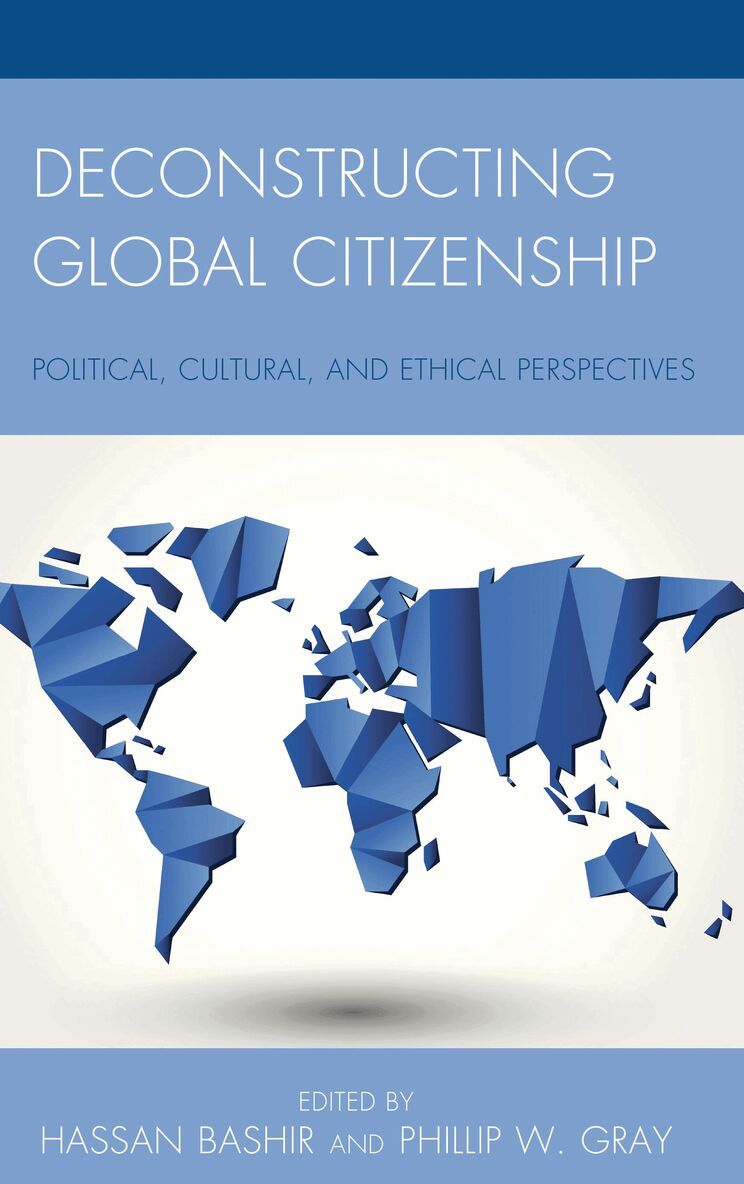
Deconstructing Global Citizenship
Political, Cultural, and Ethical Perspectives
Inbunden, Engelska, 2015
1 476 kr
Skickas inom 10-15 vardagar
The success of individual nation states today is often measured in terms of their ability to benefit from and contribute to a host of global economic, political, socio-cultural, technological, and educational networks. This increased multifaceted international inter-dependence represents an intuitively contradictory and an immensely complex situation. This scenario requires that national governments, whose primary responsibility is towards their citizenry, must relinquish a degree of control over state borders to constantly developing trans and multinational regimes and institutions. Once state borders become permeable all sorts of issues related to rights earned or accrued due to membership of a national community come into question. Given that neither individuals nor states can eschew the influence of the growing interdependence, this new milieu is often described in terms of shrinking of the world into a global village. This reshaping of the world requires us to broaden our horizons and re-evaluate the manner in which we theorize human personhood within communal boundaries. It also demands us to acknowledge that the relative decline of Euro-American economic and political influence and the rise of Asian and Latin American states at the global level have created spaces in which a de-territorialized and a de-historicized notion of citizenship and state can now be explored. The essays in this volume represent diverse disciplinary, analytical, and methodological approaches to understand what the implications are of being a citizen of both a nation state and the world simultaneously. In sum, Deconstructing Global Citizenship explores the questionofwhether a synthesis of contradictory national and global tendencies in the term “global citizenship” is even possible, or if we are better served by fundamentally reconsidering our ideas of “citizenship,” “community,” and “politics.”
675 kr
Skickas inom 10-15 vardagar
Co-Existing in a Globalized World: Key Themes in Inter-Professional Ethics brings together, and engages with, the scholarly work accomplished individually under the banner of professional ethics in various fields. The overarching theme of the volume is that globalization inevitably pairs professionals from distinct fields as co-workers. This necessitates serious reflection on how diverse fields can co-exist and achieve superior results through combining best practices from each. The authors are leading scholars and practitioners who have diverse national and distinguished professional backgrounds. These authors particularly focus on ethical concerns emerging from the inherent symbiotic relationship between cultural boundaries, professions and globalization. Furthermore, they put focused emphasis on ethical compliance with regard to globalization of professional practices into various cultural settings. The fields represented in the volume include international law, comparative education, East-West relations, engineering and bio-medical ethics, research ethics, and international professionalism in a cross-cultural context.
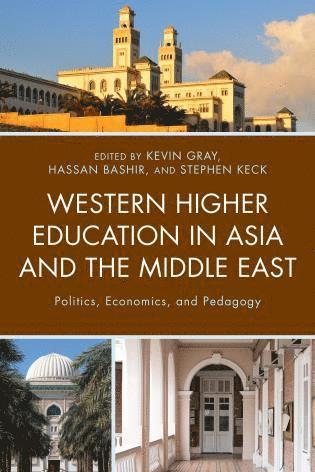
Western Higher Education in Asia and the Middle East
Politics, Economics, and Pedagogy
Inbunden, Engelska, 2016
1 240 kr
Skickas inom 10-15 vardagar
This multidisciplinary volume highlights the transformed nature of the relationship between higher education and society in the 21st century. In particular, it argues that the development of the global university, especially in the non-western world, has transformed the traditional understanding of the relationship between higher education and society. This has important implications for the relations of state, as education has not only become an object of national development policy but for many states an important export.The history of the university reflects the decisive social transformations which have given definition and identity to both new nations and modern societies. In the post-war period, universities in the industrialized world underwent a radical shift. The mass expansion of higher education ensured that universities were no longer centers designed to train youth to assume the leadership positions held by previous generations. Instead universities were to become centers where job skills could be imparted and knowledge produced, refined and used in the newly emerging Cold War economies, and where students could develop the skills necessary for employment in a changing world. Rather than focusing on the refinement of future leaders, the task of the university became linked to the development of economically exploitable technical knowledge.A shift of comparable magnitude is now ongoing in the nature of higher education itself. Globalization has led to the growth of knowledge communities around the world, mirroring the rise of centers for global finance in previous decades. In the Middle East and Asia the demands of the knowledge-based economy have led to the opening of new indigenous universities and branch campuses and partnerships with established European and North American universities. Education City in Qatar, for instance, has received or been pledged more than 200 billion dollars since its inception.The growth of new indigenous universities has altered the traditional role of the university further, increasing the emphasis on courses which are close to the marketplace. These new partnerships have contributed to the creation of what is now referred to as the global university.
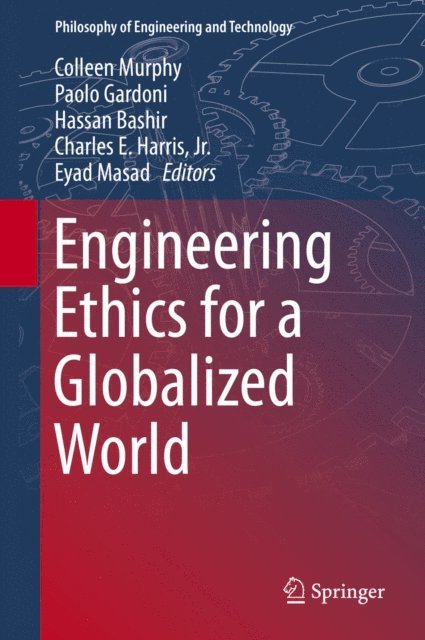
Del 22 - Philosophy of Engineering and Technology
Engineering Ethics for a Globalized World
Inbunden, Engelska, 2015
1 064 kr
Skickas inom 10-15 vardagar
This volume identifies, discusses and addresses the wide array of ethical issues that have emerged for engineers due to the rise of a global economy. To date, there has been no systematic treatment of the particular challenges globalization poses for engineering ethics standards and education. This volume concentrates on precisely this challenge. Scholars and practitioners from diverse national and professional backgrounds discuss the ethical issues emerging from the inherent symbiotic relationship between the engineering profession and globalization. Through their discussions a deeper and more complete understanding of the precise ways in which globalization impacts the formulation and justification of ethical standards in engineering as well as the curriculum and pedagogy of engineering ethics education emerges.The world today is witnessing an unprecedented demand for engineers and other science and technology professionals with advanced degrees due to both the off-shoring of western jobs and the rapid development of non-Western countries. The current flow of technology and professionals is from the West to the rest of the world. Professional practices followed by Western (or Western-trained) engineers are often based on presuppositions which can be in fundamental disagreement with the viewpoints of non-Westerners. A successful engineering solution cannot be simply technically sound, but also must account for cultural, social and religious constraints. For these reasons, existing Western standards cannot simply be exported to other countries.Divided into two parts, Part I of the volume provides an overview of particular dimensions of globalization and the criteria that an adequate engineering ethics framework must satisfy in a globalized world. Part II of the volume considers pedagogical challenges and aims in engineering ethics education that is global in character.
Del 22 - Philosophy of Engineering and Technology
Engineering Ethics for a Globalized World
Häftad, Engelska, 2016
1 064 kr
Skickas inom 10-15 vardagar
This volume identifies, discusses and addresses the wide array of ethical issues that have emerged for engineers due to the rise of a global economy. To date, there has been no systematic treatment of the particular challenges globalization poses for engineering ethics standards and education. This volume concentrates on precisely this challenge. Scholars and practitioners from diverse national and professional backgrounds discuss the ethical issues emerging from the inherent symbiotic relationship between the engineering profession and globalization. Through their discussions a deeper and more complete understanding of the precise ways in which globalization impacts the formulation and justification of ethical standards in engineering as well as the curriculum and pedagogy of engineering ethics education emerges.The world today is witnessing an unprecedented demand for engineers and other science and technology professionals with advanced degrees due to both the off-shoring of western jobs and the rapid development of non-Western countries. The current flow of technology and professionals is from the West to the rest of the world. Professional practices followed by Western (or Western-trained) engineers are often based on presuppositions which can be in fundamental disagreement with the viewpoints of non-Westerners. A successful engineering solution cannot be simply technically sound, but also must account for cultural, social and religious constraints. For these reasons, existing Western standards cannot simply be exported to other countries.Divided into two parts, Part I of the volume provides an overview of particular dimensions of globalization and the criteria that an adequate engineering ethics framework must satisfy in a globalized world. Part II of the volume considers pedagogical challenges and aims in engineering ethics education that is global in character.